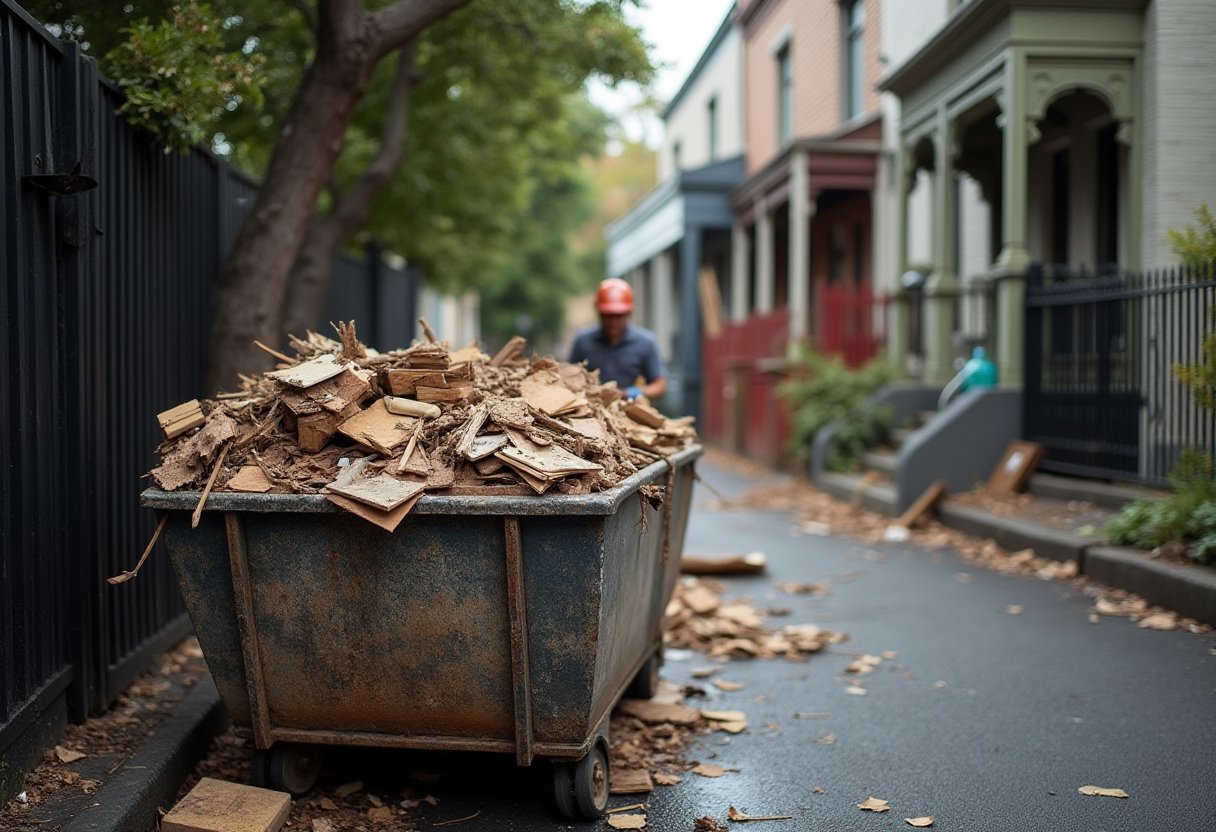

Running an office means running a steady stream of waste: paper, printer cartridges, takeaway containers, old monitors no one’s switched on in years. Most of it can be cut down, and a good chunk of what’s left can be recycled or reused instead of binned.
This is a practical guide to office waste reduction for Melbourne workplaces. We’ll cover where to start, how to tackle the big waste streams one at a time, and how to keep it going once the novelty wears off. None of it needs a big budget or a sustainability department, just a few habits and the right setup.
We’re It’s Done Rubbish Removal, based in Prahran and clearing waste for Melbourne offices and homes since 2008. Where it helps, we’ll flag what you can sort yourself and where a removal team makes sense.
Start with a quick waste audit
You can’t cut what you can’t see, so it’s worth knowing what your office actually throws out before you change anything. You don’t need anything fancy: over a week or two, keep an eye on what fills the bins and roughly sort it, so you can see the pattern.
Most offices find their waste falls into four main streams:
- Paper: printer paper, notebooks, envelopes and mail.
- Plastic: cups, bottles, cutlery and packaging.
- Food: scraps, leftovers and coffee grounds.
- E-waste: old computers, monitors, phones, cables and batteries.
Once you know which stream is biggest, you know where to start. For most offices, that’s paper.
Cut down on paper
Paper is usually the biggest single waste stream in an office, and it’s one of the easiest to shrink. A few changes that tend to stick:
- Move to digital wherever you can, and share files online instead of printing a copy each.
- Make double-sided the default on every printer. It halves paper use without anyone having to think about it.
- Proofread on screen before printing, so a typo doesn’t cost you a fresh page.
- Keep a tray by the printer for one-sided sheets, and reuse them as notepaper.
- Use e-signatures for contracts and forms instead of print, sign and scan.
Less paper means lower supply costs too, so this one usually pays for itself.
Reduce single-use plastic
Single-use plastic adds up fast in the kitchen and at events. Cutting it is mostly about making the reusable option the easy one:
- Drop disposable cups, cutlery and bottled water. A kitchen stocked with reusables handles most of it.
- If you need throwaways for visitors or events, choose compostable ones made from paper, bamboo or plant-based materials.
- Encourage everyone to keep a mug, a bottle and a container at their desk. Branded reusables make a decent welcome gift.
- Switch to refillable pens and tape dispensers.
- Ask your suppliers to trim the plastic in deliveries and use recyclable packaging where they can.
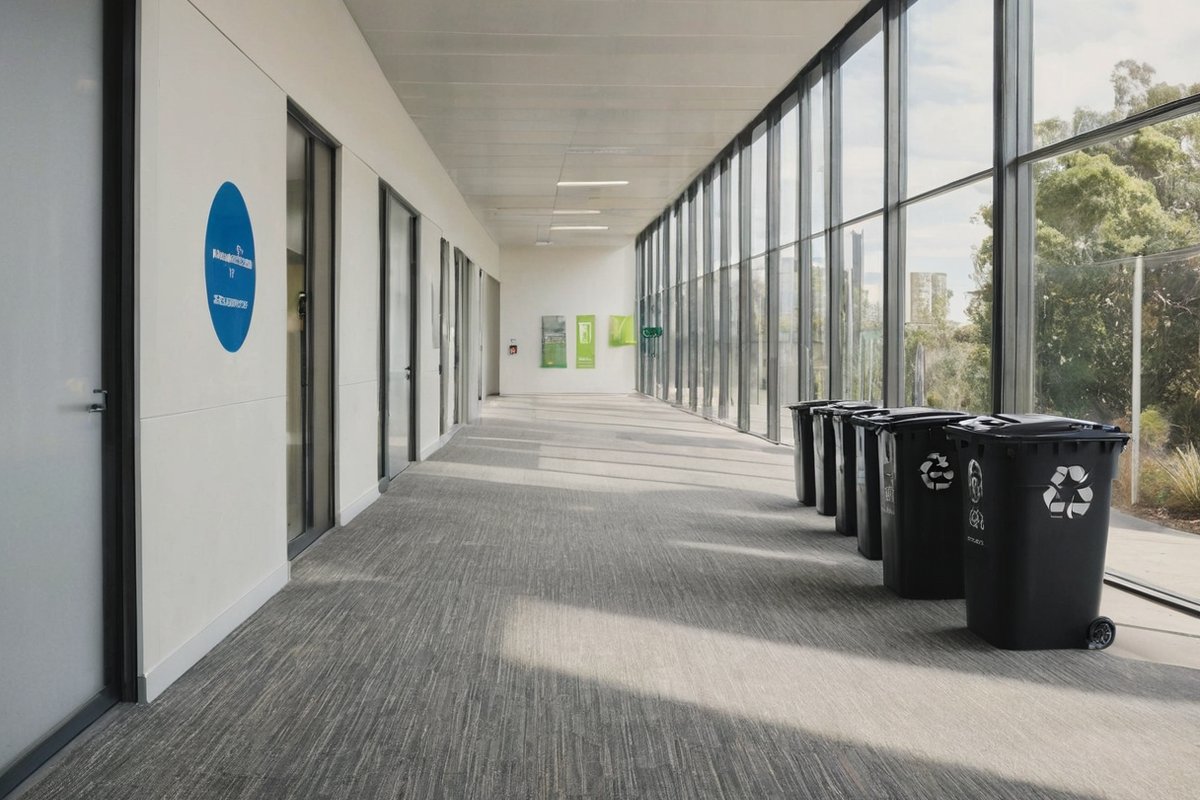
- Set up clearly labelled recycling bins so the plastic that’s left ends up in the right place.
The reusables cost a little up front, but they pay off quickly and the bins get noticeably lighter.
Keep food waste down
Kitchen and lunch waste is easy to overlook, but a few small habits make a real dent:
- Compost food scraps if you’ve got a kitchen. Plenty of Melbourne councils and private services collect organics.
- Use reusable containers, and skip the disposable packaging where you can.
- For catered meetings, ask for compostable or recyclable packaging. Most caterers offer it now.
- Pick local caterers who care about waste. It’s an easy question to ask when you book.

Cutting food waste trims the cleaning up and the catering bill too, not just the bin.
Handle e-waste responsibly
Old electronics shouldn’t go in the general bin. They hold valuable materials, and some parts are hazardous, so they need the right path:
- Get more life out of what you’ve got. A repair is often cheaper than a replacement, and easier on the environment.
- Donate or sell working gear. Schools and not-for-profits can often use older machines.
- Recycle dead electronics through a certified scheme. The National Television and Computer Recycling Scheme takes computers and TVs, and MobileMuster handles phones.
- Buy energy-efficient when you do replace something. Look for Energy Star or EPEAT ratings.
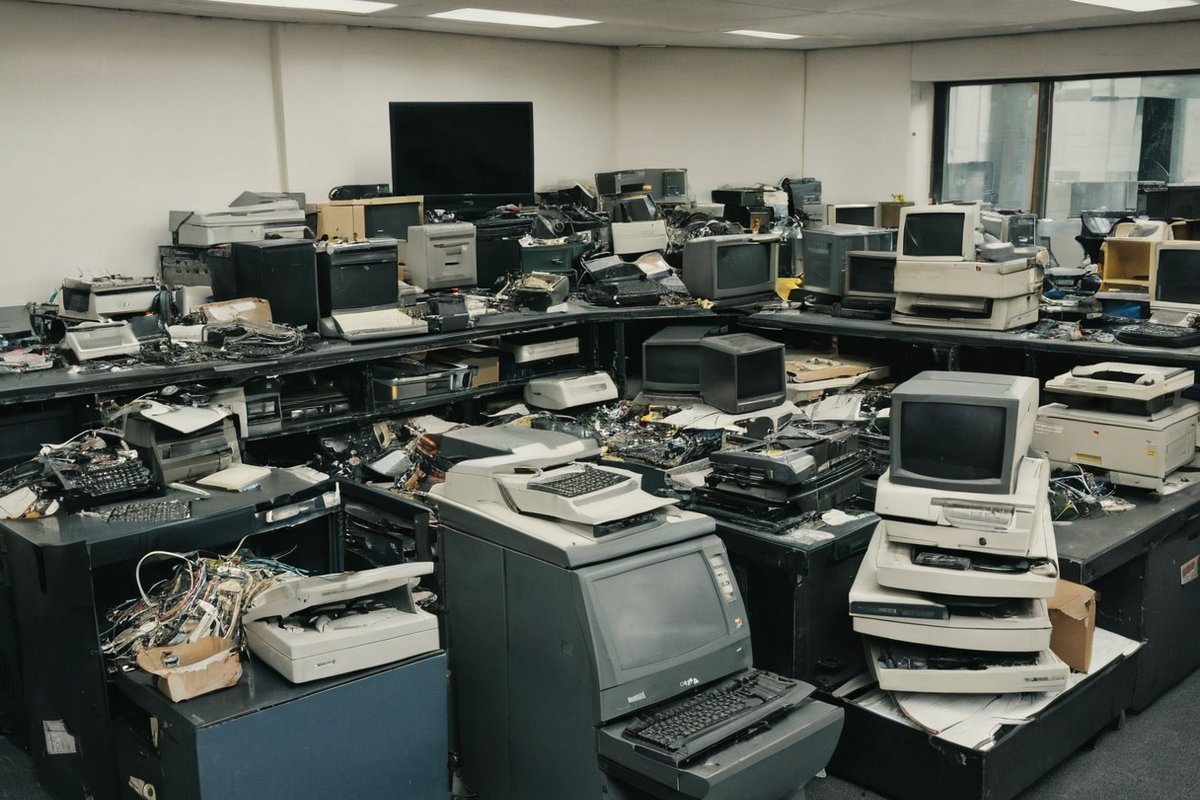
If you’ve got a pile of old machines to move, a removal team can take the lot to a certified e-waste recycler in one go.
Build it into the office culture
Habits stick when they’re shared, so it helps to make this part of how the office runs rather than a one-off push:
- Give someone, or a small green team, the job of keeping it going.
- Label the recycling and compost bins clearly, with a picture or two if it helps.
- Put up a few simple reminders near the printers and bins.
- Give a bit of credit to the people who get behind it. It goes a long way.
- Write it into your values and policies so it outlasts whoever started it.
When it’s a shared habit rather than one person’s project, it tends to look after itself.
Get creative with reuse
Beyond the basics, there’s plenty you can reuse instead of bin:
- Turn scrap paper into notepads, or use it as packing material.
- Keep good shipping boxes for storage or the next send-out.
- Upcycle old furniture. An old filing cabinet repainted as a planter, that sort of thing.
- Run an office supply swap so gently used bits find a new desk.
Frequently asked questions
Start with a quick waste audit. Over a week or two, keep an eye on what fills the bins and roughly sort it into paper, plastic, food and e-waste. Once you can see which stream is biggest, you know where to focus first. For most offices, that’s paper.
Paper, usually. It’s also one of the easiest to cut: make double-sided printing the default, move documents online, and use e-signatures instead of printing forms to sign. Most offices see a quick drop without much effort.
The cheapest changes are often the most effective. Set printers to double-sided, swap disposable cups and cutlery for reusables in the kitchen, ask people to bring a mug and bottle, and put out clearly labelled recycling bins. None of that costs more than a few reusables up front.
Don’t put e-waste in the general bin. Repair or donate what still works, and recycle the rest through a certified scheme like the National Television and Computer Recycling Scheme, or MobileMuster for phones. If you’ve got a pile of old machines, a removal team can take the lot to a certified recycler in one go.
Yes, as long as it’s sorted properly. Paper, cardboard, most plastics, e-waste and organics all have recycling or composting paths through councils and private services. Clear bin labels make a big difference, since contaminated recycling often ends up in landfill.
Reducing comes first. Recycling is good, but it still uses energy and not everything makes it through the process. The biggest wins come from not creating the waste in the first place, then recycling or composting whatever’s left.
Make the greener option the easy one, and make it a shared habit rather than one person’s job. A small green team, clearly labelled bins, a few reminders near the printers, and a bit of credit for the people who get behind it all help it stick.
When it’s time to clear the rest
Even a tidy office ends up with waste it can’t reuse: a clear-out, an old fit-out, a stack of dead monitors. That’s the point to bring in a removal team.
We clear offices and commercial spaces across Melbourne’s inner suburbs, and we sort for recycling and donation rather than sending it all to landfill. A good removal partner will:
- sort and recycle properly, so the recyclables actually get recycled
- handle e-waste and other tricky items safely
- divert food and organic waste to composting where it can
- clear a full office or fit-out in a single visit

If you’d like a hand with the heavy end of it, have a look at our office rubbish removal and commercial rubbish removal services.
Greening your office isn’t a one-off job. It’s a handful of habits that get easier the longer you keep them up. Start with the biggest waste stream, make the greener option the easy one, and build from there.
When you’ve got waste to clear and you’d rather not deal with it yourself, give the team a call on (03) 9820 1927 and we’ll come and quote it for free. We’ll recycle and donate whatever we can.