Executor responsibilities clearing a deceased estate in Victoria don’t end once the house is empty. In a lot of ways, they’re just getting started. Losing someone and then being the person who has to sort through their home is a strange kind of tired, and most executors get through the clearance itself without too much trouble. What trips people up comes later, when a sibling or cousin asks, gently or not so gently, what actually happened to Mum’s things. You don’t need a filing cabinet’s worth of paperwork to answer that well. You need a handful of simple records, gathered at the time, not reconstructed from memory six months on. This is what that short list looks like, and why it matters more than most executors realise.
The clean-out as an accounting event
Most people think of the clean-out as a physical job: get the house empty, get it ready for sale or handover. Legally, it’s also something else. Every decision you make about what gets kept, donated, sold or taken to landfill becomes part of the estate’s record, whether you write it down or not.
This is the heart of the job. Executors are expected to give beneficiaries a full account of how the estate was administered, and that duty doesn’t disappear just because the item in question was a chipped dinner set rather than a bank balance. You’re not expected to itemise every tea towel. But if a sibling later asks where Dad’s tools went, or whether the jewellery box was actually empty when it left the house, “I can’t quite remember” is a much harder place to answer from than a note you made on the day.
Treat the clearance, then, as the point where you generate your own evidence, not just where you get rid of things. That’s a much smaller job than it sounds like. It doesn’t mean lawyers in the room or a spreadsheet for every drawer. It means a few habits, done consistently, while the house is still being emptied rather than reconstructed from memory afterwards. The next section sets out exactly what those habits are.
What a complete clearance record includes

There’s no legal checklist that spells out exactly what an executor’s file should contain. But in practice, four things cover nearly everything a beneficiary might later ask about, and none of them take long to do while you’re on site.
Photos before anything leaves the house. A few phone shots of each room before the clearance starts, and again as it empties, give you a plain record of what was there and its condition. LPLC’s guide for executors suggests the same idea: an itemised list of the estate’s assets, and it says photographing or videoing the household items is a good way to record them. This matters most for anything a beneficiary might later query: furniture, whitegoods, anything that looked like it had value. You’re not building a museum catalogue, just enough to answer “what happened to Mum’s dining table” with a photo instead of a guess.
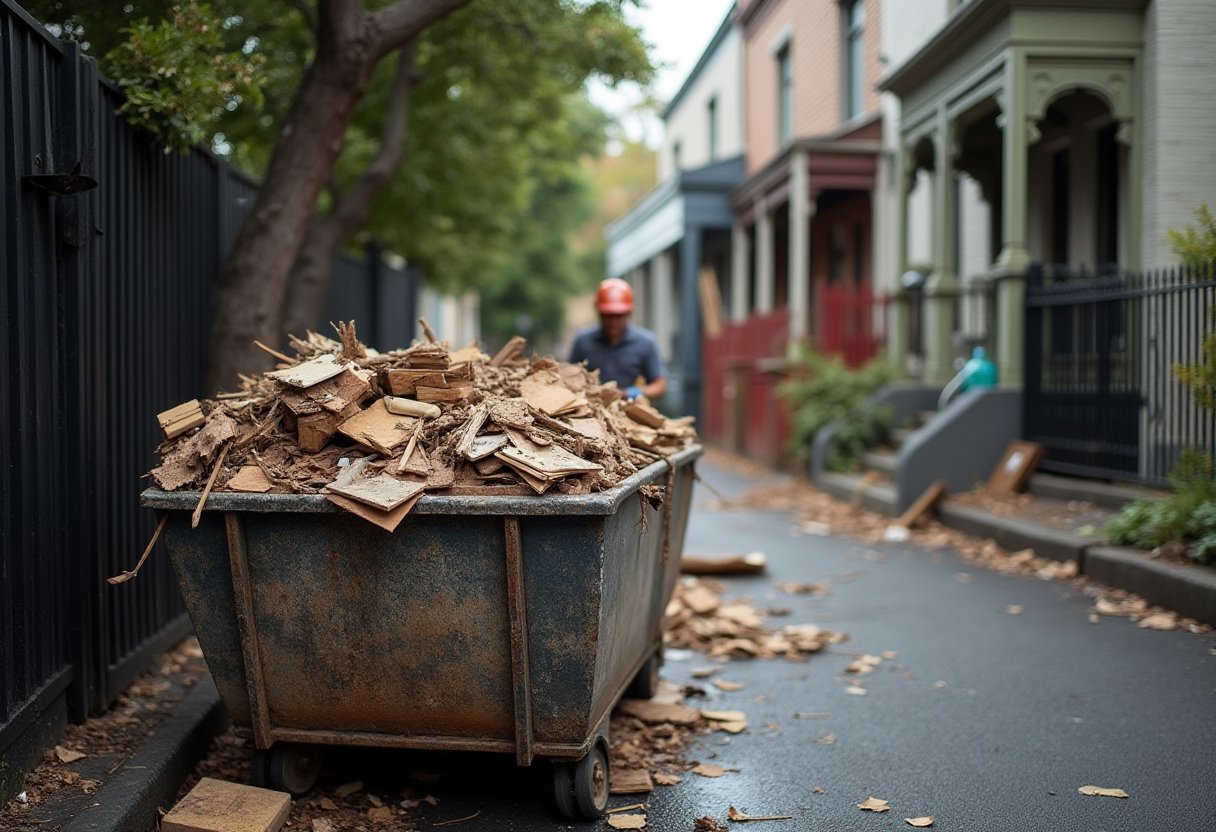
The docket from wherever the load went. If waste goes to a transfer station or tip, keep the receipt. Costs and terms vary by council. Boroondara’s Recycling and Waste Centre in Camberwell, for example, is open to non-residents for most drop-offs and charges by load size, so check the facility you’re using rather than assuming a flat rate. If a rubbish removal company handled it, keep their invoice for the cost and the date, and add a line to your notes about what they took.
A record of anything donated. Not every op shop hands out receipts for goods, but it’s worth asking on the day. If they can’t, a dated photo of the drop-off and a line in your notes does the same job. Don’t count on a tax deduction for it, though. Under the ATO’s rules for gifts of property, second-hand goods generally only qualify if they were bought in the 12 months before the gift or they’re high-value items the ATO has valued above its threshold. The record is there for the estate’s accounts, not a tax claim, and it’s awkward to chase up months later.
A short written note of what went where. A page in a notebook or a few lines in your phone: “wardrobe and bed frame to Vinnies, lounge suite to tip, jewellery box set aside for valuation.” That’s the piece that ties the photos and receipts together into something a beneficiary can actually follow.
None of this turns clearing a deceased estate in Victoria into paperwork. It’s four habits, kept up for the few days the clearance takes, that mean you’re never reconstructing an answer from memory six months on.
When it’s safe to clear and distribute

There’s no single green light that applies to every estate, and this is exactly the point where you should lean on your solicitor rather than a blog post. But broadly, executor responsibilities around clearing a deceased estate in Victoria come down to timing as much as paperwork.
The main thing to be aware of is that under section 99 of the Administration and Probate Act 1958 (Vic), eligible people generally have six months from the grant of probate to bring a family provision claim against the estate. That timeframe shapes when it’s genuinely safe to distribute assets, not just clear the house. Clearing the property and disposing of its contents is usually fine well before that window closes, since the physical clean-out and the final distribution of the estate are two different steps. What you’re protecting yourself against isn’t clearing too early, it’s distributing the proceeds or handing over specific items before you’re confident no claim is coming. An executor who distributes inside that six months and then faces a claim can be personally liable for what the court orders the estate to pay.
If the estate is small and uncontested, with everyone in agreement about who gets what, you’ll usually feel confident moving faster. If there’s any tension between beneficiaries, an unclear will, or a family member who’s been left out, it’s worth holding off on final distribution and getting advice before anything irreversible happens.
The Probate Office’s own processing time doesn’t hold up the clean-out either. You don’t need probate to start clearing a Melbourne estate, as long as you’ve taken stock of what’s there first. When in doubt, a quick call to your solicitor costs far less than an estate dispute.
If a beneficiary asks and the record isn’t there

Sooner or later, a beneficiary asks what happened to a particular item. A grandmother’s dining setting, dad’s tools, a piece of jewellery nobody can find. If you’ve kept the four things above, you can answer in a sentence and move on. If you haven’t, you’re stuck trying to remember a decision you made months ago about a house full of things, under pressure, with nothing to point to.
That’s the position you want to avoid. Executor responsibilities around clearing a deceased estate in Victoria don’t require you to remember everything perfectly, they require you to be able to show your working. Without it, a reasonable question can start to feel like an accusation, and an accusation with no answer is exactly the kind of thing that turns into a dispute over something that was, in truth, handled properly.
It also matters for your own protection, not just the beneficiary’s peace of mind. An executor who can produce photos, a tip docket, donation receipts and a short written summary has evidence they acted with care. An executor who can only say ‘I think we donated most of it’ is relying entirely on being believed. And if a beneficiary can’t get an answer from you directly, they can ask the Supreme Court’s Registrar to require the executor to file an account of the estate, verified by affidavit. Your notes from the clearance are what that account gets built from. For anything specific to your estate or your family’s situation, a proper conversation with your solicitor is worth having early rather than after a dispute has already started.
Keep it simple, keep it close to the time of clearance, and you’ll rarely need to reach for that folder at all.
If sorting the house is the part you’d rather hand off, give the team a call on (03) 9820 1927. We’ll quote it for free, and our invoice gives you the cost and the date for the estate’s accounts.
Frequently Asked Questions
Four things cover most of it: photos of rooms and larger items before anything left the house, the tip docket or waste transfer receipt showing where the load went, a receipt or dated note for anything donated, and a short written note listing what happened to items of value (sold, gifted to a named beneficiary, donated, or disposed of). None of this needs to be formal. A dated note in an email or a shared document is enough. Executor responsibilities when clearing a deceased estate in Victoria centre on being able to account for decisions, not on producing a forensic audit. If you can answer ‘what happened to Mum’s dining table’ with a photo and a line of explanation, you’re covered.
Yes. Executors owe beneficiaries a duty to account for how estate assets were handled, and that includes household contents, not just money and property. A beneficiary can ask what happened to specific items, and you’re expected to give a reasonable answer. This doesn’t mean itemising every op-shop bag. It means being able to show, in broad terms, that nothing of obvious value was thrown out without a record and that the clearance was handled sensibly. Keeping the basics as you go means you’re never caught trying to remember, months later, whether that jewellery box went to a cousin or the tip.
It’s worth getting a receipt whenever you can, even for donations. Not every op shop issues receipts for goods, so if they can’t, a dated photo of the drop-off and a line in your notes will do. Either way, it’s a quick way to show a beneficiary that an item wasn’t quietly kept or sold privately. If a piece went to a specific family member instead, a one-line note (‘the sewing machine went to Aunt Carol, as agreed at the house’) does the same job. It’s less about proving value and more about closing the loop, so nobody’s left wondering later.
Keep them at least until the estate is fully distributed. In Victoria, family provision claims generally have to be made within six months of the grant of probate, but a court can allow a late claim while the estate hasn’t yet been distributed, so distribution is the safer marker. After that, there’s no harm in holding onto photos and dockets a little longer. They take up almost no space and give real peace of mind if a question ever comes up unexpectedly, even after the estate is closed.