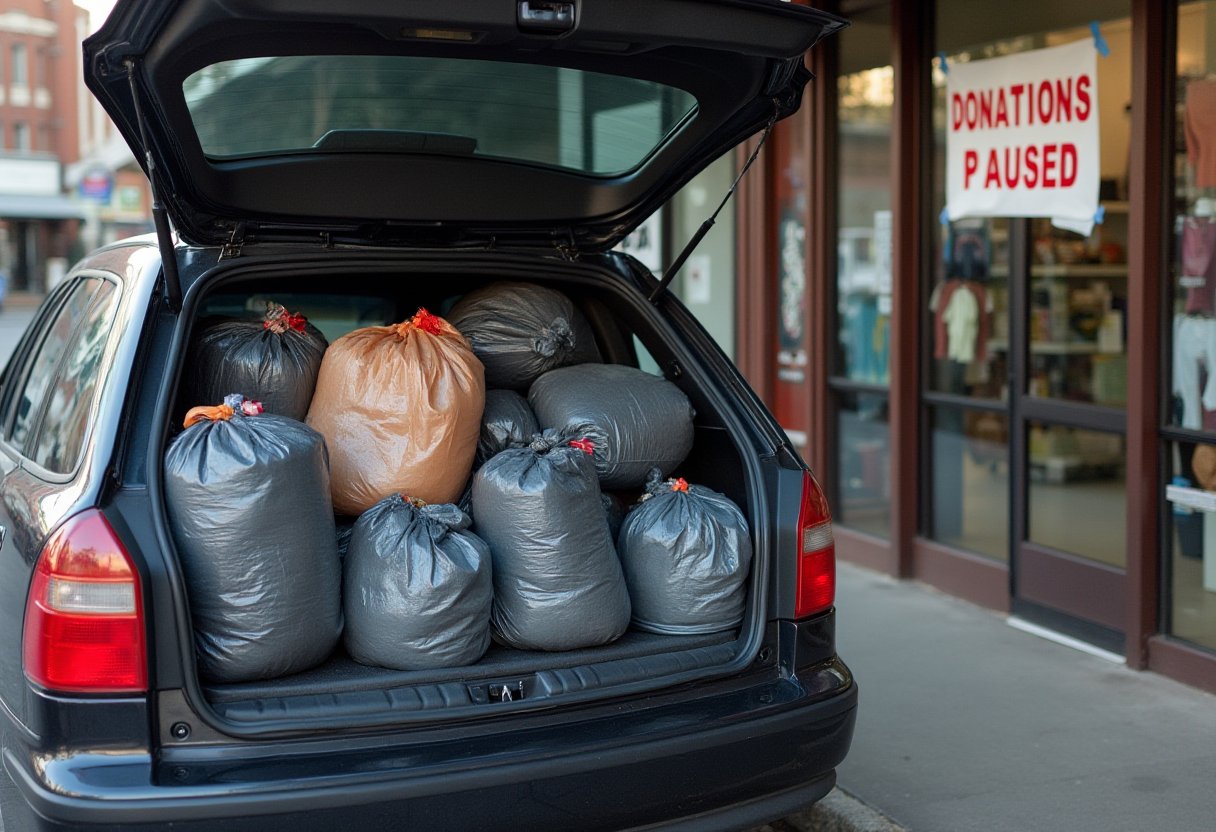
Textile recycling Melbourne services exist for exactly the moment you’re in: standing at the boot of your car in January with three bags of clothes, having just found a ‘donations paused’ sign taped to every op shop door from Chapel Street to Camberwell. It isn’t that Melburnians all cleaned out their wardrobes on the same weekend, though the post-Christmas rush is real enough. It’s that only a small share of what gets donated ever reaches a rack, and the market that used to absorb the rest has been shrinking for years. Sort those bags properly and there are four places they can go, none of which is the boot of your car in February.

Why Melbourne op shops are turning donations away in January
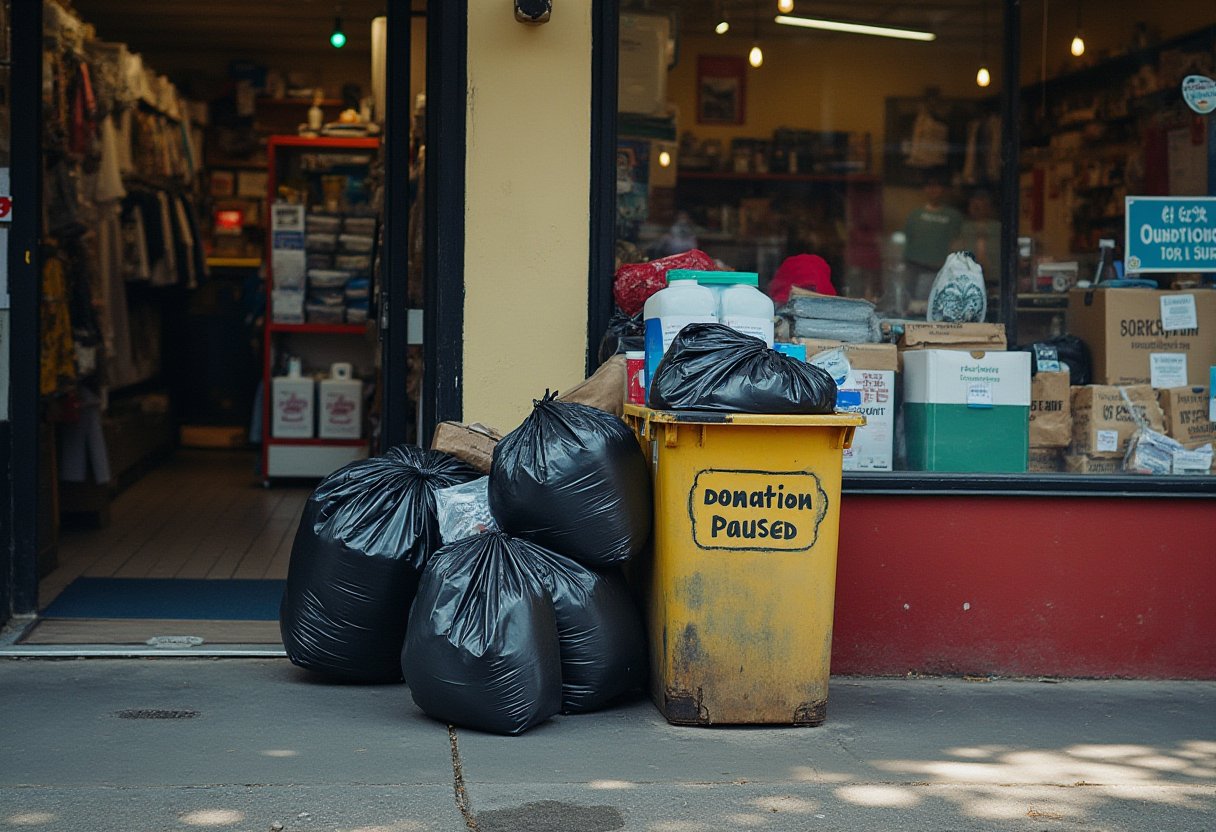
Op shops aren’t knocking your clothes back because they don’t want them. They’re knocking them back because there’s nowhere for the overflow to go. Vinnies and other charities have been asking donors to hold off on unsellable items, because the bins are full before Christmas is properly finished.
The maths behind it is blunt. Only about 10 per cent of donations make it onto the store floor, and the rest leans on a recycling and export chain that has been under real strain. In 2024 Statewide Cleaning Cloths, one of the biggest buyers of Australian op shop excess, told charities it would stop taking their stock. Its warehouses were at capacity, shipping costs on the Asian routes had climbed, and the company said it would be trading at a loss if it carried on. It had shipped roughly 20 million kilograms of clothing from Australia to Malaysia in the two years before that.
Take a buyer that size out of the chain and the surplus has nowhere to sit. Put the January donation rush on top of it and shops pause intake until the backlog clears. It’s not a Chapel Street or Camberwell thing, it’s happening at drop-off points right across Melbourne, and it tends to come back around every summer.
The “would you give it to a mate” test: what op shops actually want
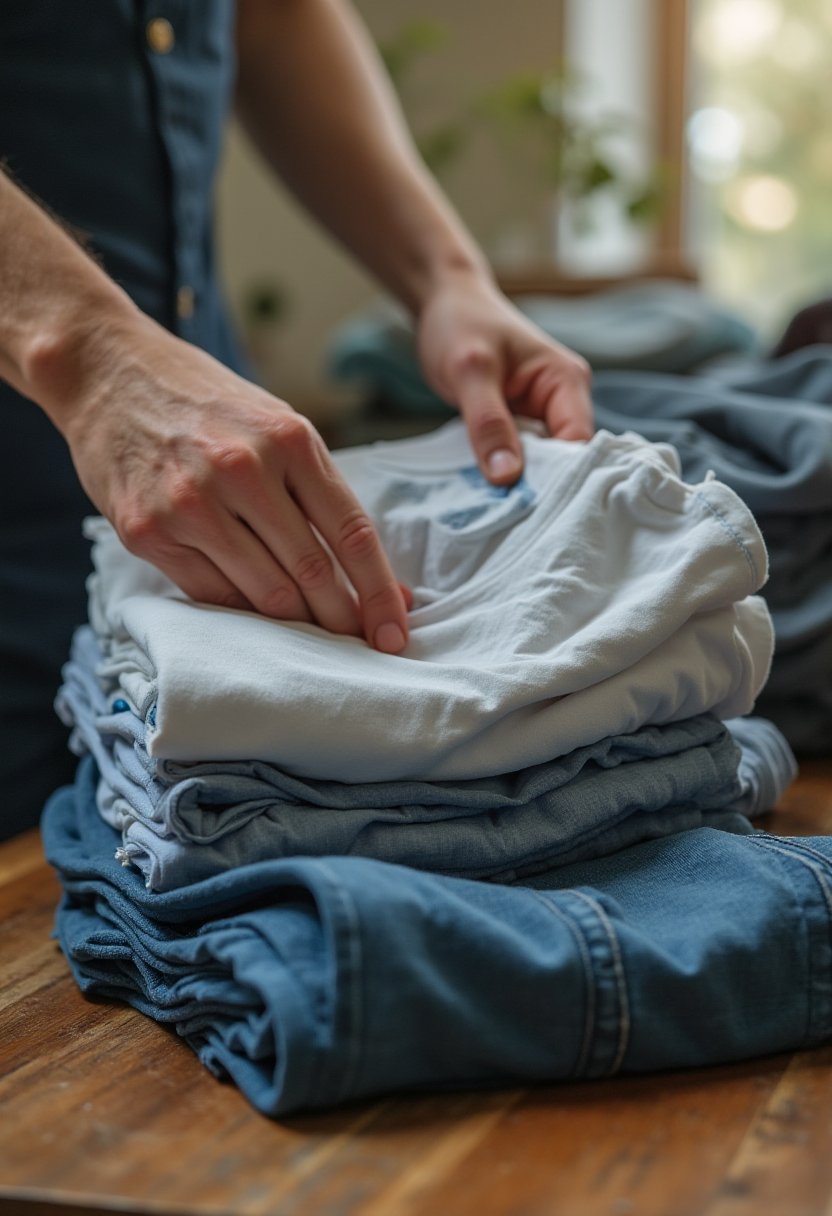
The simplest sorting rule going is the one the charities themselves now use: would you actually hand this to a mate, no apology attached? If yes, it’s donation-ready. If you’d feel the need to say “sorry, it’s a bit worn” as you passed it over, it’s not.
Op shops need clean, wearable, saleable stock. Vinnies is explicit about this on their donations page: no ripped, torn, soiled or stained clothing, no cracked or broken homewares, no stained bedding. As they put it, it takes a lot of money and volunteer hours to sort and dispose of the thousands of tonnes they get that they can’t sell.
Condition isn’t the only thing that gets a donation knocked back, either. Size, safety rules and whether anyone can shift the thing all come into it, which is why charities won’t take a piano even when it’s in good nick.
This isn’t about being harsh on your old work shirts. It’s about being honest at the sorting stage rather than leaving that call to a volunteer later. If you’re working through a whole house rather than one wardrobe, the same principle drives the keep, donate, tip and e-waste method we use on bigger clear-outs.
What actually happens to donations that don’t sell
Every bag that comes through the door gets sorted by hand. Sacred Heart Mission puts the outcome plainly in its summer donation guide: up to 60 per cent of donations can’t be resold and end up in landfill. Their line is worth repeating, because it’s the whole point. Op shops are community hubs, not your local tip.
The national picture is bigger again. Around 310,000 tonnes of clothing is donated to Australian op shops every year, and more than 43,000 tonnes of that is unusable and can’t be commercially recycled here, according to Charitable Reuse Australia’s clothing reuse export accreditation scheme. Volunteers end up doing the sorting job that should have happened at home, unpaid, on stock that was never going to sell.
Closer to home, Sustainability Victoria puts the average Victorian’s textile waste at 28 kilograms a year, with only 7 per cent of it recycled. Worth knowing that Sustainability Victoria is being wound up, so if that’s where you’ve been getting your recycling advice, it’s worth knowing where to look next.
4 places to take textiles when the op shop can’t
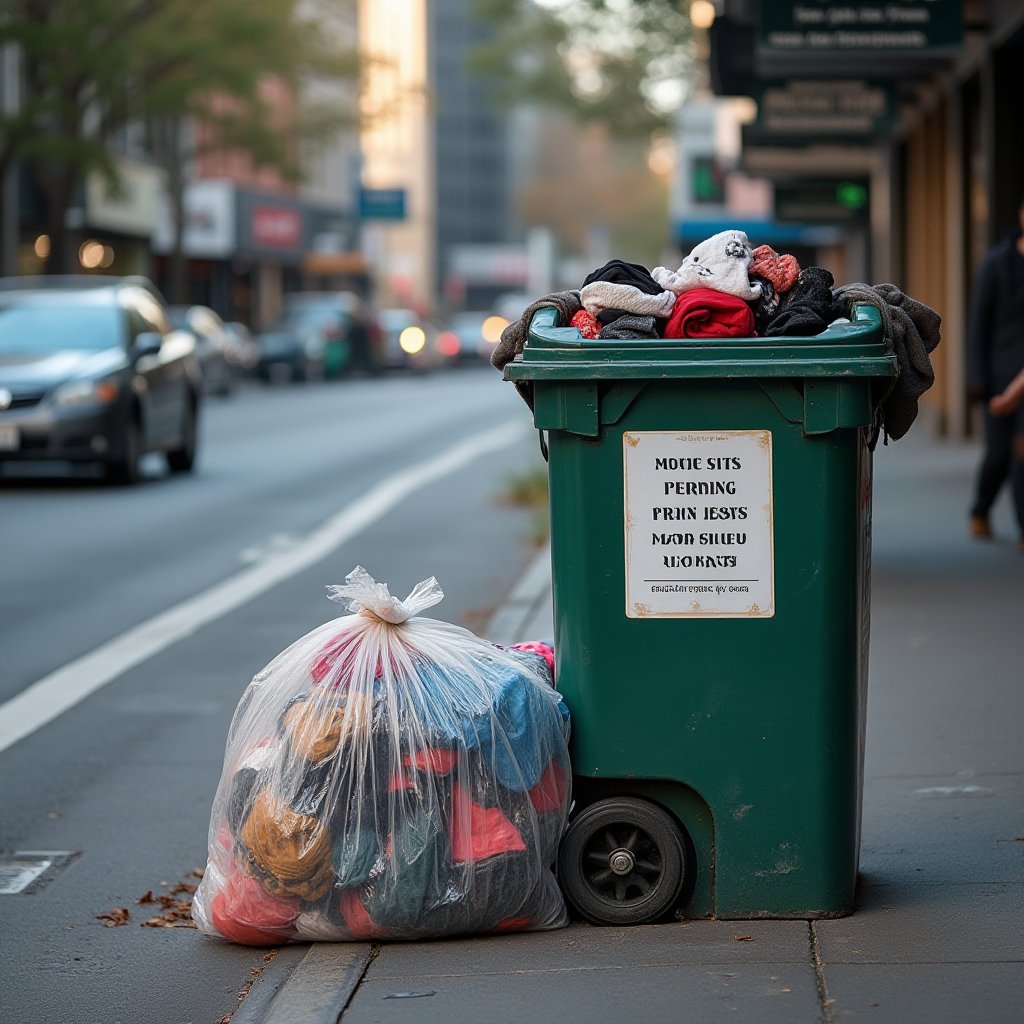
Not everything you pull out of a wardrobe is donation-ready, and that’s fine. Stained tees, odd socks, the swimmers with the dead elastic: none of that is a mate’s problem to solve, and it isn’t a Vinnies problem either. Split it the way you’d split any big declutter, into piles, and each pile has somewhere to go.
1. An SCR clothing hub, for anything still wearable. SCR runs around 1,600 clothing hubs across the country, in shopping centre and council car parks, at schools, and along the Melbourne Metro train network. They take clothing, shoes and accessories in clean, wearable condition, plus manchester like sheets, pillowcases and doona covers. It’s free, and their hub finder will show you the closest one.
2. The brand that made it. A fair few retailers now take their own products back, and some accept other brands too. Sheridan takes washed sheets, quilt covers, pillowcases and towels of any brand at participating boutiques and outlets, and sends them to BlockTexx in Queensland to be separated back into raw fibre. For clothing, H&M, Zara, Uniqlo, Kathmandu and Patagonia all run in-store collection bins, but check what each one accepts before you go: Zara takes any brand, while Uniqlo only takes its own. So that stained doona cover does have somewhere to go, it just isn’t the op shop.
3. UPPAREL, if you’d rather handle the lot in one go. They’re Melbourne-based and they take textiles that no shop could sell. The consumer service works in that order: you buy the recycling first, from $35 for a 10kg box or $70 for 20kg, pack your own box (they don’t post you one), then book an Australia Post drop-off or a courier pickup. Everything has to be clean, because their team sorts it by hand. They’ll take clothing, shoes, linen, socks, swimwear, wetsuits, fabric off-cuts and curtains. They won’t take doonas or pillows, used underwear, wired bras, bags, belts, soft toys or carpet.
4. Planet Ark’s Recycling Near You, for the odd ones out. Shoes, school uniforms, bras and work gear all have their own schemes, and they change often enough that a directory beats a list. Punch your postcode in and it’ll tell you what’s near you and which stream each item belongs in.
That still leaves a pile. Mouldy, oil-soaked or genuinely finished fabric isn’t wanted by charities or recyclers, and nor is the non-textile half of a big clear-out. If a wardrobe sort has turned into a house sort, that’s the pile we pick up, and clothing and textile removal sits alongside the furniture and the rest of it on the same run.
Leaving bags outside a closed bin isn’t a shortcut
If the op shop’s shut or the bin’s overflowing, that pile at the door isn’t a donation any more. Vinnies ask directly: don’t leave goods outside the donation bins, because they get damaged by the weather and the shop then has to take them to landfill. Vinnies’ South West area manager Ari Jadi told the ABC the same thing from the other side of the counter, describing bags left out in the weather to get ruined and rummaged through before staff arrive.
It isn’t only bad manners, either. Under Victoria’s Environment Protection Act 2017 you’re breaking the law if you dump, abandon or bury waste at a place that isn’t authorised to accept it, and EPA Victoria is clear that this includes private land. Councils enforce it as littering or illegal dumping and issue fines for it. We’ve written before about what illegal dumping costs the people left to clean it up.
The fix isn’t complicated. If the shop’s shut or the bin’s full, hang onto the bag and come back when they’re open. Sacred Heart Mission suggest ringing ahead and dropping off earlier in the day, before the store hits capacity, and they run a free collection service for larger donations and furniture across inner Melbourne if you’ve got more than the car will hold.
Sort first, then match each pile to the right place. It’s a bit more effort at the boot of the car, and it’s the difference between helping and adding to the problem. We’re based down the road in Prahran and handle rubbish removal in Prahran and across the inner south. If the leftovers have turned into a trailer load, give us a ring on (03) 9820 1927 or grab a free quote and we’ll take care of the household rubbish removal side of it.
Frequently Asked Questions
It’s a mix of Christmas decluttering and a genuine bottleneck further down the chain. Charities collect a spike of donations after Christmas and New Year, but only about 10 per cent of what comes in reaches the shop floor, and the recyclers and exporters who used to buy the rest have pulled back. One of the largest Australian buyers stopped taking op shop stock in 2024. That leaves shops with nowhere to put the surplus, so stores in Prahran, Windsor, South Yarra and along Chapel Street can genuinely be at capacity rather than fussy. If a store or bin looks full, don’t leave bags outside. Come back another day or use a textile recycler instead.
Donating is for clothes and linen in good, wearable condition, things you’d genuinely hand to a mate or that an op shop could put straight on a rack and sell. Textile recycling is for items that are clean and dry but stained, torn, missing buttons, worn through or otherwise not resaleable. Recyclers like UPPAREL take those and put them back into use: roughly 40 per cent of what they receive is still fit to wear and goes to their charity partners, and the remainder is repurposed by local makers or broken down into new material. Both streams matter. Sorting before you leave the house means less gets wrongly binned or wrongly donated.
No. Loose fabric tangles in the sorting machinery and causes real problems at the plant, so textiles never belong in your yellow-lid bin, however clean they are. Councils don’t take bagged clothing in hard rubbish either, since hard rubbish is for bulky items. Use a charity bin or op shop for donation-grade items, a textile recycler such as UPPAREL or a Sheridan in-store bin for the rest, and your general waste bin only for fabric that’s genuinely finished. If you’re unsure which bin an item belongs in, our guide to what can be recycled walks through the common ones.
Mouldy, oil-soaked or contaminated fabric isn’t accepted by charities or textile recyclers, and neither is used underwear, old carpet or heavily soiled bedding. That’s genuine rubbish and it’s fine to treat it that way. If a wardrobe clear-out has turned into a bigger job, with sorted donations in one pile, textile recycling in another and a stubborn pile of the rest, we can take that last pile off your hands. Book a free quote with It’s Done and we’ll clear it in one run, no need for three separate trips.