When the op shop’s already knocked back two boxes and you’re still googling where to donate books in Melbourne, you know this job has gotten bigger than you planned. It usually starts simple: clear the shelves, maybe the crate of old records under the stairs, done by lunchtime. Then you open the filing cabinet. Suddenly you’re not decluttering, you’re sorting a small archive, and half of it shouldn’t go anywhere near a charity bin. That’s the thing nobody tells you about a “quick” shelf clear-out in Prahran, South Yarra or anywhere else in the inner-east: books, records and paperwork aren’t one errand, they’re three, each with its own rules. This is how to work through all of it in one afternoon, in the right order, so nothing ends up somewhere it shouldn’t.

Why the op shop knocked your books back
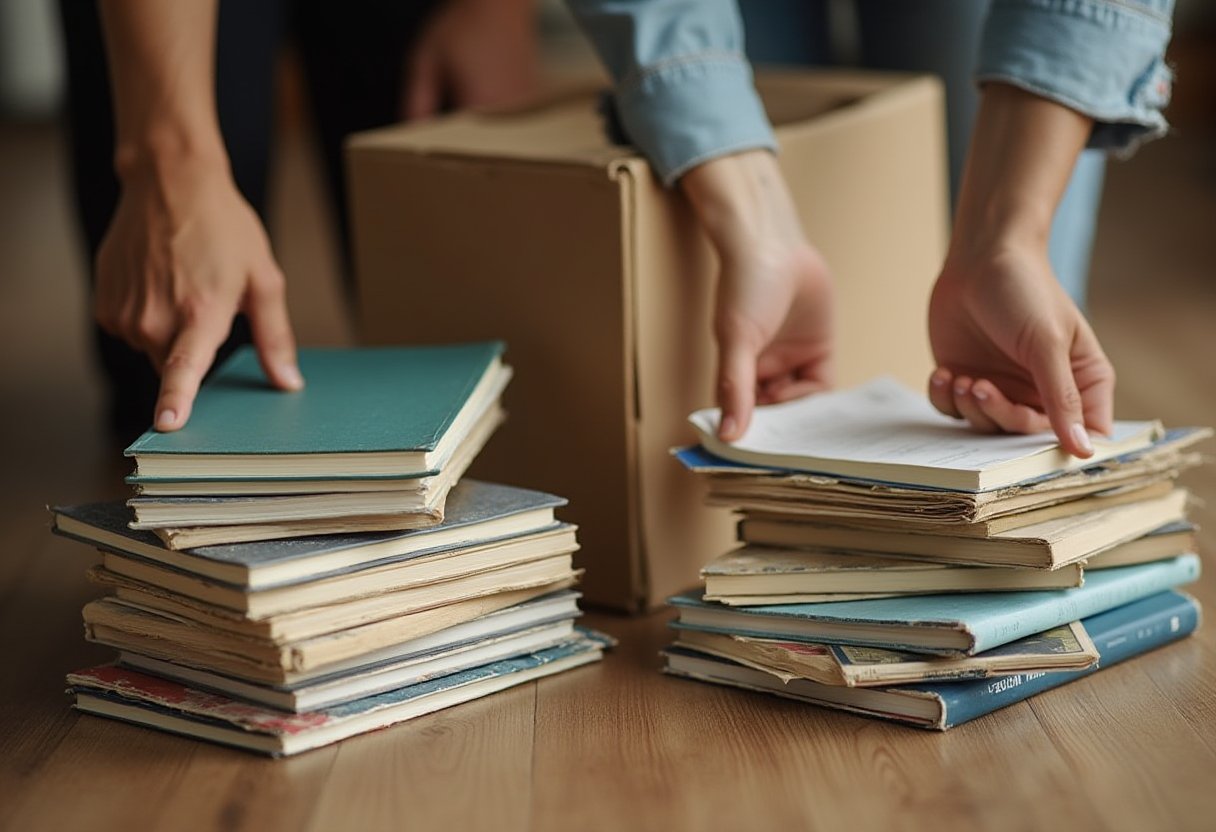
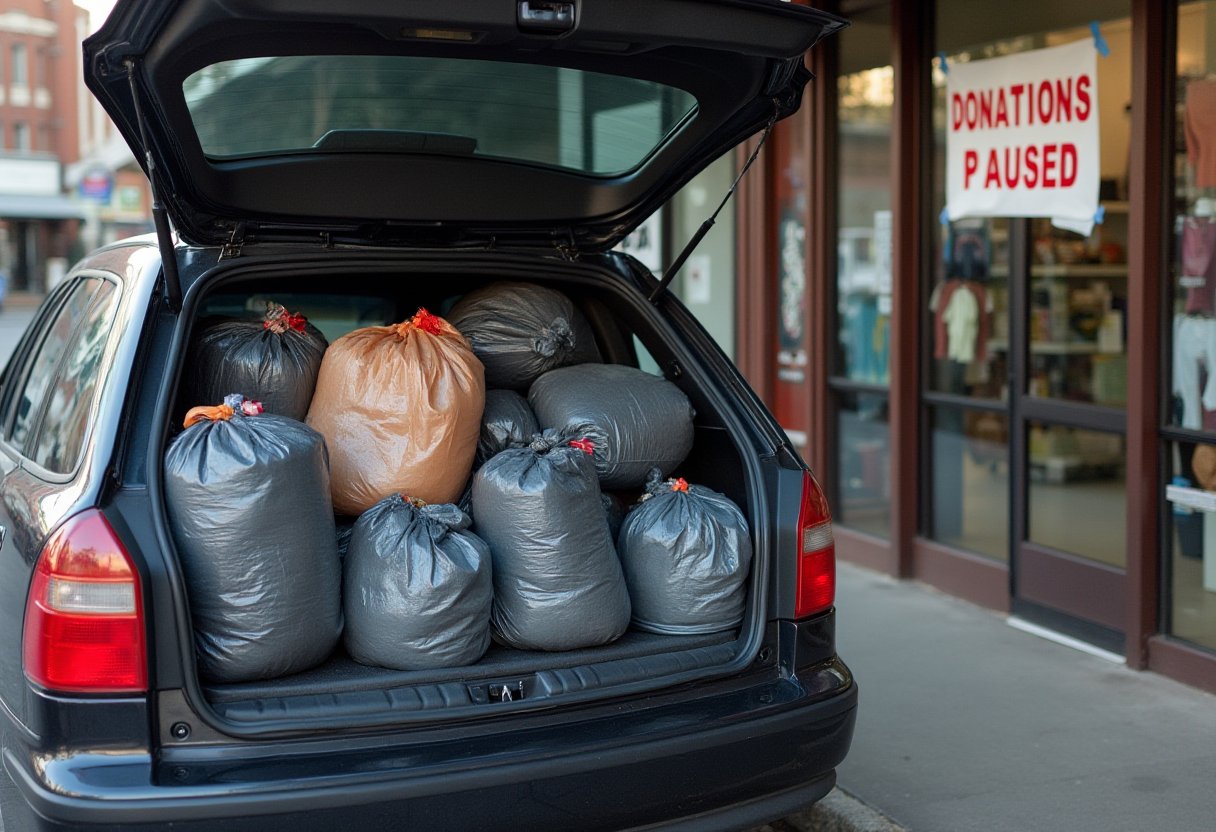
Vinnies or Sacred Heart Mission won’t take everything, and that’s not them being fussy. Op shops run on volunteer hours and shelf space, so anything mouldy, water-stained or falling apart costs them more to sort and bin than it’s worth. Vinnies simply asks for good quality items, the sort of thing you’d be happy to buy yourself. Sacred Heart Mission goes further and publishes a list of what its shops can’t accept, and textbooks are on it, alongside anything dirty, stained, damaged or broken. So those superseded uni texts and the 2014 tax guides were always going to be a no.
Volume is the other half of it. A shelf’s worth is a donation. Fifteen boxes from a house clearance is a day’s work for a volunteer, and most shops will politely decline. It’s the same wall people hit with bulky or awkward items, which is why Melbourne charities won’t move a piano either. None of it is personal. It’s shelf space and labour.
So sort before you drive anywhere. Clean, dry and readable goes in the donation pile. Damp, mouldy or mildew-smelling goes in the rubbish pile, because mould spreads through a box and can cost a shop a whole pallet. Rare, old or locally significant goes in a third pile and doesn’t leave the house until you’ve made a phone call. Getting that split right before you load the car saves you the drive to three shops hoping one says yes.
7 places in Melbourne that will take your books
Once you’ve got a clean, dry pile, there are more options than the shop that just turned you away. These seven cover most of what comes out of a house in the inner-east.
- Sacred Heart Mission op shops. They take books and other media, and they’ve got shops close to home in Windsor on Chapel Street, Hawthorn on Riversdale Road, plus St Kilda, Elsternwick and South Melbourne. If it’s more than you can carry, they run a free collection service for large donations across inner Melbourne on (03) 8658 1698. Just remember the textbook exclusion.
- Brotherhood Books. The Brotherhood of St Laurence resells donated books online through Brotherhood Books, and the way in is to drop good quality books at any BSL op shop. It’s a genuinely good home for general fiction and non-fiction that a single shop couldn’t shelve, because the online store isn’t limited by one shopfront’s worth of space.
- Vinnies shops. Still the widest network, and fine for cookbooks, paperbacks and general non-fiction in good nick. Ring the shop first if you’re bringing more than a couple of boxes.
- A smaller local op shop or book exchange. Independent shops and church op shops are usually less swamped than the big chains, so a box that got knocked back on Chapel Street often gets a yes two suburbs over.
- Kay Craddock Antiquarian Bookseller. If you’ve turned up something genuinely collectable, first editions, fine bindings, Australiana, the Collins Street antiquarian trade is where it belongs rather than a donation bag. Kay Craddock has been in the Assembly Hall at 156 Collins Street since 1990. Email a list or a few photos before you cart anything in.
- Camberwell Sunday Market. If you’d rather sell, the Rotary Club of Balwyn market at the corner of Market Place and Station Street runs every Sunday morning, and the rule is that everything on a stall must be second-hand or handmade. That’s exactly what a shelf clear-out is. Books and records both move there.
- State Library Victoria, for the genuinely significant. Old, rare or historically important material is worth an offer before it goes anywhere else. The Library accepts offers of collection material through an online form, aims to respond within ten working days, and asks that you don’t send or bring anything in until they’ve contacted you. It’s not a drop-off.
Worth adding an eighth for locals: if the material is about Prahran, Windsor, Malvern or Armadale specifically, old photographs, deeds, club records, the Stonnington History Centre invites donations of relevant material from residents and community groups. Discuss it first on history@stonnington.vic.gov.au or (03) 8290 1360. We’ve seen boxes of that sort go out with the hard rubbish, and once it’s gone it’s gone.
Everything that lands in one of those piles keeps weight out of landfill, and it adds up: charitable reuse in Australia diverts more than a million tonnes of waste from landfill a year. Every box that finds a shelf is one less trip for us.
Records: sell before you donate
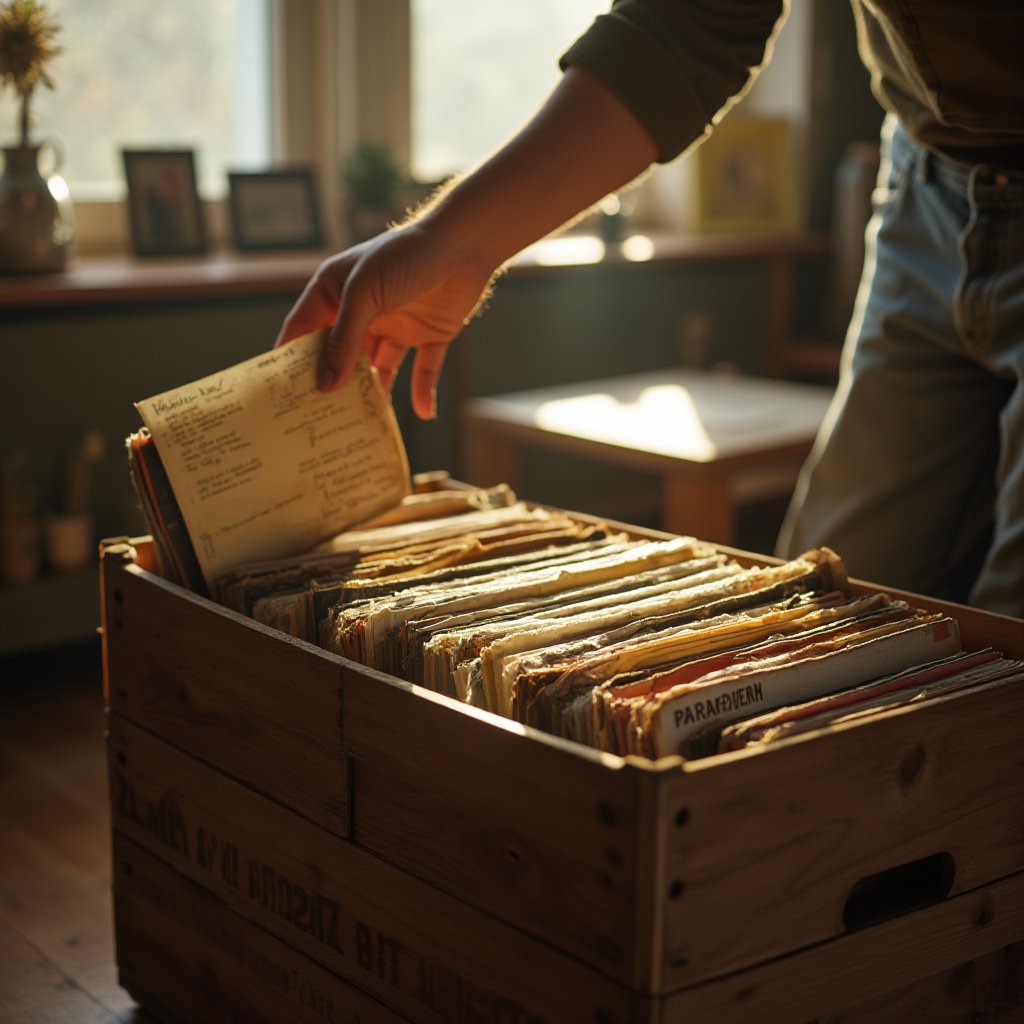
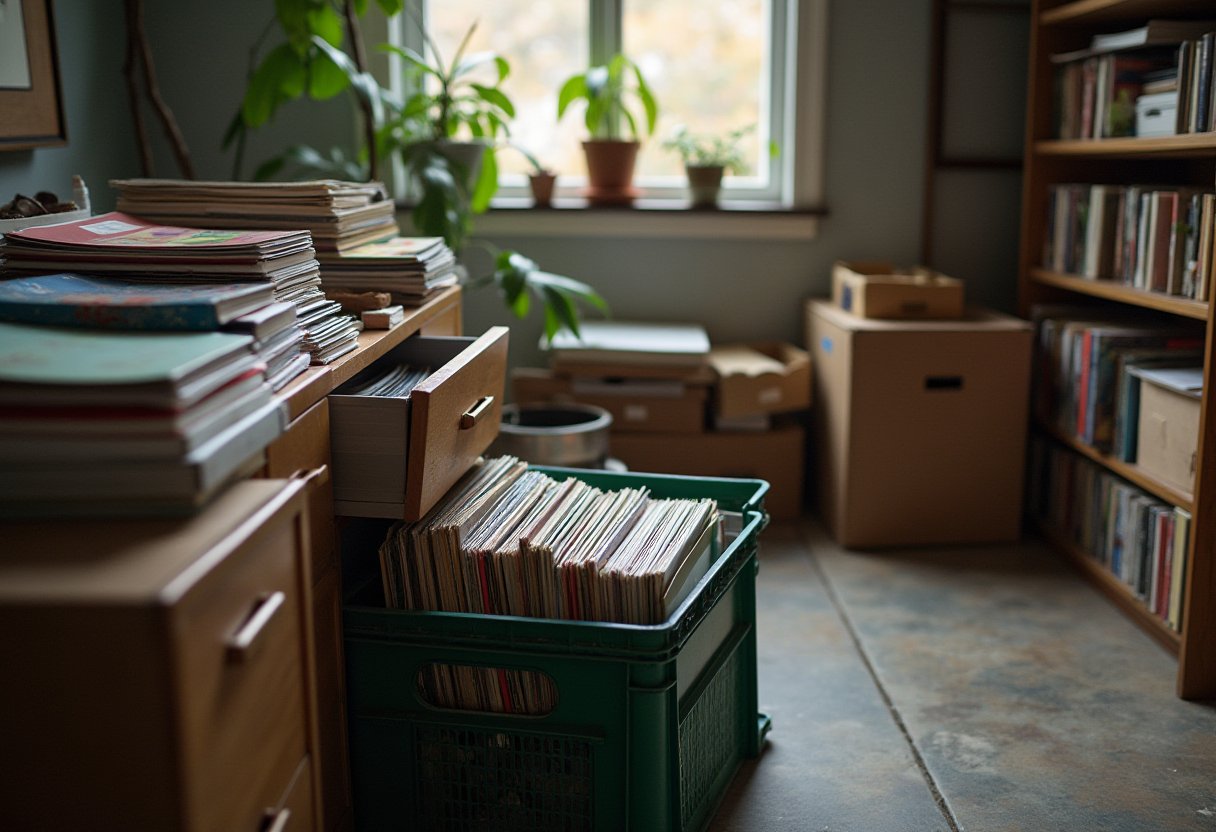
Vinyl is different from books. A crate of records can hold real resale value, and most op shops know it, which means they’re often pickier about what they’ll take. Chipped sleeves, warped discs or anything that’s been sitting in a damp garage usually gets knocked back. If that’s where yours have been, have a look at what else the garage has been quietly ruining while you’re in there.
So sell first. Melbourne has a proper market for this. Greville Records has been at 152 Greville Street in Prahran since 1978 and buys used collections. Northside Records on Gertrude Street in Fitzroy trades in soul, funk, jazz and hip hop. Round and Round on Sydney Road in Brunswick buys and sells secondhand. Licorice Pie, now at Collingwood Yards, buys pre-loved LPs and singles across most genres. Ring ahead with a rough count, the main artists and an honest word on condition, and most will tell you over the phone whether it’s worth the trip.
If you’d rather do it yourself, the Facebook Marketplace and Gumtree crowd for vinyl is active and specific. Jazz, soul, Australiana pressings and original Countdown-era rock all move quickly with the right listing. A Sunday stall at Camberwell will clear a smaller stack in a morning. It’s the same sell-then-donate order that works for forty years of gear in a shed, and it’s the order that leaves you with the smallest pile at the end.
Whatever doesn’t sell, the duplicates, the common pressings, the compilation albums nobody wants, that’s when the op shop makes sense. They’ll take a tidy, dry, unbroken box happily. It’s the water-damaged sleeves and cracked discs that belong in the rubbish pile rather than someone’s donation bin.
The filing cabinet: what to keep and for how long
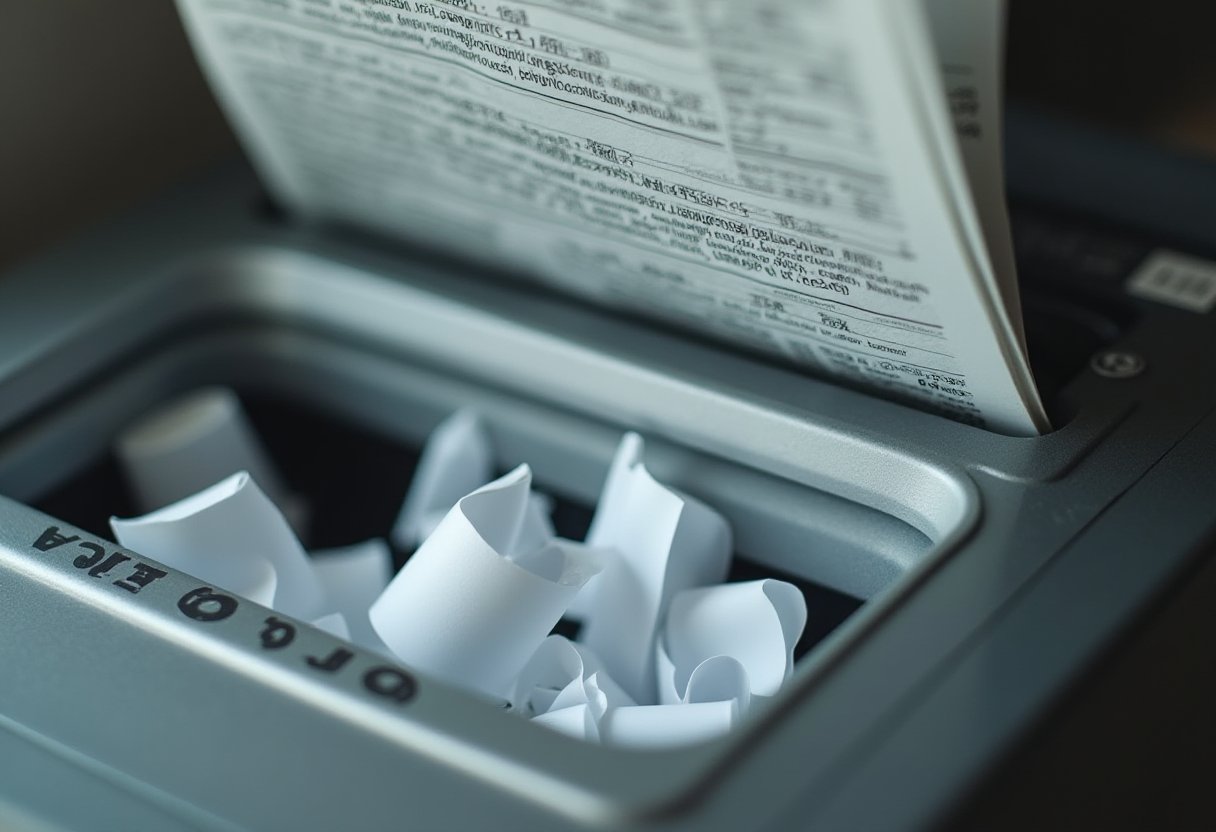
The filing cabinet is the one you can’t sell at the market or drop at the op shop. Old bank statements and payslips aren’t clutter, they’re a security risk sitting in a box, and that changes how you should think about the timing.
Start with what you actually have to keep. If the home office doubled as a small business, section 535 of the Fair Work Act 2009 (Cth) and the Fair Work Regulations 2009 require employee records to be kept for seven years, and the Fair Work Ombudsman sets out what that covers in its record-keeping guidance. Check those dates before anything goes near the bin. For personal papers, the ATO’s general rule is five years for tax returns and the receipts behind them. Property and loan documents are worth holding for as long as you own the asset and a few years after. Insurance policies can go once they’re renewed and the claim period has lapsed. When in doubt, keep it another year rather than guess.
Once something is past its date, don’t just tip it in with the recycling. Australian Privacy Principle 11 requires organisations to destroy or de-identify personal information once it’s no longer needed, and it’s worth holding yourself to the same standard at home. Shred anything carrying a name, account number, tax file number, Medicare number, date of birth or signature. A home shredder handles a shoebox over a weekend. For a whole cabinet, a mobile shredding service or your council’s secure destruction day will get through it far quicker.
What comes out the other side is just paper. Shredded paper goes in the recycling bin loose rather than bagged, and clean office paper, envelopes and manila folders go the same way. If the shredding leaves you with more paper and cardboard than the fortnightly bin will swallow, that’s a load we can take in one go rather than you rationing it out over two months.
What’s left: recycling, hard rubbish and calling in help
Once the good books are donated and the important documents are shredded, what’s left is genuinely rubbish, not a failure to find it a home. A water-stained box of paperbacks, records too scratched to play, a filing cabinet with nothing left in it: none of that needs an op shop’s blessing.
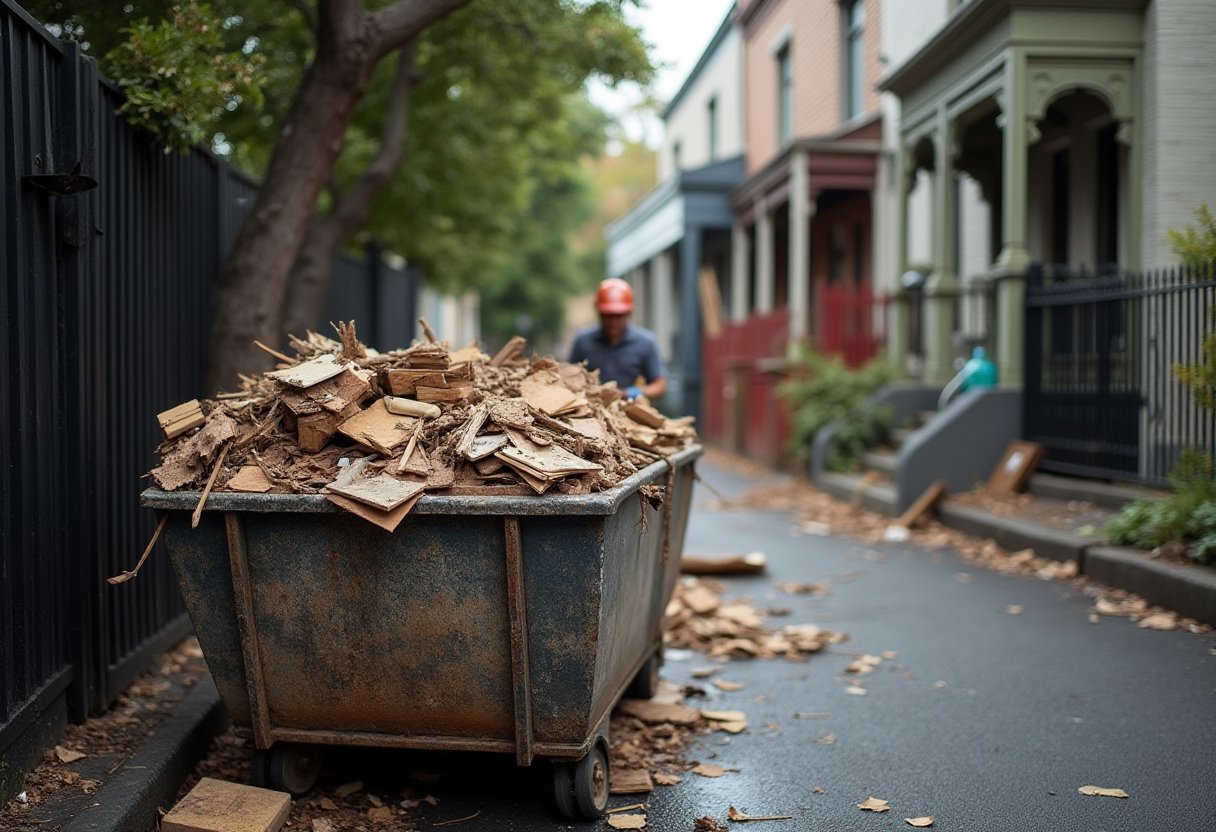
Council hard rubbish will take the empty cabinet and a modest stack of books if you can wait for a booking and don’t mind it sitting on the nature strip beforehand. In Prahran and Windsor that means Stonnington, and it’s worth knowing what the council will and won’t collect before you drag anything out. That works fine if you’re not in a hurry. It works less well for a terrace with no front yard to stage things in, or when the cabinet is one item among a whole house of furniture, old shelving and boxes.
That’s the point where it stops being a sorting job and becomes a removal job. We’ll take the lot in one visit: the cabinet, the crates, the boxes that didn’t make the donation cut, and whatever else the afternoon turned up. Everything that can be recycled goes that way, and the rest is weight off your hands. It’s the same household rubbish removal run whether it’s four boxes or a full shed.
If you’d rather book it in than work around a nature strip schedule, give the team a call on (03) 9820 1927 for a free, no-obligation quote.
Frequently Asked Questions
Shelf space and volunteer hours, mostly. Vinnies, Sacred Heart Mission and the Brotherhood of St Laurence all receive more donated books than they can shelve, so they’re strict on both condition and quantity. Water damage, mould, missing covers or a musty smell are automatic no’s, Sacred Heart Mission won’t take textbooks at all, and turning up with fifteen boxes from a house clearance will get a polite decline almost anywhere. It isn’t personal. If your books are clean, dry and in good nick, a smaller independent op shop or a book exchange is often less swamped than the big chains.
Brotherhood Books resells donated books online, and you get them there by dropping good quality books at any Brotherhood of St Laurence op shop. Sacred Heart Mission takes books and other media at its Windsor, Hawthorn, St Kilda, Elsternwick and South Melbourne shops, and will collect large donations across inner Melbourne on (03) 8658 1698. Collectable titles are better off with an antiquarian dealer like Kay Craddock on Collins Street. Genuinely rare or historically significant material should be offered to State Library Victoria through its online form, or to the Stonnington History Centre if it’s local. For big mixed-condition collections, a hard rubbish booking or a booked removal is the realistic answer.
Records hold value longer than books do, so check before you box them up. Greville Records in Prahran, Northside Records in Fitzroy, Round and Round in Brunswick and Licorice Pie at Collingwood Yards all buy used collections, particularly jazz, soul and original pressings. Ring first with a rough count and a few artist names, and most will tell you over the phone whether it’s worth bringing in. Warped, scratched or water-damaged records aren’t worth reselling, and there’s no need to feel precious about those ones.
Most inner-Melbourne councils will take a filing cabinet as a scheduled hard rubbish item, empty, with the drawers removed or taped shut. Check your own council’s list first, because entitlements and item caps differ a lot between them, and a metal cabinet may count toward a scrap metal limit rather than general hard waste. If it’s the only thing you’re getting rid of, waiting for a collection date is fine. If it’s one item in a bigger clear-out, it’s usually quicker to have the lot taken at once.
Treat it as a security question before a decluttering one. The ATO’s general guidance is five years for tax records, and property, super and insurance documents are worth holding longer again. Employee records for a small business must be kept for seven years under section 535 of the Fair Work Act 2009 (Cth). Bank statements and utility bills can usually go after a year or two once you’ve checked nothing’s outstanding. Anything with a tax file number, Medicare number or account details needs to be shredded rather than binned, and some libraries and Officeworks stores run shredding services if you don’t own a shredder. Shredded paper still goes in the recycling bin, loose rather than bagged, along with anything else on your council’s recyclable list.