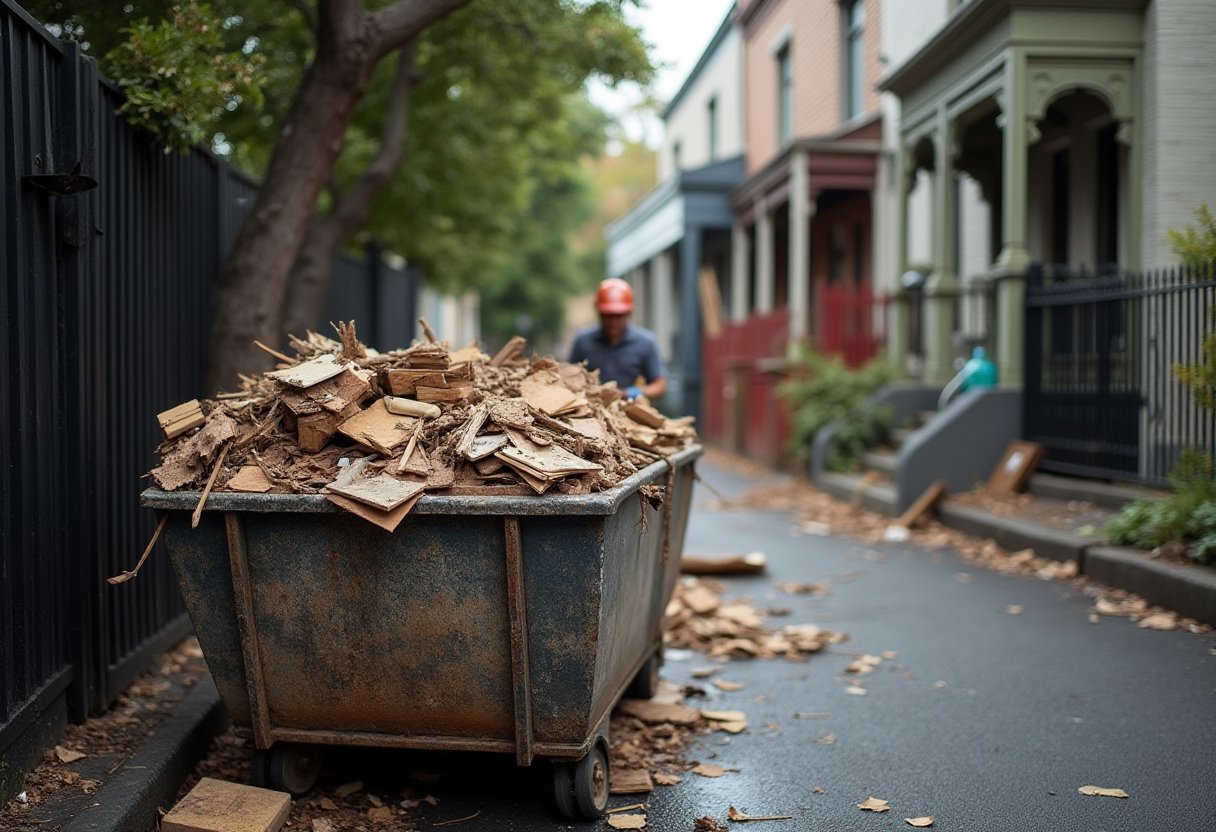

A garage cleanout sounds like a weekend you’ll never get back, especially when that pile in the corner has been growing since the last renovation. Here’s the bit most guides skip: deciding what stays and what goes takes about 30 minutes, if you commit to one rule and don’t wander back in for a second look. Getting rid of it properly is the slower half: the tip run, the council booking, the paint tins you can’t just chuck in with everything else. Know which job you’re actually doing before you touch a single box.
The 30-minute sorting method
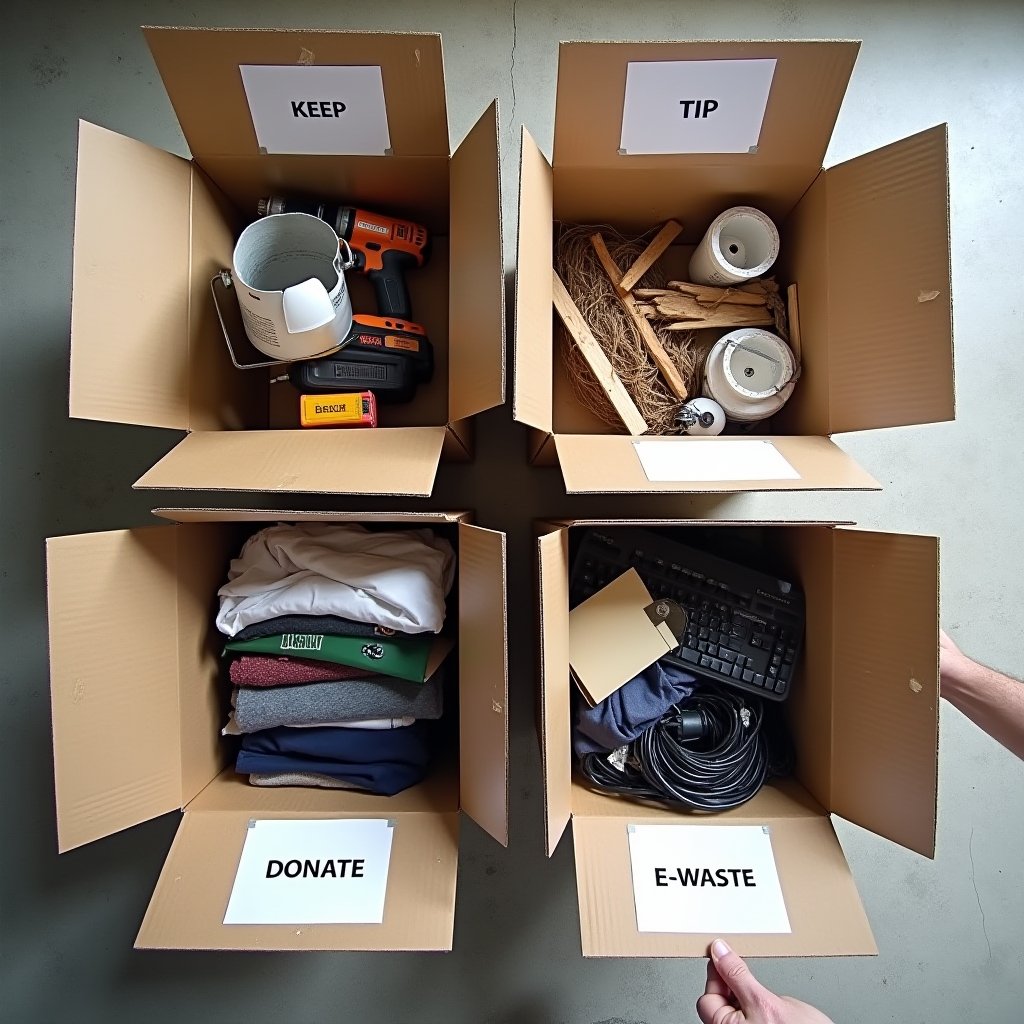
Set a timer. Walk the pile once, and only once, sorting into four piles: keep, donate, tip, e-waste. Don’t stop to decide if the exercise bike is worth fixing. If you’re holding it and asking “maybe?”, it goes to tip. That’s the whole rule, and it’s the only thing that keeps a garage cleanout to 30 minutes instead of a whole Saturday.
The e-waste pile matters more than people think. Old power tools, dead extension cords, anything with a battery or a cord needs to go somewhere other than general rubbish, so keep it separate from the start rather than fishing it back out later.
Don’t open boxes you haven’t opened in five years. If you can’t remember what’s in it, you already know the answer: tip. The sorting only stays fast if you trust the first instinct and keep moving, room by room, without doubling back.
What your council will and won’t take
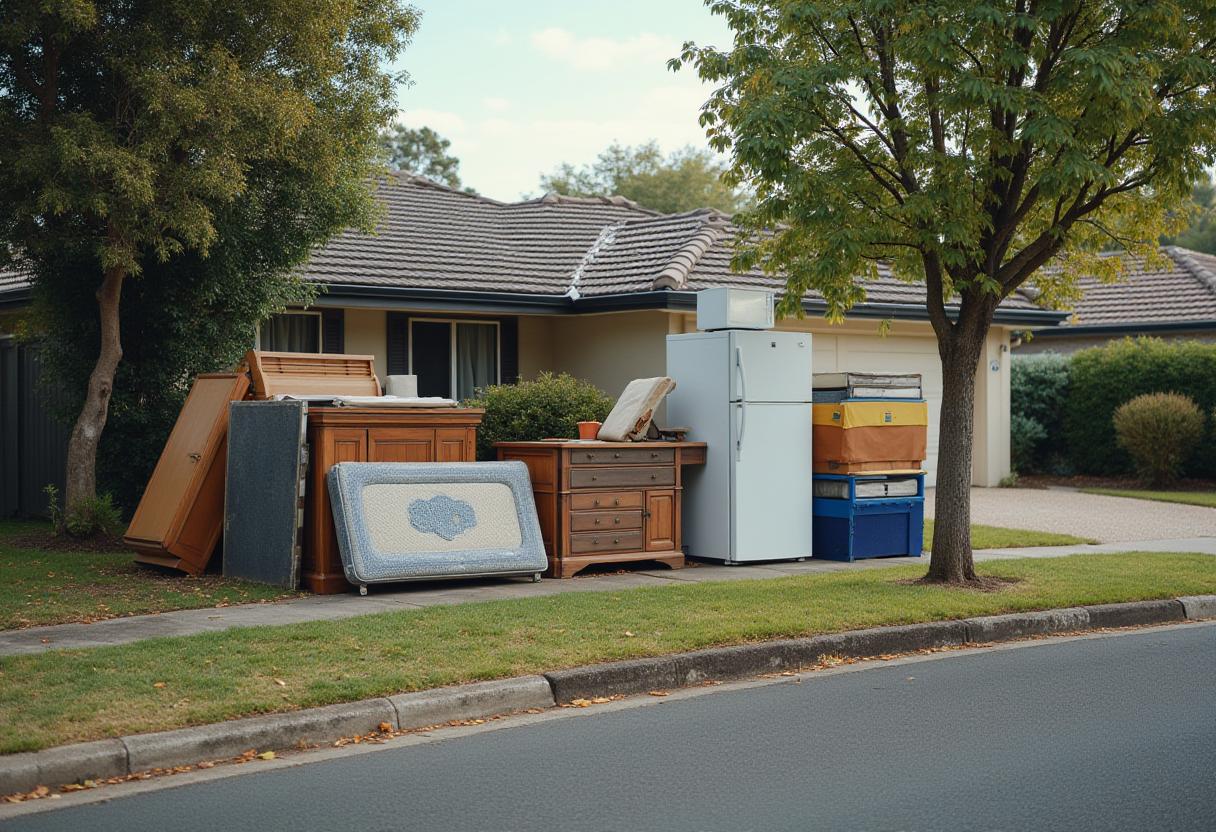
Every inner-Melbourne council runs a hard waste collection with its own rules, and this is where a lot of garage cleanouts come unstuck. Most will take furniture, mattresses and general household bulk, but they draw a hard line at anything with a plug, a battery or gas in it: TVs, fridges, air conditioners, old power tools. That’s e-waste, and it needs a separate drop-off, not the kerb.
Paint tins, car batteries, gas bottles and asbestos sheeting are usually refused outright, booking or no booking. Tyres often get knocked back too. And you can’t just put it out whenever you like: most councils want you to book ahead, sometimes weeks out, and only collect on set days.
If your garage cleanout has turned up anything from that refused list, don’t let it sit on the nature strip hoping for the best. A council fine for the wrong pile is an easy way to turn a tidy weekend into an expensive one.
E-waste and hazardous items

This is where most garage cleanouts trip up. Old TVs, monitors, printers and that drawer of dead phone chargers all count as e-waste, and Victoria has banned them from landfill since 2019, so they can’t go in your general rubbish or hard-rubbish pile at all. The good news is e-waste has its own recycling stream at council transfer stations, usually for a small fee or free depending on the item.
Paint tins, car batteries, gas bottles and old chemicals need separate handling too. Half-full paint is the classic one: let it dry out with the lid off if it’s genuinely empty, otherwise it needs a dedicated drop-off, not the bin. Boroondara, Stonnington and most inner-south councils list accepted hazardous items on their transfer station pages, so it’s worth a quick check before you load the car.
When it’s worth calling in help
Some garage cleanouts are a straightforward trip to the transfer station. Others aren’t, and it’s worth being honest about which one you’ve got. It matters more than it used to, because Melbourne tip fees keep climbing, so every extra run to the transfer station adds to the bill. If the pile includes furniture, appliances and enough general rubbish that your car would need three trips, or if you simply don’t have a free weekend before the next council hard waste collection slot comes around, that’s when a garage cleanout team is worth the call. It’s not admitting defeat, it’s recognising your time has a value too, and the 30 minutes you spent sorting was the hard part anyway.
Sort first, decide second
Sort first, decide second. Give yourself 30 minutes, one rule, no backtracking, and you’ll have a clear pile before you’ve talked yourself out of it. What happens next depends on what’s in that pile: council hard rubbish if it qualifies, a proper e-waste drop-off for anything with a plug or battery, or a booked-ahead garage cleanout with a team who’ll sort the rest so you don’t have to.
Frequently Asked Questions
Sorting is the quick bit. If you commit to a rule and work in short bursts, you can get through a genuinely packed garage in about 30 minutes, because you’re not doing 30 minutes of deep cleaning, you’re doing 30 minutes of decisions. The part that takes longer is disposal: booking a council hard rubbish collection, arranging a skip bin, or getting someone in to take it away. That side depends on council calendars and what’s actually in the pile, not on how fast you can sort. Plan for the sort to be quick and the exit to take a few days, and you won’t feel like you’ve failed when the garage isn’t empty by dinner.
Pick one rule before you start and don’t renegotiate it item by item. A good one: if you haven’t touched it in two years and it’s not sentimental or seasonal, it goes. Work in one direction, left to right or top to bottom, and don’t backtrack to reconsider something you’ve already sorted. Second-guessing is what turns 30 minutes into a weekend. Put things into three piles only: keep, donate, dispose. Anything you’re stuck on goes in a fourth “decide later” box so it doesn’t stall the whole job, and you deal with that box separately once the rest is sorted.
Most inner-east and inner-south councils, including Stonnington, Boroondara and Glen Eira, run booked hard rubbish collections rather than a free-for-all kerbside day, and each has limits on volume and what’s accepted. E-waste like old power tools, TVs and computer monitors is usually banned from hard rubbish altogether and needs to go to a separate drop-off point or collection. Booking out ahead matters here: popular collection windows fill up weeks in advance, especially around Melbourne’s renovation season. Check your council’s website before you put anything on the nature strip, because putting the wrong items out can mean a fine rather than a collection.
Paint tins, old fuel or oil, gas bottles, car batteries and asbestos sheeting are the usual culprits that get a load rejected or a fine issued. Paint needs to be fully dried out or taken to a Detox your Home drop-off; fuel and batteries go to a transfer station or specialist recycler. If you’re not sure what’s hiding at the back of your garage, it’s worth a quick check before you fill anything, because one wrong item can mean the whole load gets knocked back at the tip.
Yes, and this is the step most guides skip over. Skip bin providers and removalists in the inner suburbs book out quickly, particularly on weekends, so once you’ve sorted your piles, get something booked rather than waiting until the garage is empty. If you’d rather skip the logistics altogether, give the team at It’s Done Rubbish Removal a call on (03) 9820 1927. We’ll come and quote it for free, and take care of the sorting-to-tip part while you focus on the 30-minute decision.