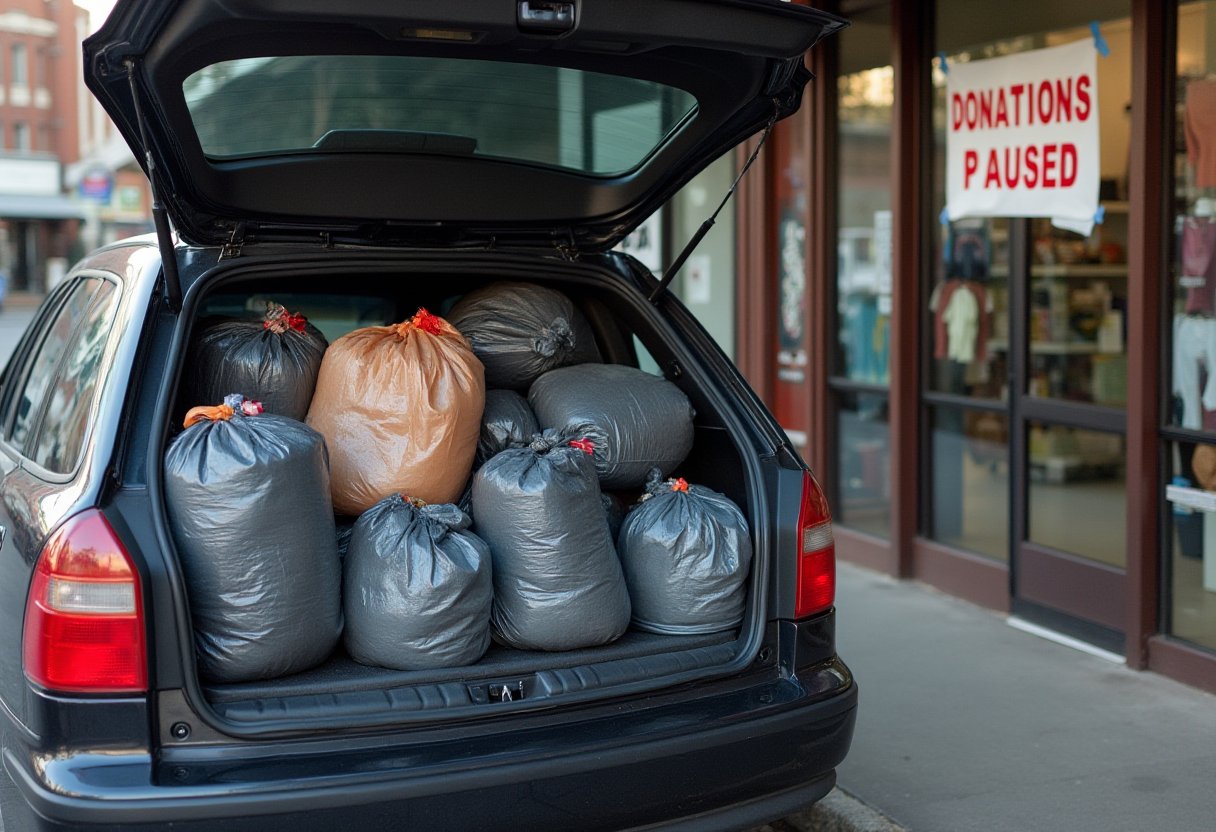
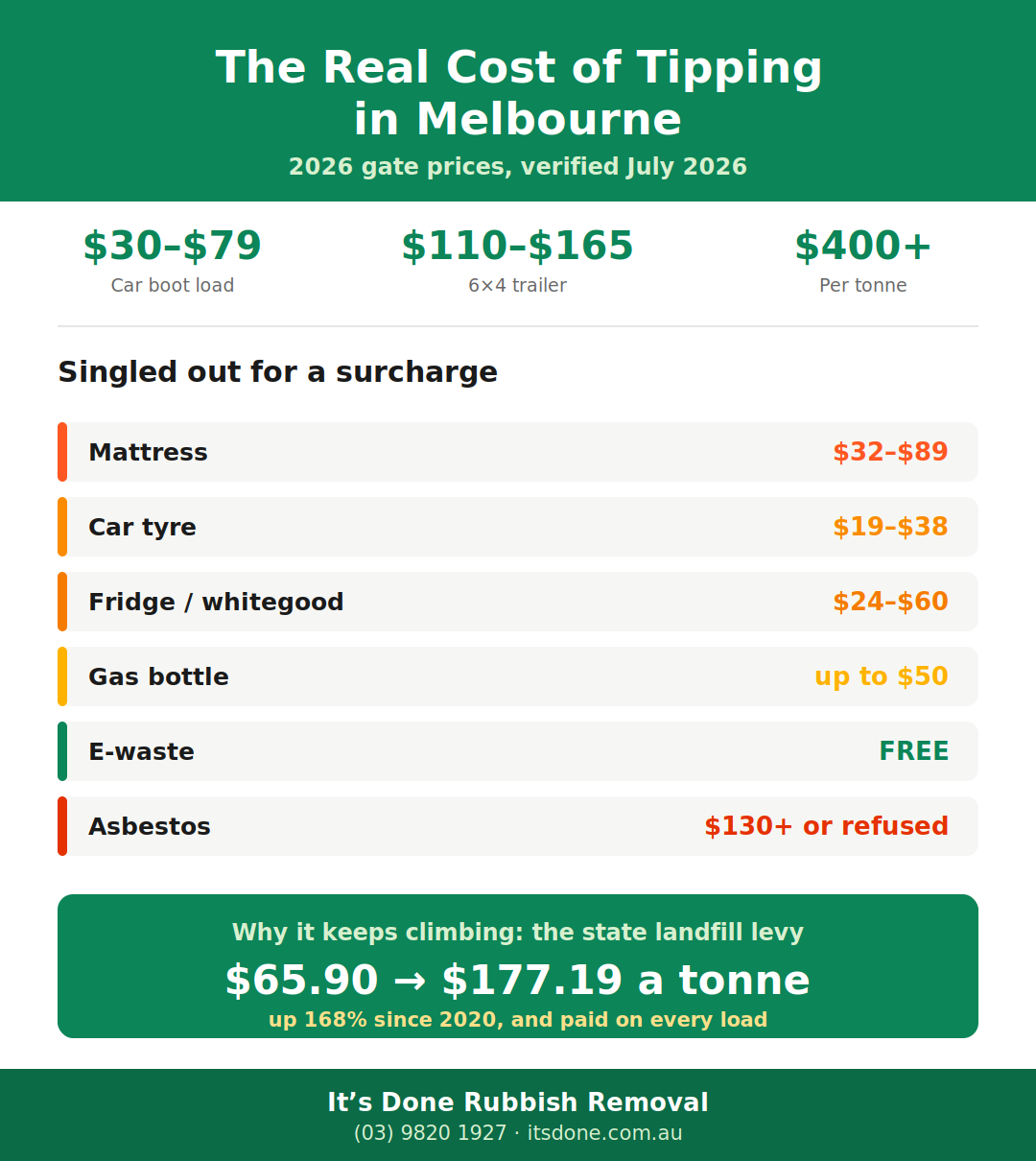
Load up the trailer, drive to your nearest transfer station, and you will pay more this year than you did last year. A car boot of general waste that cost around $67 at one Melbourne tip in 2025 now runs $74. A mattress that was $35 to drop off is $38.50. None of this is an accident, and none of it is stopping.
This guide lays out what a trip to the tip actually costs across Melbourne in 2026, which items get singled out for extra charges, and the one reason prices climb every single year no matter which suburb you live in. Every price below is tied to a named facility and the date we checked it, because tip fees change often and vary wildly from one council to the next.
What a trip to the tip costs in 2026
Here is the first thing nobody tells you: you cannot easily compare tips by the cubic metre. Most Melbourne transfer stations price general waste by load size, not volume. You pay by the car boot, the station wagon, the trailer, or once your load gets big or heavy, by the tonne across a weighbridge. Two tips can both look “reasonable” and charge you completely different amounts for the same trailer.
Here is what general or mixed waste costs across a spread of Melbourne facilities, all verified in July 2026:
| Facility | Suburb | Car boot | 6×4 trailer | Per tonne | Verified |
|---|---|---|---|---|---|
| Knox Transfer Station | Wantirna South | $74 | $154 / $230.50 | $406.50 | Jul 2026 |
| YRRS Coldstream | Coldstream | $74 | $165 / $247 | $428.50 | Jul 2026 |
| Whitehorse R&W Centre | Vermont South | $62 | weighed | $407 (min $125) | Jul 2026 |
| Darebin RRC | Reservoir | $59.50 | priced by m³ | $267.50 | Jul 2026 |
| Hume RRC (resident) | Sunbury / Campbellfield | $34 | $110 | $169/m³ | Jul 2026 |
| Wyndham RDF | Werribee | $30 | $154 | $334 (commercial) | Jul 2026 |
| Cleanaway Clayton South | Clayton South | $79 +$1.58 | $155 to 300kg | $455 +levy | Jul 2026 |
| Cleanaway Brooklyn | Brooklyn | $75 | $130 to 300kg | $429 | Jun 2025 |
A few things jump out. Council-run sites like Hume and Wyndham are the cheapest for a small load, but they often charge non-residents more and some ask to see your licence. Private operators like Cleanaway are pricier at the gate and tack a fuel levy on top of every visit. And the per-tonne rate is where a heavy load hurts: a single tonne of general waste is over $400 at most private sites before you have paid for the trailer, the fuel, or your Saturday.
The materials that get singled out
The gate price is only the start. Melbourne tips have become far pickier about what they will take and what earns a surcharge. Turn up with the wrong item and it gets pulled out of your load and priced separately.
Mattresses
Expect a flat fee per mattress, and expect it to sting. Frankston charges $32, Knox $38.50, Whitehorse $40, and Future Recycling in Cheltenham a hefty $89 (all as at July 2026). One myth worth killing: most tips charge the same whether it is a single or a queen. The size-based pricing people expect only shows up at a couple of sites, like Nillumbik ($45 single, $62 queen) and Veolia’s Hampton Park. For the full breakdown of why mattresses cost so much to dispose of, we wrote a separate guide on mattress disposal.
Tyres
The catch here is the rim. A car tyre off the rim is $19 at Knox and $27.50 at YRRS Coldstream, but leave the rim on and you add anywhere from $3 to $22 per tyre. Bring a truck tyre and you can pay $60 or more each, if the site takes them at all.
Fridges and whitegoods
Anything with gas in it needs degassing, so fridges and air conditioners carry a $24 to $60 fee depending on the site (Knox $24, Darebin $36, Nillumbik $60 as at July 2026). Commercial quantities cost more again.
Gas bottles
A 9kg BBQ bottle is free at Boroondara and Frankston, but $22 at Knox and up to $50 at Future Recycling.
E-waste
Anything with a plug, battery, or cord has been banned from Victorian landfill since 1 July 2019, so you cannot put it in a bin or a general load. The good news: dropping it at the tip is free at nearly every site, funded through a national recycling scheme. Knox, Hume, Wyndham, Frankston, and YRRS all take it at no charge. If you are clearing out old TVs, laptops, or phones, we walk through how to drop off e-waste free in Melbourne in five steps. And if you are not sure what belongs in which stream, our guide to what can and cannot be recycled sorts it out.
Asbestos
Most transfer stations flatly refuse it. The handful that accept it, like Wollert Landfill, charge from $130 for a small household load, and Future Recycling asks $275 a bag. A word of caution here: It’s Done does not handle asbestos or hazardous material either, because the law requires a licensed asbestos removalist, so a specialist is your only safe option for that job.
Sort your load before you go
Then there is the penalty that catches people out most: mixing your load. At Frankston, clean separated concrete and brick is $140 per cubic metre, but the moment you mix soil, brick, and concrete together it jumps to $267 per cubic metre. Sorting your load before you arrive can literally halve the bill.
Green waste, by contrast, is the one thing that gets cheaper. Garden organics run two to three times less than general waste at the same site. Frankston charges $162 per cubic metre for hard waste but $48 for green. If you can separate the branches from the couch, do it.
Why it goes up every single year
Now the part no other guide connects for you. The reason your tip fees rise every year sits in a single number set by the state government: the landfill levy.
The landfill levy
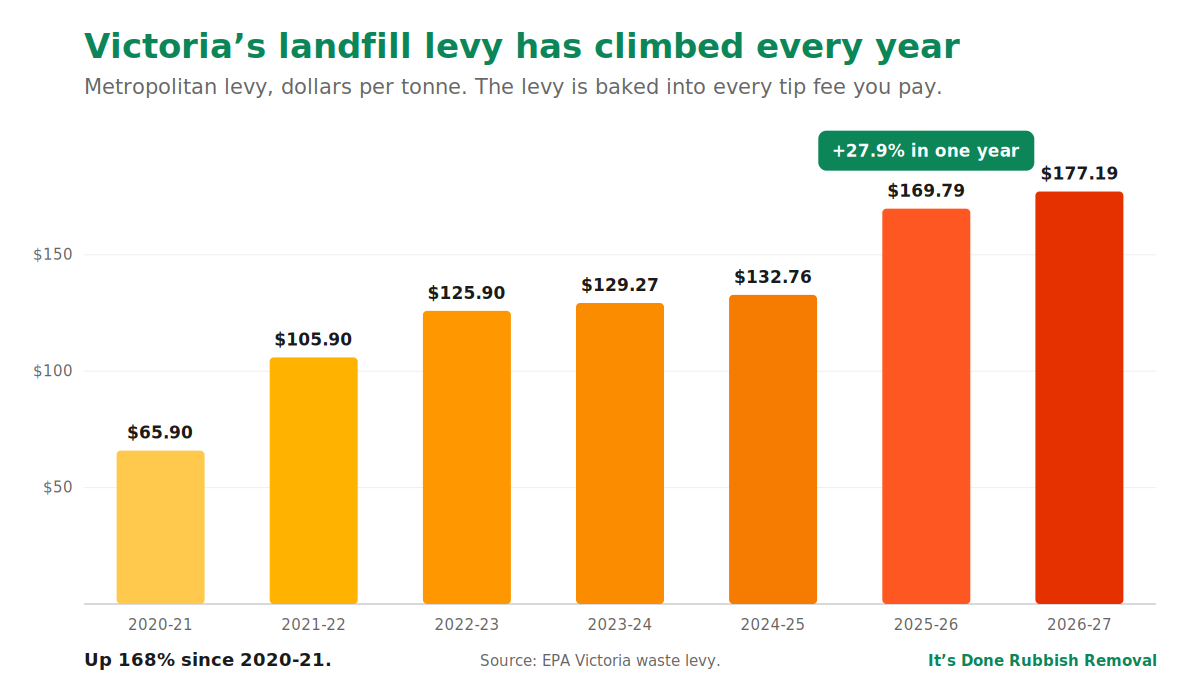
Every landfill operator in Victoria pays the government a levy on every tonne of waste they bury. It is a direct cost of doing business, so it flows straight through into the gate fee you pay. When the levy goes up, so does the price of your car boot load, your skip bin, and your rubbish removal quote.
Here is how the metropolitan levy has moved, per tonne, straight from EPA Victoria:
| Financial year | Levy per tonne | Change |
|---|---|---|
| 2020-21 | $65.90 | n/a |
| 2021-22 | $105.90 | +60.7% |
| 2022-23 | $125.90 | +18.9% |
| 2023-24 | $129.27 | +2.7% |
| 2024-25 | $132.76 | +2.7% |
| 2025-26 | $169.79 | +27.9% |
| 2026-27 | $177.19 | +4.4% |
That is a 168 percent rise in six years. The big one landed on 1 July 2025, when the levy jumped from $132.76 to $169.79 a tonne in a single step, a deliberate move by the state to bring Victoria’s rate into line with New South Wales and South Australia. Operators passed almost all of it straight to the gate. That is the honest answer to “why has the tip gotten so expensive,” and it is only part of the story.
The other cost drivers
The levy is not the only thing pushing prices up. Melbourne’s south-east landfills are running out of airspace, which means waste travels further to be buried and costs more to haul. The 2019 collapse of recycler SKM and the earlier China recycling import bans permanently raised the cost of processing what used to be cheap to send offshore. Tighter environmental rules under Victoria’s Environment Protection Act, in force since July 2021, added compliance costs for every operator. And the rollout of the four-bin system and food-and-garden waste collection has to be funded somewhere. All of it lands in the same place: the fee you pay to get rid of your rubbish.
Rising fuel prices
Fuel is quietly wrapped up in every one of those costs. Waste trucks run on diesel, and diesel has climbed hard this decade.
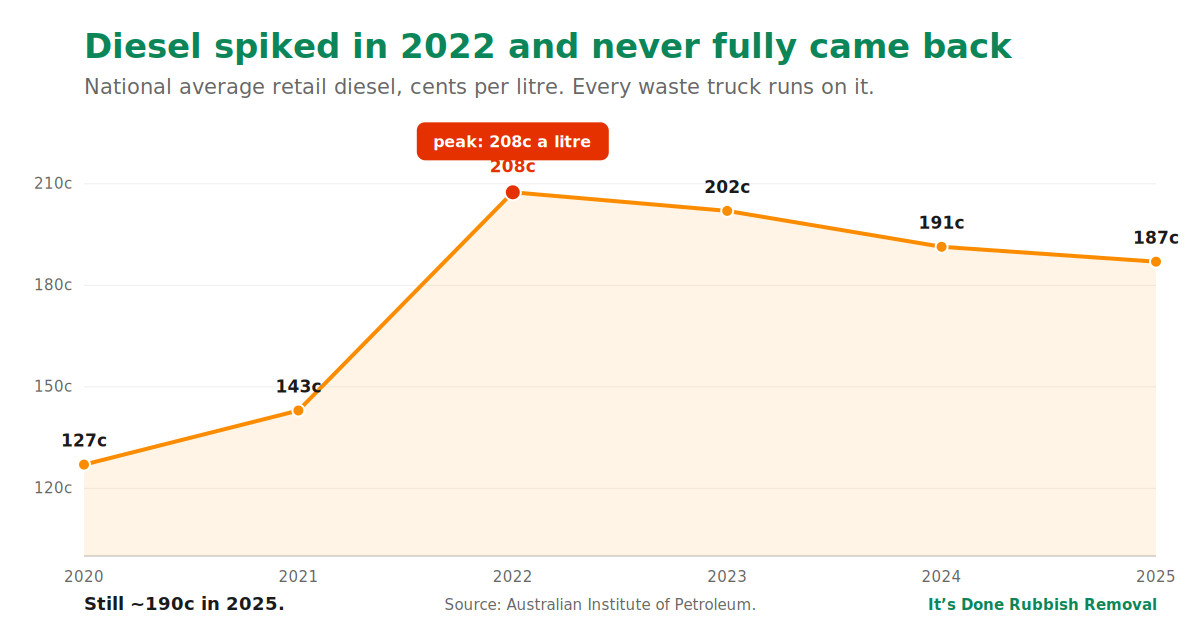
The national average went from roughly 127 cents a litre in 2020 to a peak above 207 cents in 2022, and it still sits near 190 cents in 2025. Every tonne now travels further to a shrinking number of landfills, on more expensive fuel, and that haulage cost is baked straight into the gate fee. Some private tips make it visible: Cleanaway adds a fuel levy of around $1.58 to every visit at its Clayton South site, so you can literally watch petrol prices land as a separate line on your tip receipt.
Households versus businesses
The levy hits everyone, but businesses feel it harder, and for reasons that go beyond volume.
What households pay
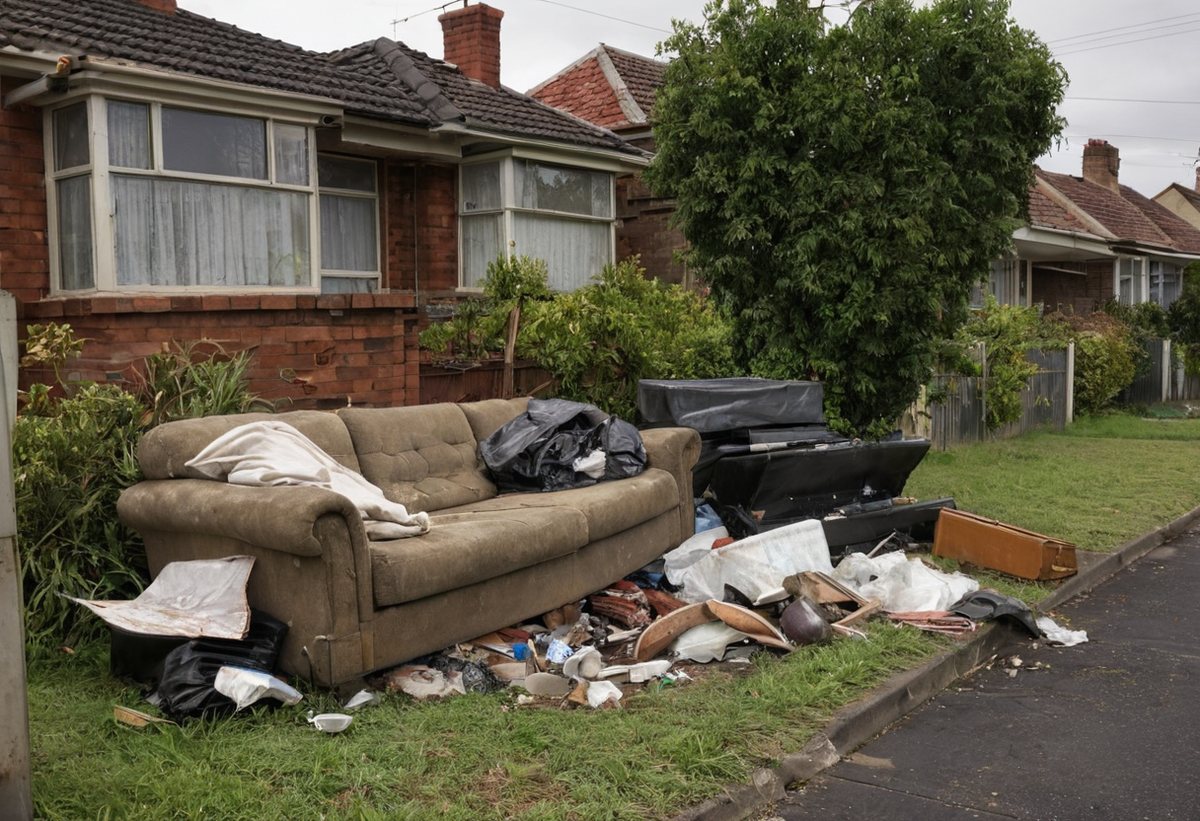
If you are a household, your council softens the blow. Part of the levy is absorbed into your rates, most councils give you at least one free hard-waste collection a year, and government grants cover some of the new recycling infrastructure. How much you get varies by council, so it pays to check what yours offers: we have covered Stonnington’s hard-rubbish rules, the single Boroondara collection Kew residents get in 2026, and the two free collections Yarra offers in Richmond. You also get resident pricing at council tips, which can be a third cheaper than what a non-resident pays. Hume charges residents $34 for a car boot and non-residents $41 for the same load.
What businesses pay
Businesses get none of that buffer. Commercial operators pay the full commercial gate fee on every load, and it is steep. Cleanaway’s Dandenong site takes commercial waste only and charges $626.67 a tonne for putrescible waste as at 2026. Anyone handling contaminated soil or hazardous material pays a “priority waste” levy that runs to $288.29 a tonne, nearly double the standard rate. For a builder, a real estate agent clearing a property, or a tradie running regular loads, every levy increase lands in full, every time.
A few practical traps for businesses at council sites: many transfer stations refuse commercial vehicles entirely, some cap vehicle size (Boroondara turns away anything over two tonnes GVM), and residency-based sites will not serve an out-of-area ABN at all.
The costs people forget to count
The gate fee is not the whole cost of a tip run. Add the trailer hire if you do not own one, the petrol to haul a loaded car or trailer to a tip that keeps moving further out, and the two or three hours of your day it swallows. If your load is heavy, watch the minimum charge: many sites round up to a minimum tonne, so a half-tonne load can cost the same as a full one.
Tip, skip bin, or removalist?
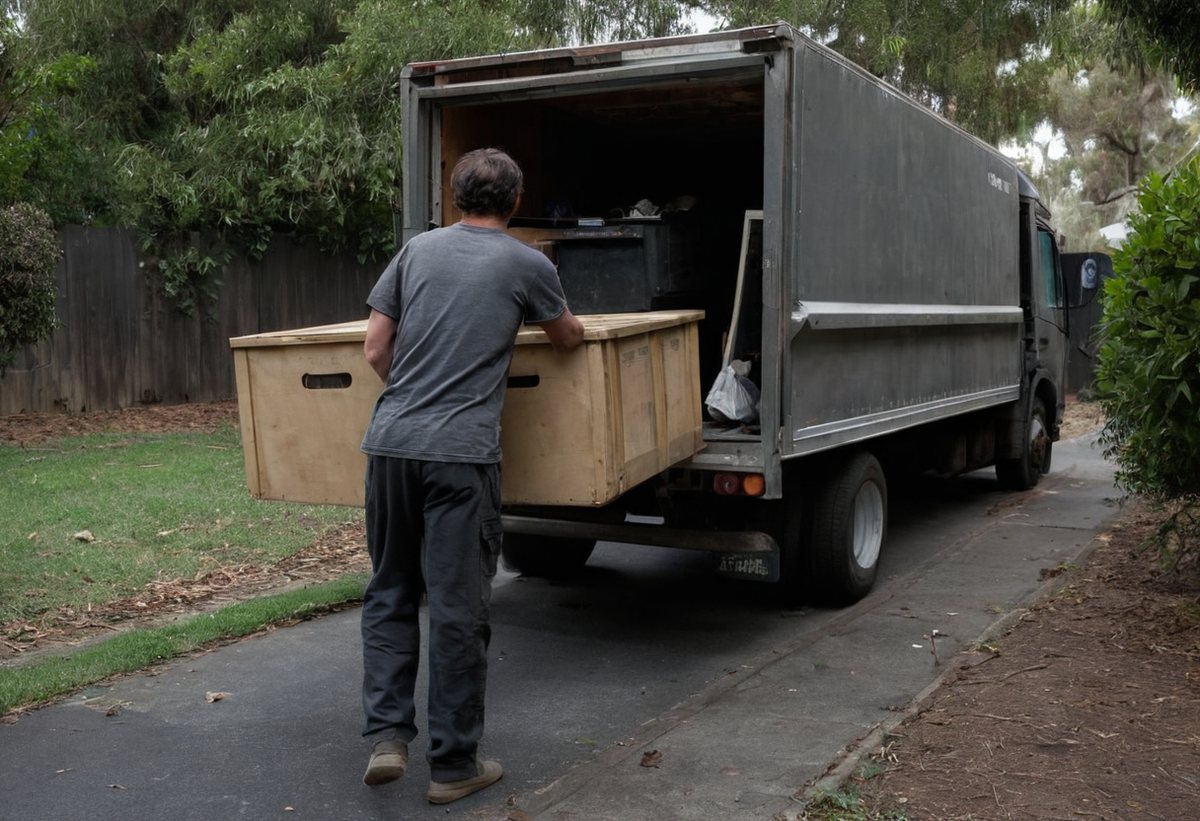
This is where the tip stops being the cheap option. Once your load is heavy, the per-tonne rate, the trailer hire, the fuel, and the repeat trips stack up fast, and a single two-tonne load can run past $600 plus GST at the gate before you have counted your own time. A skip bin gets you out of the weighbridge queue, but the work is still all yours: you lift every item into it by hand, you sort it, and it sits on your nature strip for a week while you fill it. A rubbish removalist is the only option that actually takes the job off your hands, crew and truck included, sorted and gone in one visit and priced as a single job. We lay out how a rubbish removal service compares to skip-bin hire if you want the full picture.
So the real question is not just “what does the tip charge,” but “what does this actually cost me once I count the trips, the trailer, and a full day of my own labour.” For a single boot of clean green waste, the tip wins. For a garage full of mixed junk, an old fridge, and a mattress, having someone haul it away in one visit usually beats both the tip and the skip.
Where It’s Done fits
We built It’s Done for exactly the load that makes a tip run miserable: the mixed pile with the fridge, the mattress, the broken furniture, and the box of e-waste that the tip would pull apart and surcharge item by item. You do not sort it, you do not hire a trailer, you do not queue at the weighbridge, and you do not get hit with a separate fee for every awkward item. Our crew does the lifting, we sort it for you, and you pay one price to have the whole lot gone in a single visit.
For a small, clean, single load, the tip is still the cheap option, and this guide should help you find the best-priced one near you. For everything else, get a free quote from It’s Done or call the team on (03) 9820 1927, and skip the whole ordeal.
Frequently Asked Questions
A car boot of general waste ranges from about $30 at council sites like Wyndham to $79 at private operators like Cleanaway Clayton South, as at July 2026. A 6×4 trailer load runs roughly $110 to $165, and once you are weighed by the tonne you are looking at $400 or more. Council-run tips are cheaper but often charge non-residents more.
The main driver is the Victorian landfill levy, a per-tonne charge the state government sets that every tip pays and passes on to you. It rose from $65.90 a tonne in 2020-21 to $169.79 in 2025-26, a jump of more than 150 percent, with the biggest single increase landing in July 2025. Landfill closures, higher recycling costs, rising diesel prices, and tighter environmental rules add to it.
Most tips charge a flat $32 to $89 per mattress regardless of size, and many councils include mattresses in a free annual hard-waste collection, which is usually the cheapest route. We cover the full picture in our mattress disposal guide.
Sometimes, but not always. Many council tips refuse commercial vehicles, cap vehicle size, or restrict entry to local residents. Businesses usually pay a higher commercial gate fee or a per-tonne weighbridge rate, and priority waste like contaminated soil attracts a levy of nearly $290 a tonne.
For a single small, clean load, the tip is cheapest. For a big or mixed load the honest comparison is not just the gate price but the effort: a skip bin still means you load it, sort it, and store it on the nature strip for days, while a removalist takes the lot away in one visit. Once you count the per-tonne tip rate, trailer hire, fuel, repeat trips, and a day of your own time, having it hauled away usually comes out ahead for anything more than a boot-load.
E-waste, meaning anything with a plug, battery, or cord, has been banned from Victorian landfill since 2019 and is free to drop at nearly every Melbourne tip. Tyres are not free: expect $19 to $38 per car tyre, with an extra charge if the rim is still on.
Closing
All prices in this guide are indicative, verified in July 2026 from council and operator fee pages. Tip fees change frequently and vary by site and load, so confirm the current price with your chosen facility before you go, and if the job is bigger than a boot-load, It’s Done can take the lot off your hands in one visit.