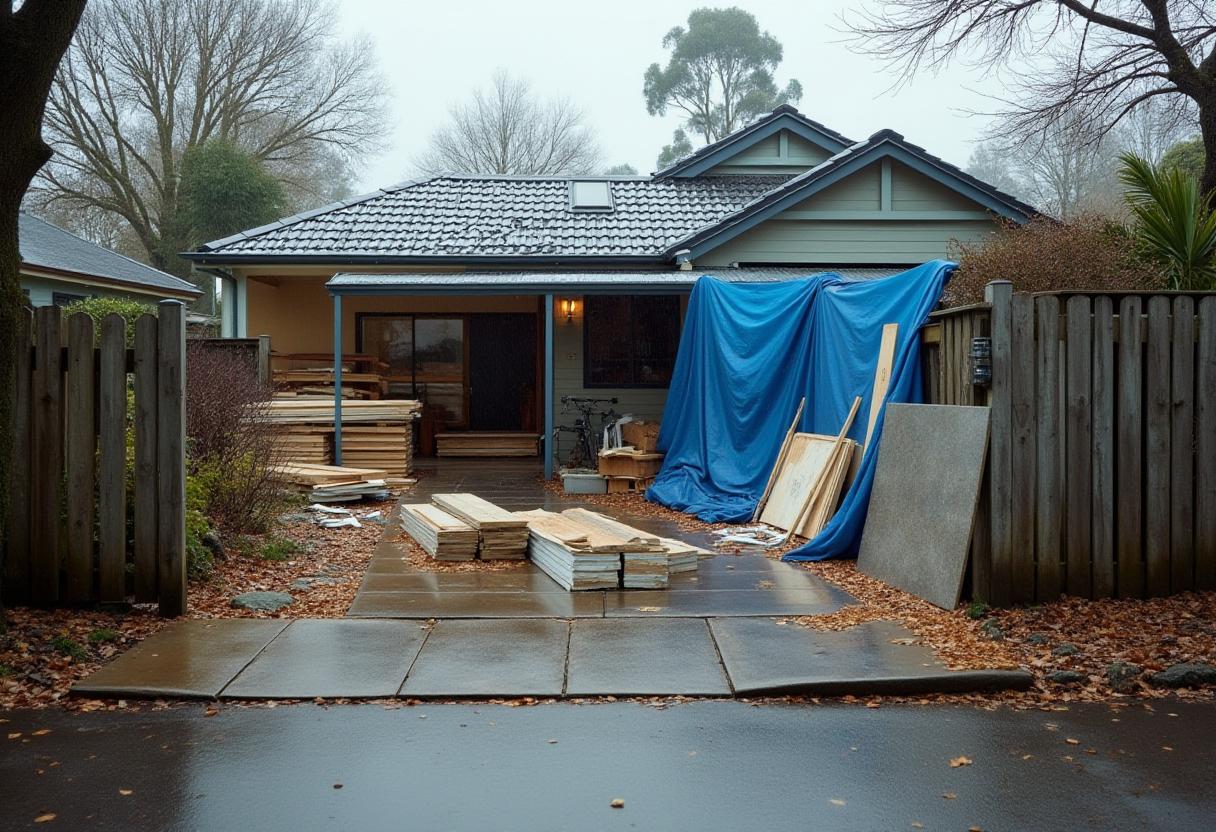
If your renovation’s stalled and there’s a pile of it sitting in the driveway, you already know renovation waste storage isn’t as simple as chucking a tarp over it until the tradies come back. Melbourne winter doesn’t do covered materials any favours, plaster sheets swell, timber warps, and anything left in a driveway in Toorak or Hawthorn for long enough is fair game to whoever walks past after dark. If a building permit’s involved, there’s a clock running too, whether the job’s paused or not.
Decide what stays and what goes
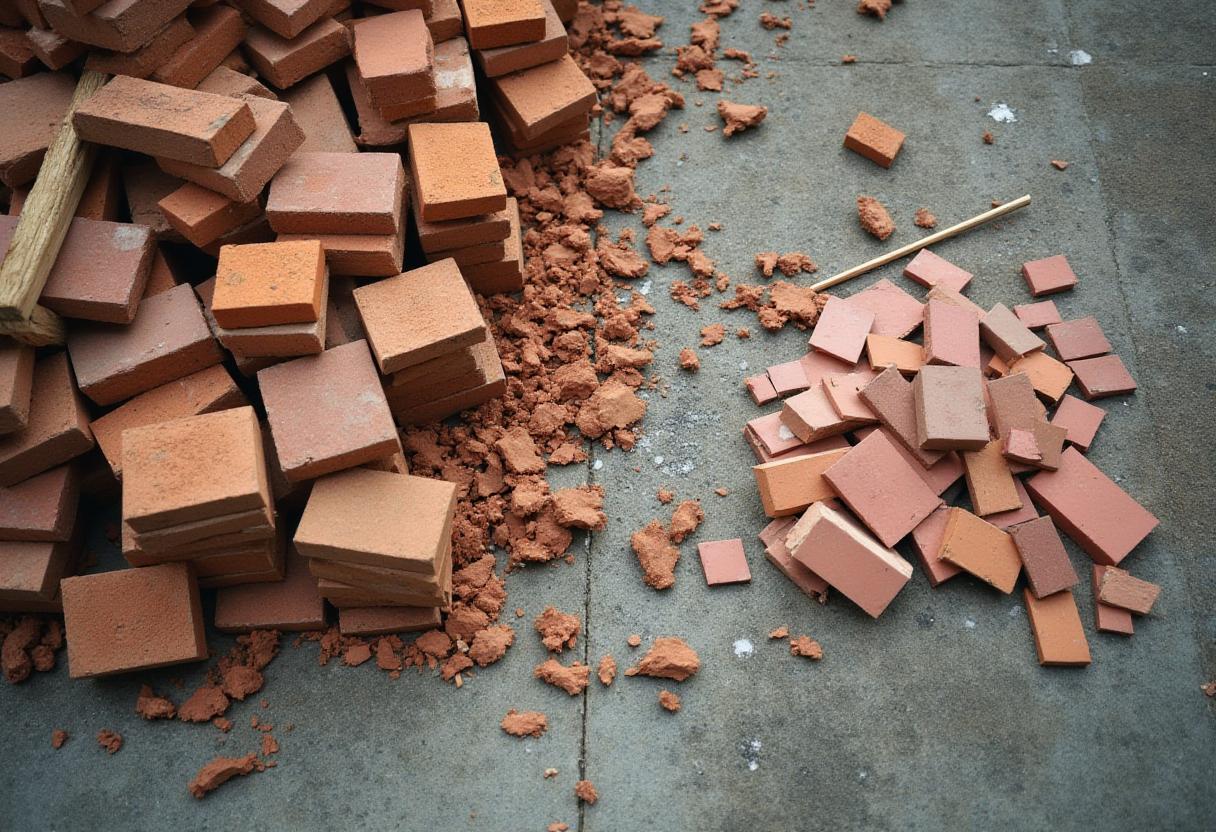
Before you do anything else with that driveway pile, sort it into three groups. Materials that’ll go back into the job, tiles, timber, fittings you paid good money for, need proper renovation waste storage: off the ground, under a tarp that’s actually secured, not just draped over the top. Anything already broken, offcuts, packaging, old fittings ripped out in the first week, is rubbish now. There’s no reason for it to sit through a Melbourne winter waiting for the job to restart. It’ll only get heavier, wetter and harder to shift later.
Be honest about what’s actually salvageable. A stack of good bricks under a proper cover will survive months outside without complaint. A pile of plasterboard offcuts won’t, and once it’s swollen and gone mouldy it’s not worth keeping anyway. If there’s any chance of asbestos in what’s been pulled out, particularly in anything from a pre-1990 build, don’t guess at it. Check how it needs to be handled before you touch it again.
Protect what stays over winter
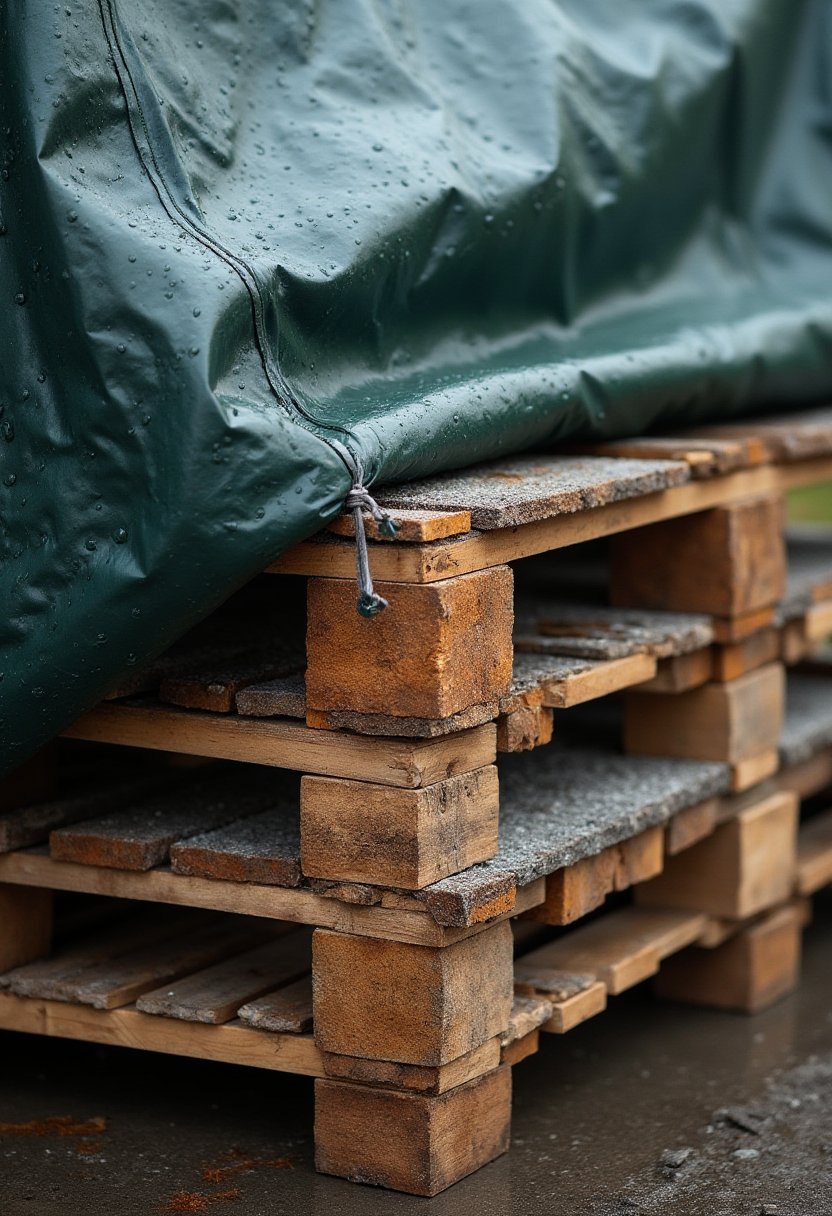
Not everything in that pile needs to go. If you’re keeping tiles, timber, bricks or fittings for when the job starts back up, treat that as proper renovation waste storage, not just a tarp thrown over the top and forgotten. Stack it off the ground on pallets or offcuts so nothing sits in standing water, and use a heavy-duty tarp pegged down at the edges rather than weighed down with a few bricks that’ll shift in the first decent gust.
Winter in the inner-south means weeks of rain, not just the odd shower, so check the cover after any big blow rather than assuming it’s held. Timber that’s been rained on repeatedly will cup and warp, and plasterboard left exposed is basically gone within a fortnight.
It’s also worth thinking about what’s easy to grab from the street. A stack of good materials on a driveway is an invitation, especially anything that looks like copper, timber or reusable fittings. If it’s valuable, bring it behind a fence or into a garage rather than leaving it out for the season.
The permit clock in the background
If the renovation needed a building permit, that permit has an expiry date, and pausing the job doesn’t pause it. Most permits run for two years from issue, but check the date on your paperwork rather than assuming. If the job stalls past that point, you may need to apply for an extension or, in some cases, a new permit before work can restart, and that’s a slower process than most people expect.
It’s easy to lose track of this while you’re focused on the pile in the driveway, but it’s worth diarising the date now. A permit lapsing quietly in the background can end up costing you more time than the renovation waste storage sitting out front. If you’re unsure where your job stands, a quick call to your building surveyor will confirm it. Sort that out early, and the materials question becomes much simpler to manage.
Getting rid of what’s already rubbish
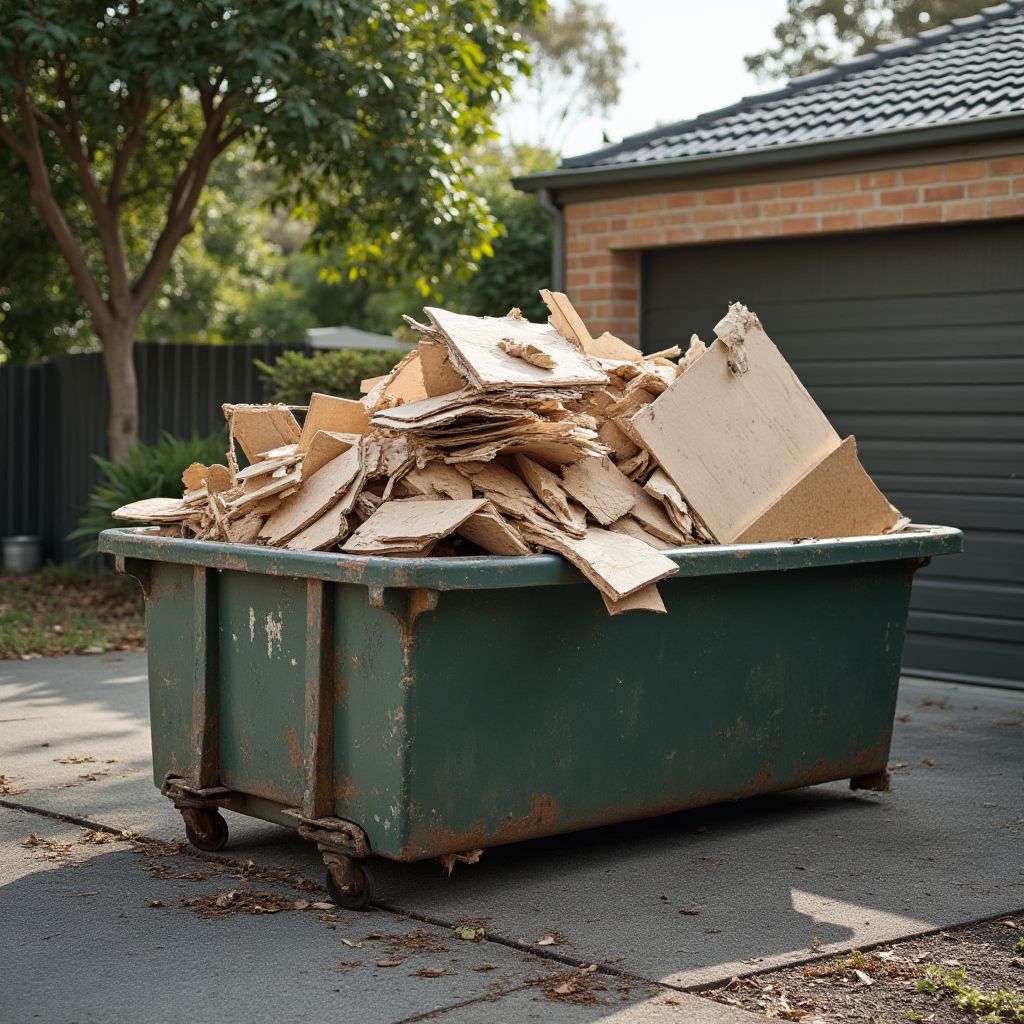
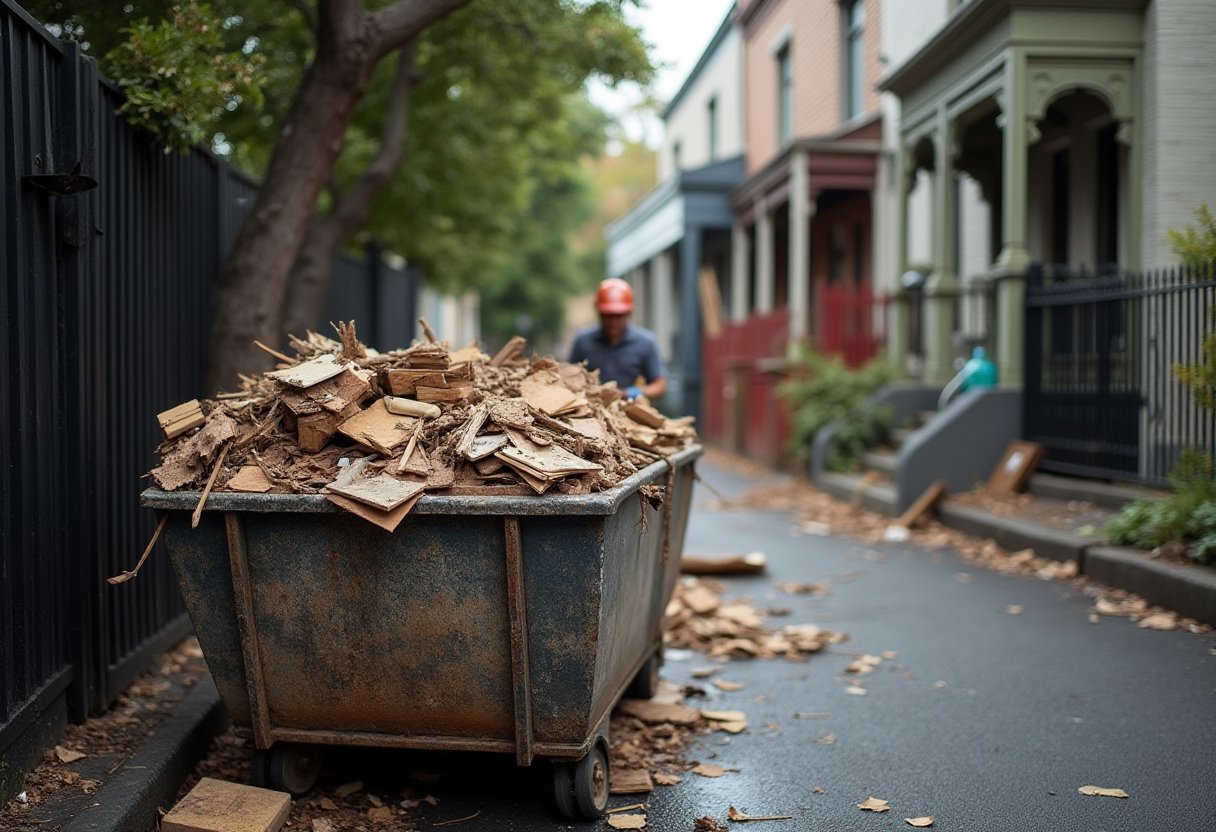
Not everything in that driveway pile deserves protecting. Broken tiles, old plasterboard, packaging, offcuts: if it’s already rubbish, it doesn’t need renovation waste storage, it needs to go. Left out through a Melbourne winter, cardboard and timber packaging soak up water, add weight, and turn into a soggier mess than the one you started with.
Sort before you store. Keep what the trade will need when work restarts, and clear the rest properly, rather than letting it merge into one pile you’ll have to pick through later. Renovation debris is your responsibility to get rid of the right way, and it can’t go out with the council hard rubbish the way an old couch can, so it’s a skip or a licensed removal job instead. EPA Victoria sets out where that duty sits. If there’s anything in the mix that might contain asbestos from an older part of the house, don’t guess at it. There’s clear guidance on safely bagging and disposing of suspected asbestos, and it’s worth a read before you touch anything.
Clear the genuine rubbish now, and there’s less sitting between you and a finished job.
Triage the pile before winter
Sort the pile before you walk away from it: keep what you’ll reuse, protect it properly, and clear the actual rubbish now rather than let it become one soggy heap by spring. If a building permit’s involved, check its expiry rather than assuming the pause stopped the clock too. Good renovation waste storage is really just triage, done early. If you’d rather hand off the clearing part, give the team a call on (03) 9820 1927 for a free quote.
Frequently Asked Questions
It depends on the material, but don’t plan on “indefinitely”. Timber, plasterboard and insulation soak up water fast and start losing structural value within a few weeks of exposure, even under a tarp that’s not properly secured. Metal offcuts and fixings will rust. Bricks, pavers and tiles hold up far better and can wait out a longer pause without much harm. If you know the job’s stalled for more than a month, treat anything moisture-sensitive as needing proper cover or a shed, not just a tarp thrown over the top. A quick weekly check saves a lot of grief later.
No, and this catches a lot of homeowners in Stonnington and Boroondara out. Most building permits in Victoria have a fixed period, generally around two years, and the clock keeps running whether the job is active or not. If you’ve got a permit issued for the work, check the expiry date on it now rather than assuming “we’ll pick it up again eventually.” Letting it lapse can mean reapplying and re-inspecting under current rules, which costs more time and money than the pause itself.
If you can already see broken tiles, old plasterboard, packaging or offcuts that clearly aren’t being reused, get them gone now. There’s no upside to a pile of genuine rubbish sitting in a Prahran or South Yarra driveway for winter, taking up space and looking like an invitation to fly-tippers. If that skip ends up on the street or nature strip rather than your own driveway, your council will usually want a permit for it first, and the fees and rules vary from one council to the next. Save the skip bin or bulk pickup for when the job restarts and you know the full volume of waste. Two smaller clearances usually costs less hassle than one guessing game.
Yes, more than most people realise. Copper piping, power tools, and even stacked timber are common targets, particularly on quieter inner-city streets where a ute pulling up doesn’t raise an eyebrow. If materials are visible from the street, they’re worth protecting properly: stored behind a locked gate, under cover, or moved to a garage if you’ve got the room. It’s a small effort compared to replacing stolen materials mid-renovation.
Be honest with yourself about the timeline. If the renovation is likely to sit for more than a couple of months, ask whether storing that stack of half-used plasterboard or leftover pavers is really cheaper than replacing them later, once you factor in weather damage and the driveway space you’re losing. Sound, dry materials worth keeping should go under proper cover. Anything damaged, damp or clearly surplus is better off cleared now. If you’re not sure which is which, we’re happy to have a look and give you a straight answer on what’s worth keeping.