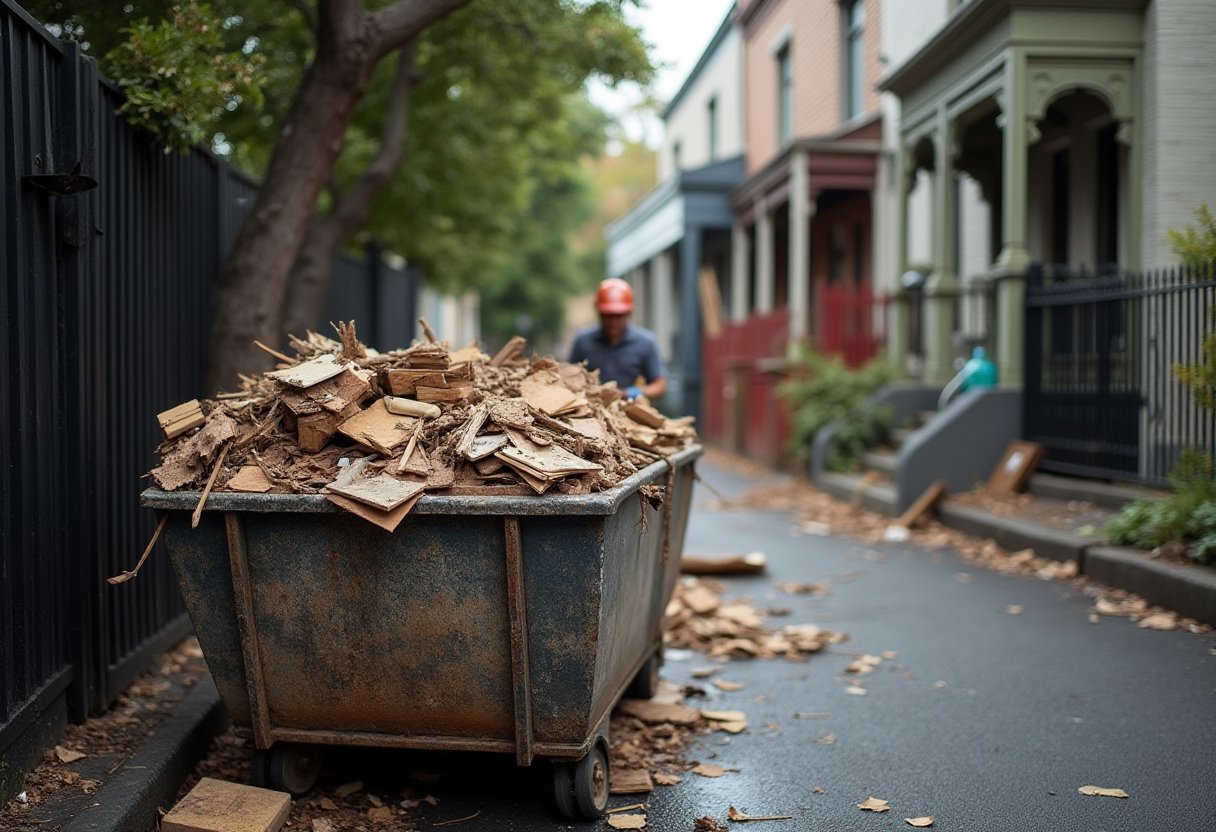
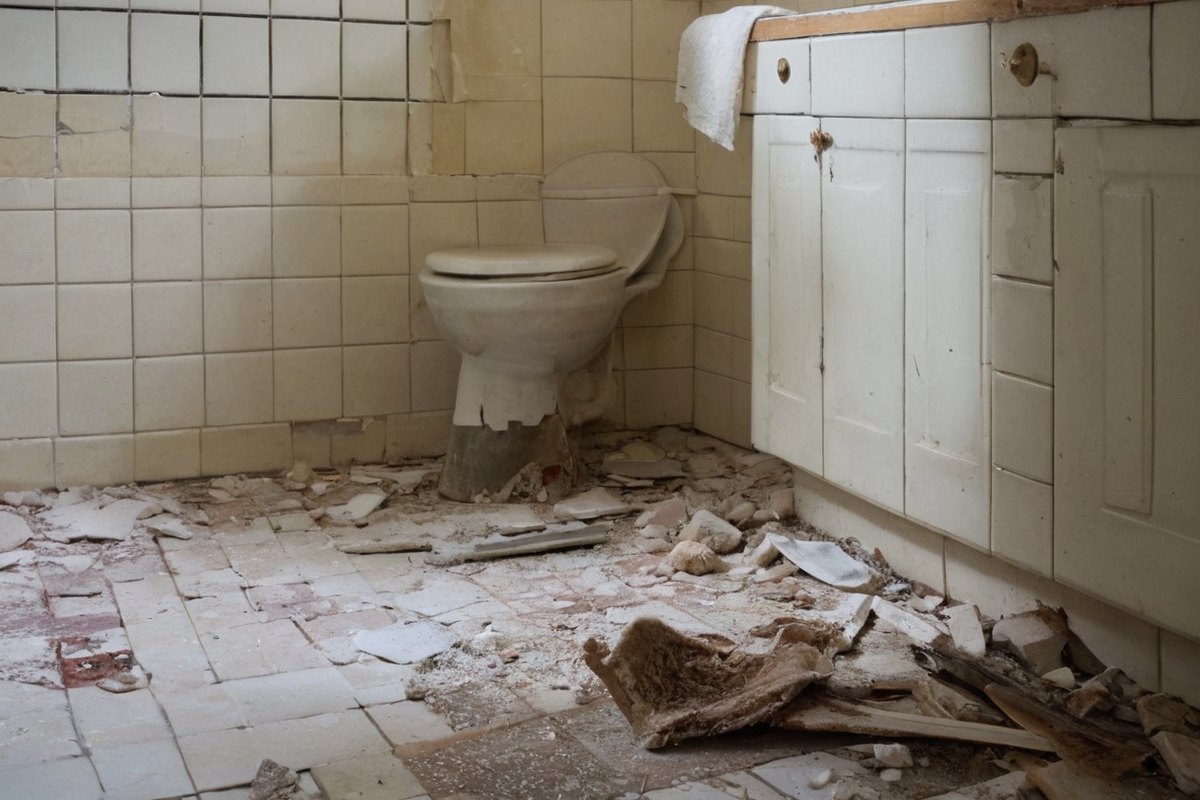
A bathroom or kitchen renovation is exciting right up until the demolition starts and you see how much comes out of one small room. Old tiles, a cast-iron bath, ripped-out cabinets and a benchtop that takes two people to lift: it adds up fast, and it is heavy.
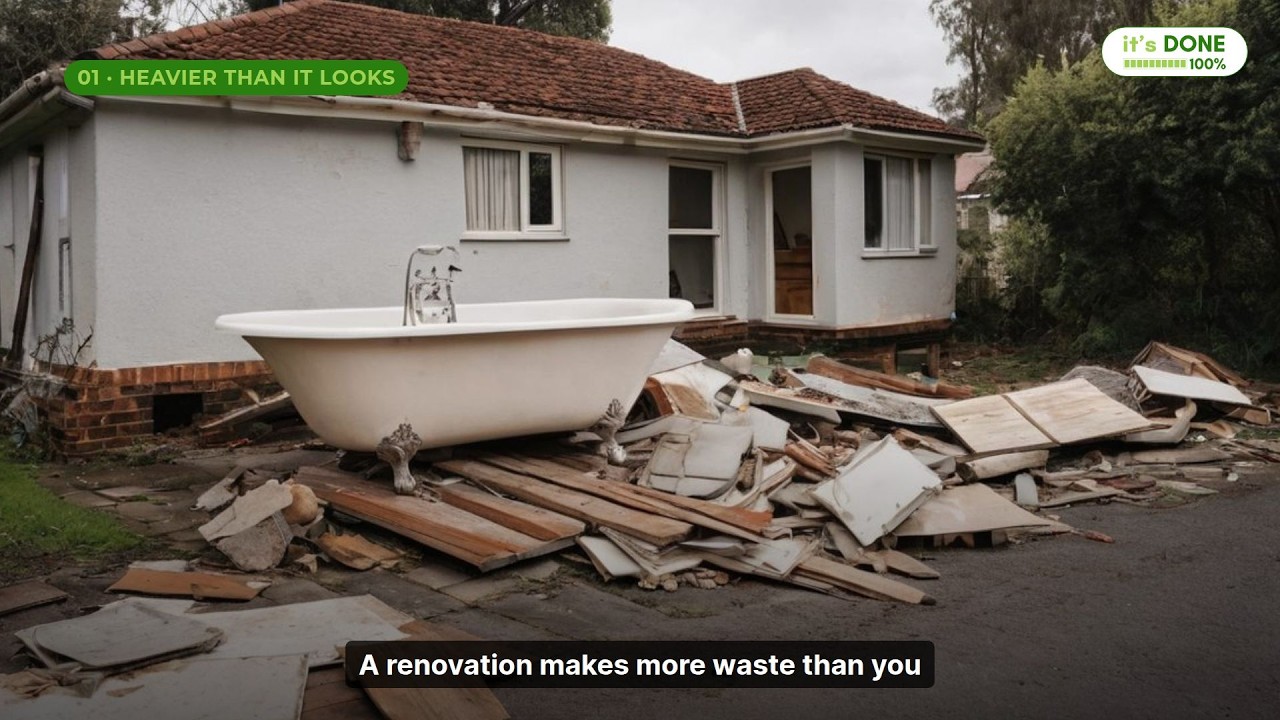
The rubbish side is the part most people underestimate. A bit of planning keeps the debris moving instead of sitting in the driveway for the length of the job. Here is what a bathroom or kitchen demo actually generates, why weight matters more than volume, and how to stage the removal so it never becomes the bottleneck.
What a demo actually generates
Bathrooms and kitchens are the two most common renovations, and they throw off more waste than almost any other room. In a bathroom strip-out you are dealing with:
- Wall and floor tiles, plus the concrete screed and adhesive behind them
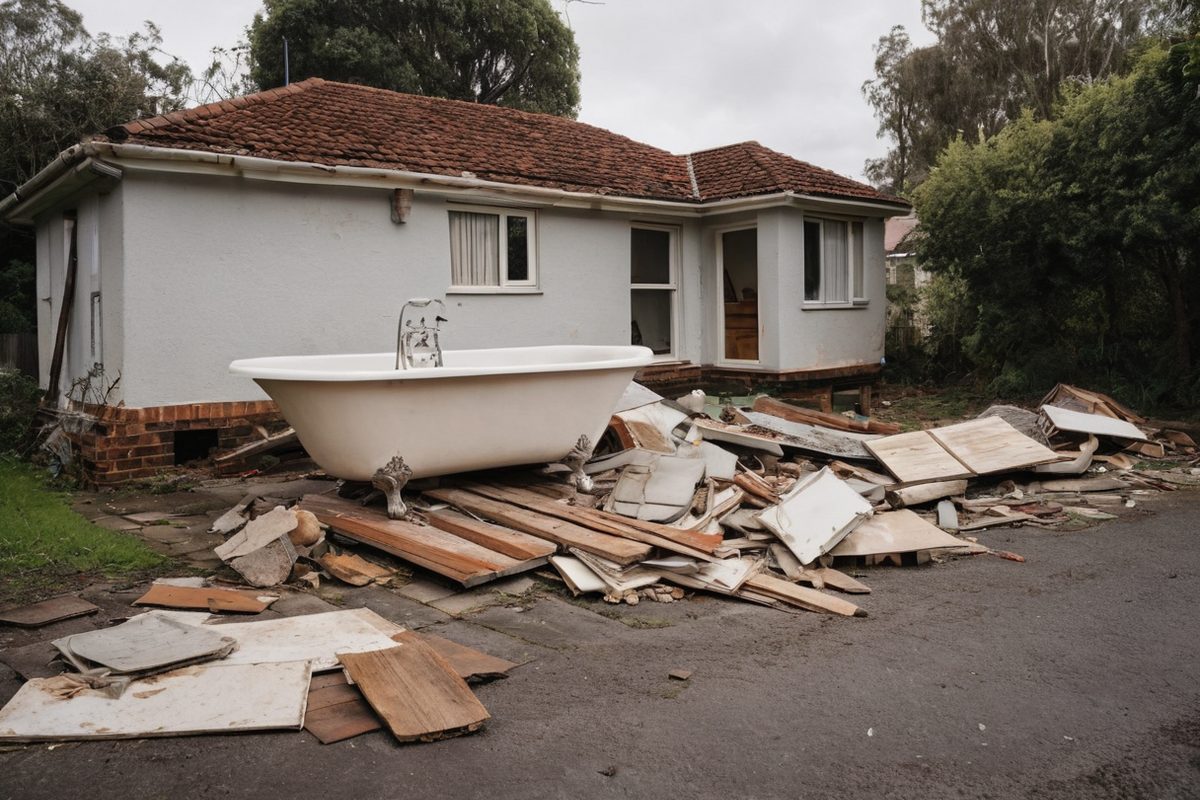
- The old bath (cast iron is extremely heavy, acrylic is bulky), basin, vanity and toilet
- Wall sheeting, waterproofing membrane and old plasterboard
- Tapware, pipe offcuts and rusted fixings
A kitchen adds its own mix:
- Cabinets and carcasses, often particleboard that breaks up messily
- The benchtop: engineered stone and granite are very heavy, laminate is lighter but bulky
- Splashback tiles, the sink and tapware
- Old appliances such as the oven, cooktop, dishwasher and rangehood, which are e-waste, not landfill
- Vinyl, floating floor or old lino underneath
Why weight matters more than volume
Reno waste is the one job where a small pile can be deceptively heavy. Tiles, concrete, render, brick and engineered-stone offcuts are dense, so a load that looks like half a trailer can weigh more than a whole lounge room of furniture. It matters because skip bins are priced and capped by weight, and it is easy to fill a cheap skip to its limit with one bathroom’s tiles and still have the cabinets to go. When you plan, think in tonnes, not just space.
Check for asbestos before you start
If your home was built before the late 1980s, the bathroom and kitchen are exactly where asbestos turns up: in wall and ceiling sheeting, behind tiles, under vinyl flooring and in eaves. It is not something to guess at. Get a licensed assessor to test before any demolition, and if asbestos is found it must be removed and disposed of by a licensed asbestos removalist. It cannot go in a skip, in general rubbish, or in our truck. We are happy to take everything else once the asbestos has been handled by the right people.
How to stage the removal so it doesn’t pile up
The goal is to keep the work area and the driveway clear so the next trade can get in. A few things that help:
- Separate as you go: metal (taps, pipes, the old bath) and appliances are recyclable, so keep them out of the general pile
- Clear the strip-out debris before the new trades start, not after the whole job
- Bag small, sharp debris like tile shards so it is safe to handle and quick to load
- Keep a clear path to the bin or truck so nothing gets double-handled
- Book the removal around your trade schedule, so the heavy waste leaves the day it comes out
Staging is the whole point of on-call removal: instead of one giant pile at the end, the waste leaves in steps as each part of the demo finishes.
Skip bin or on-call removal?
Both work for a renovation, and the right call depends on the job:
- A skip bin gives you continuous access to throw things in as you go, but you load it yourself, you are capped by weight, and you may need a council permit if it sits on the street.
- On-call removal means we bring the crew, lift the heavy and awkward items (that cast-iron bath, the stone benchtop) and take it away in staged trips, with no permit and no skip parked out the front for a fortnight.
For a heavy bathroom or kitchen strip-out, a lot of people use a mix: a skip for the loose, light debris and a renovation waste removal booking for the heavy lifting and the final clear-out.
Plan the rubbish in from day one
The renovations that run smoothly are the ones where the waste was part of the plan, not an afterthought. Work out what is coming out, be honest about the weight, sort the asbestos question early, and book the removal to line up with your trades.
If you would rather not wrestle a bath down the hallway, give the team a call on (03) 9820 1927 for a free, no-obligation quote. We handle the heavy renovation waste removal and general household rubbish removal across Prahran, Hawthorn, Toorak and the rest of the inner east and south, staged around your job.
Frequently asked questions
Tiles and the concrete screed behind them, the old bath, basin, toilet and vanity, wall sheeting and waterproofing, plus tapware and pipe offcuts. Most of it is heavy, so plan for weight rather than just volume.
General demolition debris can go in a skip, but not asbestos, and old appliances are e-waste rather than landfill. Skips are also capped by weight, which tiles and concrete reach quickly, so a heavy reno often needs more than one.
If the home was built before the late 1980s, assume it is possible and have a licensed assessor test before any demolition. If asbestos is found, it must be removed and disposed of by a licensed asbestos removalist, not in general rubbish.
A skip suits steady, light debris you load yourself. On-call removal suits heavy items and staged clear-outs with no permit. Many renovations use both.
Yes. We lift and remove heavy items like cast-iron baths, stone benchtops and cabinetry, and take them away in staged trips. Call (03) 9820 1927 for a free quote.