

Office downsizing usually starts with a walk around a floor that’s gone quiet on a Tuesday. Half the desks are empty because half the team’s working from home now, and you’re still paying full rent on space nobody’s using. If your office is anywhere from Richmond to South Yarra, you’ve probably had this conversation with your landlord already: pack up and relocate, or shrink what you’ve got and stay put. Moving out is a huge job for what might only be a few rows of desks too many. There’s a smaller, faster middle path, keep the lease, strip out the part you don’t need, and we’ll walk through exactly how that works.

Why so many Melbourne offices have empty desks now

Hybrid work didn’t happen overnight, but it stuck. Most inner-city businesses settled into a pattern years ago: two or three days in, the rest from home, and it hasn’t moved back since. Nationally, a large share of employees now work from home at least part of the week, and Melbourne’s inner suburbs, Richmond, South Yarra, Cremorne, are full of tenants who signed their lease when the whole floor was full and never needed it that way again.
The result is a fit-out built for a headcount that doesn’t come in anymore. You’ve got desks for 40 and a daily crowd closer to 20, a boardroom nobody’s booked in months, a bank of lockers for staff who now work from a kitchen table. That’s office downsizing in its most common form: not a business shrinking, just a business occupying its space differently.
The catch is that none of this space is going anywhere on its own. Someone still has to decide what to do with a floor’s worth of furniture and partitions that are surplus to what your team actually needs, and that’s the part we’ll get into next.
Partial stripout, full relocation, or sublease
Before anyone touches a partition wall, you need to know which of these three you’re actually doing, because they have completely different implications for your lease. Relocating means walking away from the space entirely, triggering a make-good clause and a new lease elsewhere. Subleasing means finding someone else to occupy the space you don’t need, which solves the cost problem but adds a second relationship to manage. A partial stripout, removing unused desks, partitions, and joinery while keeping the rest of the tenancy running, is the option most businesses actually want, because it’s the only one where you keep control of the space without paying for capacity you’re not using.
Here’s the part that trips people up. In Victoria, office leases sit outside the Retail Leases Act, so there’s no statutory make-good standard to fall back on. Whatever your lease document says about alterations and reinstatement is the whole answer, not a starting point. That’s not a reason to avoid office downsizing, it’s just the reason to read your lease properly and have a short conversation with your landlord before a single desk comes out. Once that’s settled, the removal itself is the straightforward bit.
What your lease actually allows
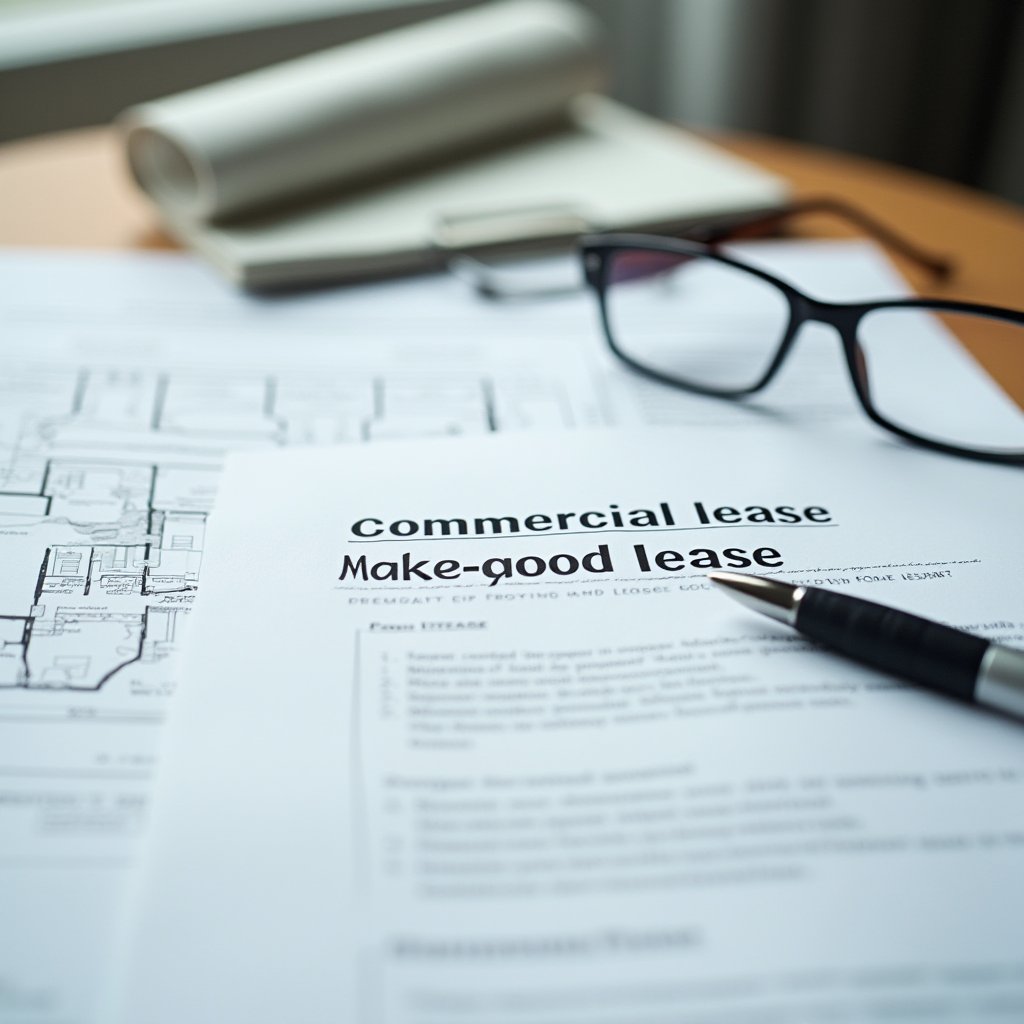
Before you touch a single workstation, get the lease out and read the make-good clause properly, not the summary you remember from signing day. Because office premises sit outside the Retail Leases Act in Victoria, there’s no statutory backstop dictating what condition you have to hand the space back in: whatever’s written down is the whole agreement, not a guide.
Look for anything covering alterations, partitions, and reinstatement of services like data cabling or power points. Some leases only care about the shell and let you strip fitout freely. Others require you to reinstate to the original layout at the end of the term, which changes the maths on office downsizing considerably if you’re planning to remove partitions or built-in joinery now.
If the clause is vague, or you can’t find one at all, call your landlord or agent before you start. A short conversation up front, ideally in writing, is worth far more than assuming goodwill later. Ask specifically what happens to the vacated area: can it sit empty, does it need to be handed back in a certain state, and does removing fixed partitions count as an alteration under your terms.
Once you’ve got a clear answer, you’re not guessing anymore. You can plan the stripout around what’s actually allowed, not what you hope is allowed.
Planning a partial stripout

Once you know what’s actually allowed, treat the partial stripout as its own small project, separate from the office downsizing decision that got you here. Start with a simple list: what’s coming out (desks, chairs, partitions, cabling), what’s staying, and where the line sits between the two. If you’re removing fixed partitions, work out whether that needs sign-off from the landlord’s building manager as well as the lease itself, since shared services like air conditioning zones or fire egress can run through those walls.
Sequence the work around the rest of the tenancy. A stripout doesn’t need to happen overnight, but it does need to happen without dust, noise or blocked corridors disrupting people still working next door. Book it for a quiet period, evenings or a weekend, and confirm lift access and loading dock times with the building in advance.
Materials that come out don’t all need to go to landfill. Furniture in reasonable condition, partition panels and carpet tiles can often be diverted through reuse or recycling channels rather than binned, which is usually the cheaper option anyway.
When a partial stripout makes sense
A partial stripout is worth considering when your lease still has years to run and the extra desks genuinely aren’t coming back. It’s not a way around your obligations, always check your specific lease and talk to your landlord first, but done properly, office downsizing this way is far quicker and cheaper than relocating. Once the lease side is sorted, the physical job is straightforward: schedule around the rest of the tenancy, protect lifts and corridors, and get furniture and materials diverted for reuse where you can. If you’d like a hand with the removal, give us a call on (03) 9820 1927.
Frequently Asked Questions
Not necessarily, and that’s the first thing to check. Unlike retail tenancies, Victorian office leases sit outside the Retail Leases Act, so there’s no default make-good standard to fall back on. Whatever your lease says is what applies, full stop. Some leases specify make-good only at the end of the term, others are silent on partial changes altogether. Before you book anyone to pull out desks or partitions, read the make-good and alterations clauses properly, and have a quick conversation with your landlord or property manager. Once you know what’s actually required, the removal side is the easy part.
It shouldn’t, if it’s planned properly. We work around the areas still in use, schedule the noisy or messy parts outside core hours where we can, and section off the work zone so the rest of your team can keep operating normally. Most partial stripouts in inner-Melbourne offices, think Richmond, Cremorne or Hawthorn tenancies, are done over a day or two for a single floor or wing. We’ll talk through the layout with you beforehand so there are no surprises on the day.
We sort as much as possible for reuse or recycling rather than sending it straight to landfill. Good-condition furniture often finds a second life through donation or resale, timber and metal partition frames get recycled, and only genuinely unusable material ends up at the tip. If you’d like a breakdown of what was diverted, we can give you that when the job’s done, which is handy if your business reports on waste for its own sustainability reporting.
A week or two is usually enough for us to book it in properly and confirm access with your building manager, especially if lifts or loading docks need scheduling. If you’re under time pressure, we can often turn things around quicker, just call and we’ll see what’s possible. The main thing that adds time isn’t the removal work itself, it’s building access approvals, so get that conversation started with your landlord early.
In almost every case, yes, by a wide margin. Relocating means a new lease, a new fitout, and make-good on the old space regardless of what your current lease says. A partial stripout keeps your existing lease running and only removes what you’re no longer using, so you’re paying for removal and disposal, not a full commercial move. It’s worth getting a quote for the stripout alongside whatever relocation costs you’re weighing up, the gap is usually bigger than people expect.