Melbourne hard rubbish collection isn’t one system. Every council runs its own, and the seven that cover our patch don’t agree on anything. I spent years on the other side of this at Stonnington City Council, and the number one thing residents got wrong wasn’t the rules, it was assuming their number matched the neighbour’s. Stonnington doesn’t take bookings at all, it sweeps every street twice a year. Cross into Boroondara and there is no scheduled sweep, only two bookings you have to make yourself. Port Phillip gives a house four. Miss the fine print and you’re either wasting an entitlement you didn’t need to use yet, or worse, dumping on the nature strip outside your collection window and copping a fine for it. This post lines up all seven side by side so you can see exactly what you’re entitled to, and what happens when you go over it.

Why the rules differ by council
Every council runs its own waste contract, its own budget, and its own idea of what’s fair, so the entitlements don’t line up neighbour to neighbour. The split that matters most is scheduled versus booked. Stonnington runs two area-wide collections a year, in spring and autumn, and your date is set by where you live rather than by anything you do. Almost everyone else has moved to on-call bookings, and the number you get ranges from one a year in the City of Melbourne to four a year for a Port Phillip house.
Then there’s the volume cap sitting underneath the count, and it’s usually the part that bites. City of Melbourne allows one cubic metre for the whole financial year, which is a washing machine and a chair. Glen Eira and Bayside allow four. Boroondara sits in between at two cubic metres a booking. Two councils can both say “one free collection” and mean very different amounts of rubbish.
Part of it comes down to what each council is trying to prevent. A booking cap stops one household from bombarding the collection roster every few weeks. A volume cap stops someone booking once and quietly filling half a nature strip. I saw both problems from the inside at Stonnington: residents who’d genuinely forgotten they’d already had their collection, and others testing exactly how much they could get away with on a single kerb pile.
Contractor arrangements matter too. Some councils run hard waste as a bookable, on-demand service, others fix set collection weeks per street, and the trucks, sorting facilities and landfill diversion targets behind each system aren’t identical. A council juggling a tighter recycling contract will often build a tighter entitlement to match.
None of this is arbitrary bureaucracy for its own sake. It’s each council balancing service cost against fair access, which is exactly why a single, generic “check your council” line is close to useless. You need your council’s actual number, not a general rule of thumb.
The comparison table
Here’s the entitlement, council by council, for the seven municipalities we work in every day. I’ve pulled every line from the council’s own waste page, but entitlements shift as contracts get renegotiated, so treat this as your starting point, not gospel, and confirm the live number before you book.
| Council | Free hard rubbish entitlement | How you book |
|---|---|---|
| Stonnington | Two scheduled area-wide collections a year, spring and autumn. Nothing to book. | Look up your street’s collection dates; paid pickups available in between |
| Boroondara | Two booked collections per financial year, up to 2m³ each. There is no scheduled annual collection. | Book online, every collection |
| Glen Eira | Three booked collections per financial year, up to 4m³ each. Bulk cardboard and bundled branches get three of their own. | Book online, one week to one day ahead |
| Yarra | Two free collections per household per calendar year. Unused bookings don’t carry over. | Book through Yarra’s online form |
| Port Phillip | Four a year for a house, six joint collections a year for a block of flats or units. Included in the annual waste charge. | Book online, items sorted into three piles |
| Melbourne | One collection per financial year, capped at one cubic metre. The tightest allowance on this list. | Book online; commercial and retail addresses aren’t eligible |
| Bayside | Two collections per calendar year, up to 4m³ each, and the two bookings must be at least six weeks apart. | Book online, but put the items out first: collection happens within four working days, so the pile has to be on the nature strip already |
Notice the pattern: nobody offers unlimited collections, and everybody caps the volume. That’s the detail that trips people up more than any other. You book one entitlement, assume it covers the whole garage clean-out, and discover on collection day that half the pile is still sitting on the nature strip because it went over. In Glen Eira it’s worse than that, because one over-limit or non-compliant item can get the entire pile rejected rather than just the offending piece.
If your council isn’t listed here, its waste and recycling page will have the same three answers, and those three answers are what Melbourne hard rubbish collection really comes down to: how many free collections, how it’s booked, and what the volume cap is. Write those three numbers down before you start planning the job.
Apartments, renters and eligibility
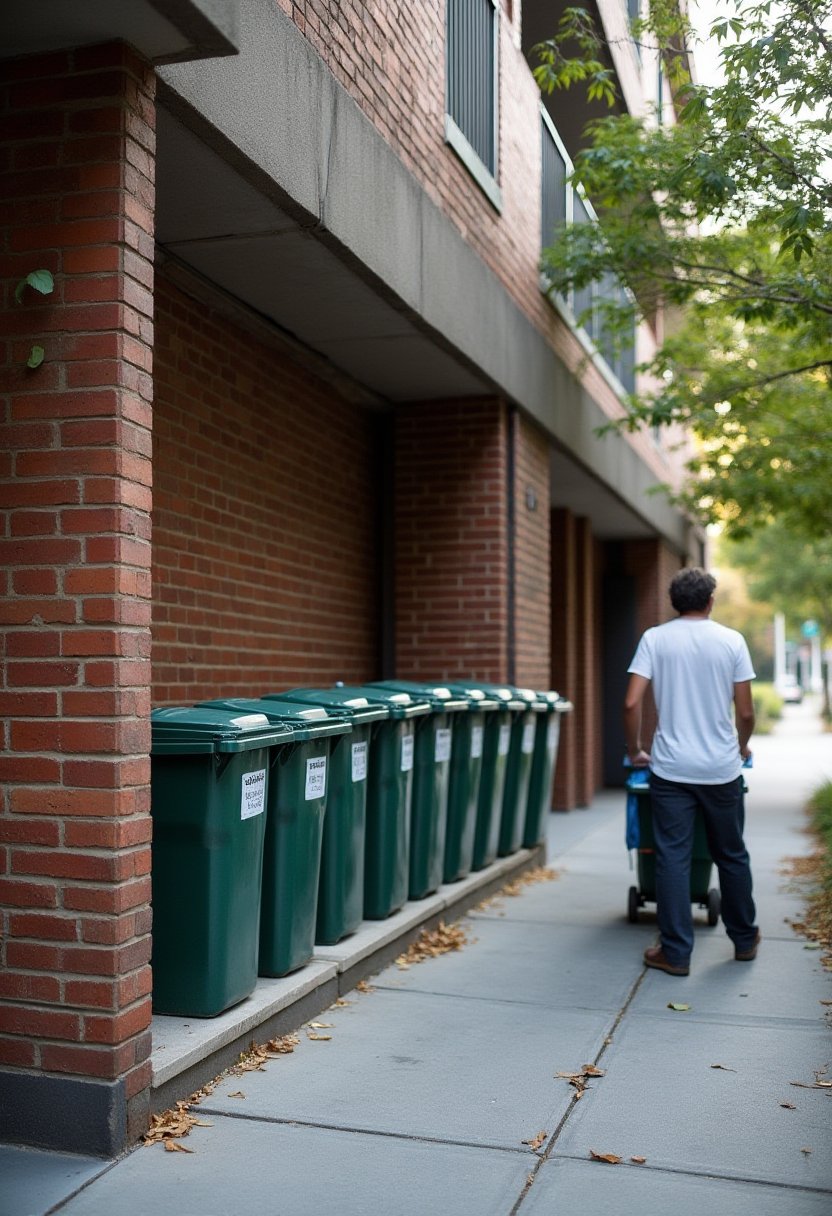
If you’re renting or living in a unit block, the answer to “can I book hard rubbish” depends on who owns the bin day, so to speak. In most inner-Melbourne councils the entitlement sits with the rateable property, not the individual resident, which is where things get complicated for apartments.
A single-dwelling rental is usually straightforward. The property has its entitlement, and either you or your landlord can use it against the property’s address. If you’re renting a house in Brighton or Elwood, check with your landlord first. Some property managers book the collection automatically as part of routine maintenance, and turning up with a ute load of the previous tenant’s leftovers on the same nature strip won’t do you any favours. The same goes at the other end of a tenancy, where an unbooked pile is one of the classic end-of-lease mistakes.
Apartment blocks are where it gets genuinely different council to council, so don’t assume the rule you heard from a friend applies to you. A block of 20 units does not get 20 entitlements, but it doesn’t always get just one either. Port Phillip gives a block of flats six joint collections a year and expects the building to book them, and its guidelines say apartment residents must go through the building manager or owners corporation rather than booking individually. Glen Eira goes the other way and lets apartment residents book in their own right, while asking them to check with the property manager first. Boroondara splits it by size: buildings up to 14 units book for themselves, 15 and over go through the body corporate.
So if you’re renting a unit in South Yarra or Prahran and want a couch gone, the first call is usually building management, not the council. They hold the booking rights, they know whether the allowance has already been spent this year, and in most blocks they coordinate one collection for everyone. It’s also worth knowing what rules your building follows before you move anything into a shared area or lift.
This is exactly the gap where a lot of renters get stuck. You’ve got genuine rubbish, no entitlement to book against, and a body corporate that only organises a collection once a year, if that. If that’s where you’ve landed, a paid removal booked ahead sidesteps the whole entitlement question. You’re not waiting on strata to act, and you’re not risking a fine for dumping outside a collection window.
When the free entitlement isn’t enough
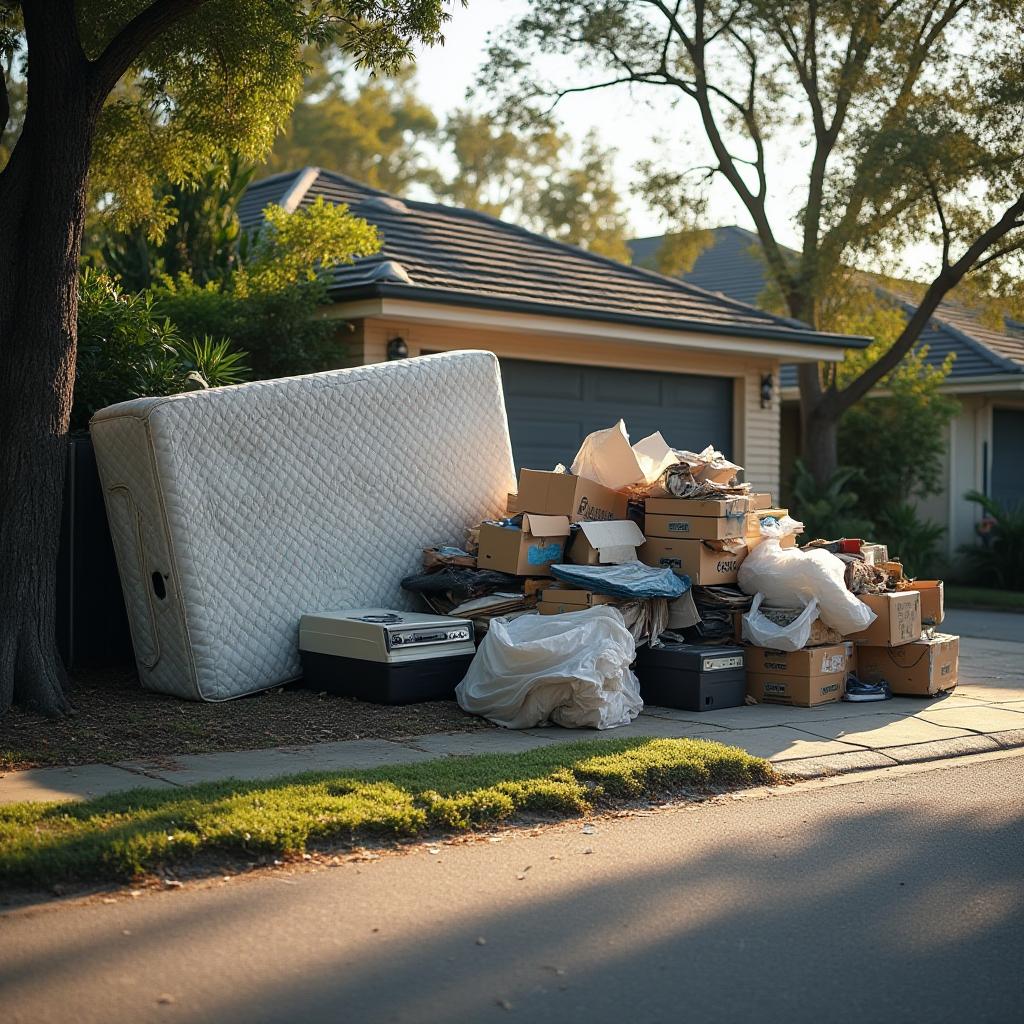
Sometimes the entitlement just doesn’t cover what you’ve got. You’ve done the renovation, or you’re clearing a parent’s house, and what’s sitting on the nature strip is well past one council pick-up’s worth. Or the collection window is weeks out and you need it gone sooner. Or, and I saw this constantly at Stonnington, half the pile is banned from kerbside collection altogether: gas bottles, tyres, car batteries, anything that looks like it might be asbestos, fridges with the gas still in them. Mattresses are their own headache, capped at one or two pieces in several councils and collected on a separate run. The truck simply won’t take the rest, entitlement or not.
This is where a lot of people get stuck between two bad options: pay for a skip they don’t have the driveway space for, or leave it out and hope. Neither is great. Melbourne councils are dealing with a genuine rise in illegal dumping as residents try to work around exactly these gaps, and it’s landing councils and ratepayers with the clean-up bill, plus the resident with a fine if they’re caught.
A booked removal sidesteps all of it. We’ll take the volume your council entitlement doesn’t cover, we’ll take most of what’s banned from kerbside (asbestos aside, that needs a licensed handler), and we’re not tied to a booking calendar that might be a fortnight away. You tell us what’s there, we quote it, we turn up on a day that suits you rather than a day the council’s roster suits.
It’s also worth saying: this isn’t an either/or. Plenty of our jobs start with “we used our council collection for the bulk of it, but this last trailer-load needs to go now.” That’s a completely normal way to use both systems well.
Frequently Asked Questions
It depends entirely on your council, and that’s the whole point of this comparison. Across the seven councils above the answer ranges from one a year in the City of Melbourne, through two in Boroondara, Yarra and Bayside, to three in Glen Eira and four for a Port Phillip house. Stonnington doesn’t count collections at all, it runs two area-wide sweeps a year and your date depends on your street. Some councils reset on 1 July and some on 1 January, which catches people out on its own. Don’t assume your entitlement matches your neighbour’s, even if you’re a few streets apart in the same postcode. Check the table above for your council, then confirm the current number on their website before you plan around it.
Almost every inner-Melbourne council now runs hard rubbish on a booking system. Stonnington is the main exception in our area, with two scheduled area-wide collections a year and no booking required. Everywhere else you book online or by phone and get an allocated collection day. Booking queues can run several weeks out, especially after Christmas and during spring cleaning season, so if you need something gone quickly, a booked-ahead removal is often faster than waiting for your slot. Never put items on the kerb before your confirmed date, with one exception that catches people out constantly: Bayside works backwards. It wants the pile on the nature strip before you book, collects within four working days, and if the items aren’t there when the truck arrives you still lose one of your two bookings for the year. Everywhere else, an early pile is an unbooked pile, and councils issue infringement notices for those.
Most councils cap hard rubbish at a set volume, typically between one and four cubic metres, and anything over that gets left behind or incurs an extra charge. Glen Eira is stricter again: go over the limit, or include one item that isn’t allowed, and the whole collection can be rejected rather than just the offending piece. This catches people out during a big garage clean-out or a deceased estate clearance, where the pile is genuinely bigger than one household’s normal entitlement. If you’re clearing out beyond the cap, it’s worth getting a quote for the excess rather than repeatedly rebooking council collections and hoping it fits next time.
Yes, and this trips up more residents than the volume cap does. Every inner-Melbourne council excludes things like gas bottles, car batteries, tyres, asbestos, paint and general household rubbish. E-waste is more nuanced than most people expect: Boroondara, Port Phillip and the City of Melbourne all collect it, but it usually has to sit in its own separate pile, and loose batteries or items with batteries sealed inside are refused almost everywhere. Getting that wrong can mean a fine under Victoria’s e-waste landfill ban rather than a pickup. Check your council’s banned items list before you put anything out.
It happens more often than councils admit. Some, like Boroondara, will leave a card giving you 24 hours to fix a non-compliant pile and return without burning your second booking, so read anything left behind before you assume the worst. If your hard rubbish is sitting there rejected, or your collection window passed and life got in the way, you don’t need to wait for the next round to come free again. Give the team at It’s Done a call on (03) 9820 1927 and we’ll come and quote it for free, no obligation either way.