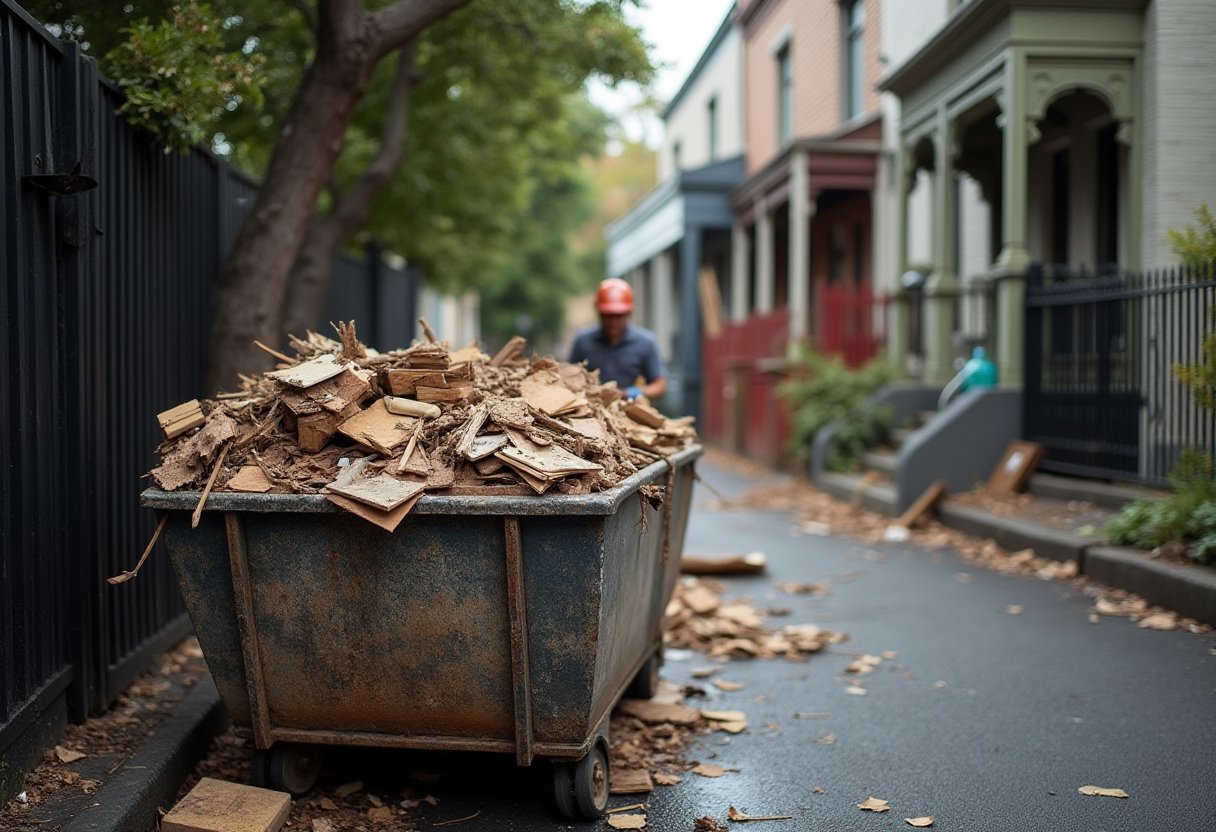
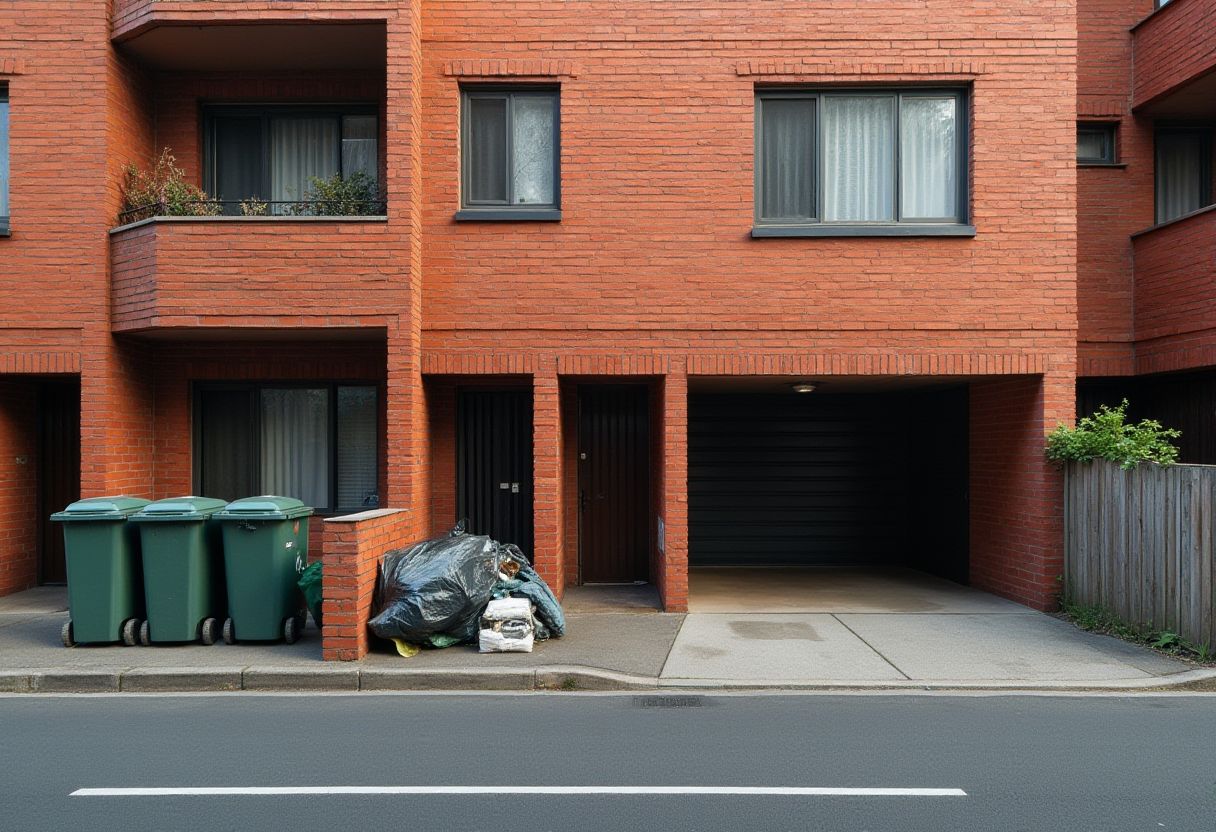
Apartment rubbish removal in Melbourne isn’t one system, it’s dozens, and that’s usually where people get stuck. Ask a friend in South Yarra how their block sorts hard rubbish and they’ll tell you the council picks it up twice a year. Ask someone in a Prahran building with a private waste contract and the council won’t come near it. Skip permits sit in the same mess: some councils will issue one for a shared driveway, others won’t touch strata land at all. The rules depend on your council and your building, not on rubbish removal in general.
Who’s responsible: council, owners corporation, or you

Before you plan anything, work out who’s actually in charge of the rubbish. It’s rarely as simple as “the council deals with it.”
Start with your building. If your owners corporation has a private waste contract, that contractor manages the bins and, often, the hard rubbish too, which usually rules out your council’s kerbside collection. The owners corporation model rules set out what the OC is meant to manage on common property, so a look at your building’s rules (or a call to your OC manager) will tell you fast whether hard waste sits with them or with you.
If there’s no private contract, check your specific council’s eligibility for hard-waste collection, because some councils won’t collect from multi-unit buildings at all. Skip permits work the same way: some councils issue them for shared driveways, others won’t touch strata land.
Once you know who’s responsible, you’ll know whether you’re waiting on a scheduled pickup, chasing your OC, or better off arranging apartment rubbish removal yourself.
Council hard-waste collection: why eligibility isn’t uniform
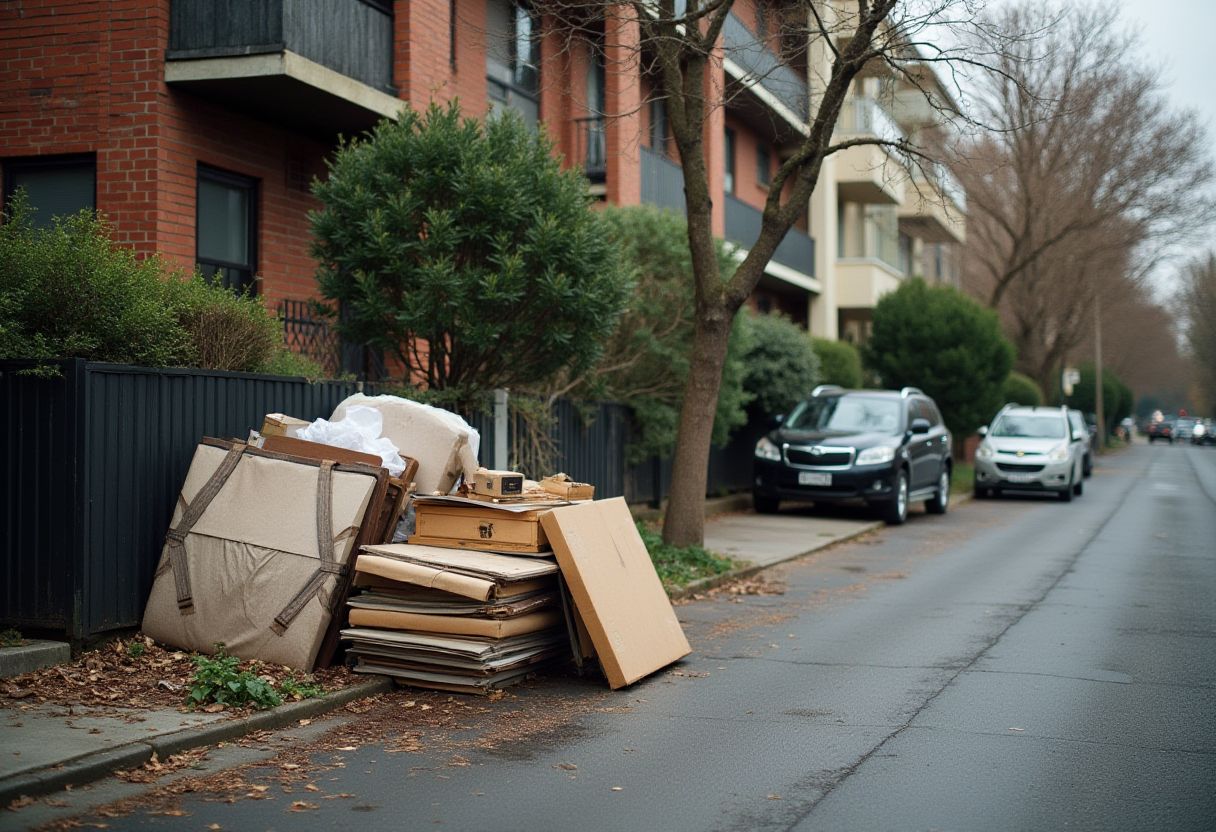
Here’s the bit that catches people out: there’s no single Melbourne-wide rule for hard waste at apartment blocks. Every council sets its own eligibility, and plenty of them simply won’t collect from multi-unit buildings, especially where a private waste contract is already in place. Others will collect, but only from certain unit numbers or with the OC booking on residents’ behalf. Port Phillip, for example, runs its own hard and green waste collection process with its own booking rules, and the next council over may work completely differently.
Skip permits follow the same pattern. Some councils will issue a permit for a shared driveway or common area, others treat strata land as off-limits entirely.
So don’t assume your building follows the same rules as your mate’s place two suburbs over. Check your specific council’s page, confirm it against what your OC tells you, and you’ll know quickly whether you’re looking at a scheduled pickup or arranging apartment rubbish removal yourself.
Skip bin permits: who actually applies, and what it costs
If your building doesn’t qualify for hard waste, a skip is often the next thing people think about. But skip permits aren’t council-blind either. Councils generally require a permit to place a skip on the road or nature strip, and most charge a fee based on how many days it sits there. In apartment rubbish removal, though, the bin usually can’t go on the road at all: there’s nowhere to park it without blocking a driveway or a neighbour’s access, and some strata committees won’t authorise one on common property regardless of what the council allows. So before you get quotes, work out where the skip would physically sit. If the honest answer is “nowhere that works,” a permit was never really the option, and it’s worth looking at what happens when your OC can’t move fast enough either.
When a rubbish removal service is the practical fix

Once you’ve worked out that neither the council nor a skip permit is going to sort things in your timeframe, the decision gets simpler. You’re not choosing between five options anymore, you’re choosing between waiting on your owners corporation and booking apartment rubbish removal that comes to you.
A removalist who’s used to inner-city buildings will bring the right gear for a lift, a loading dock, or a set of stairs that a wheelie bin can’t manage, and they’ll sort what can be donated or recycled rather than sending it all to landfill. Book it ahead for a date that suits, rather than waiting on a hard-waste slot that may not even apply to your block or an OC meeting that’s weeks away.
It won’t fix a slow committee, but it does mean your rubbish isn’t waiting on one either.
Work out who is responsible first
Before you do anything else, work out who’s actually responsible: your council, your owners corporation, or you. That’s what decides whether you’re waiting on a scheduled collection, chasing a committee, or better off sorting apartment rubbish removal yourself. Check your specific council’s rules, since eligibility for a private building isn’t consistent across the inner suburbs, and check what your OC has actually agreed to in its rules. If neither’s moving fast enough, booking a removal ahead is the quickest way to get it sorted on your terms.
Frequently Asked Questions
It depends on the council, and that’s the bit most guides skip over. Some councils, including Stonnington and Boroondara, will collect hard rubbish from multi-unit properties if the building doesn’t have a private waste contract in place. Others exclude apartment blocks from the scheduled hard-waste service altogether, on the basis that the owners corporation is expected to arrange its own collection. The only way to know for certain is to check your specific council’s waste page or call them directly, because “apartment” doesn’t mean the same thing to every council. Don’t assume your building qualifies just because a house two streets over does.
For anything outside your normal bin day, it’s usually the owners corporation, not the council. Most apartment and unit blocks in the inner suburbs run under a private waste contract that the OC has signed off on, which is exactly why council hard-waste bookings often aren’t available to residents. If you’re not sure who holds that contract, your building manager or OC committee should be able to tell you. Worth checking before you spend time waiting on a council booking that was never going to apply to your address in the first place.
Sometimes, but it’s more restrictive than for a house. A skip on a public footpath or nature strip needs a council permit, and approval depends on things like street width, parking impact and how long you need it there, which is a harder ask outside a busy building in Prahran or South Yarra than on a quiet suburban street. Some strata car parks aren’t council land at all, so a permit isn’t even the right process; you’d need OC sign-off instead. If a skip isn’t practical, a booked removal that takes the load straight from your unit is usually the simpler fix.
This comes up a lot with renovation waste or a big clear-out that can’t wait for the OC’s next scheduled pickup. You don’t have to wait on that process. A rubbish removal service can come to your building, take the load from the corridor or your car space, and have it sorted without you needing a permit or a council booking at all. It’s worth checking your building’s access rules (loading dock hours, lift bookings) before you lock in a time, but otherwise it’s a straightforward way to get it handled on your own timeline.