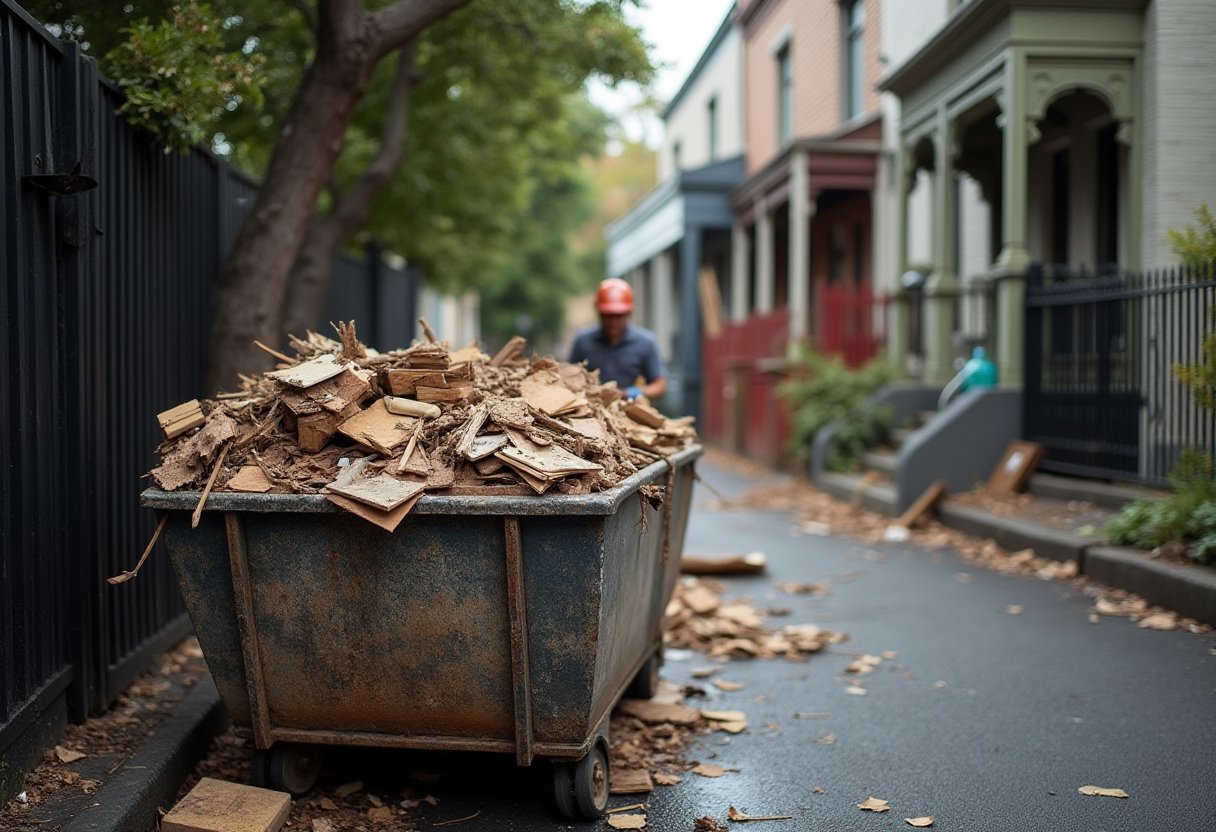
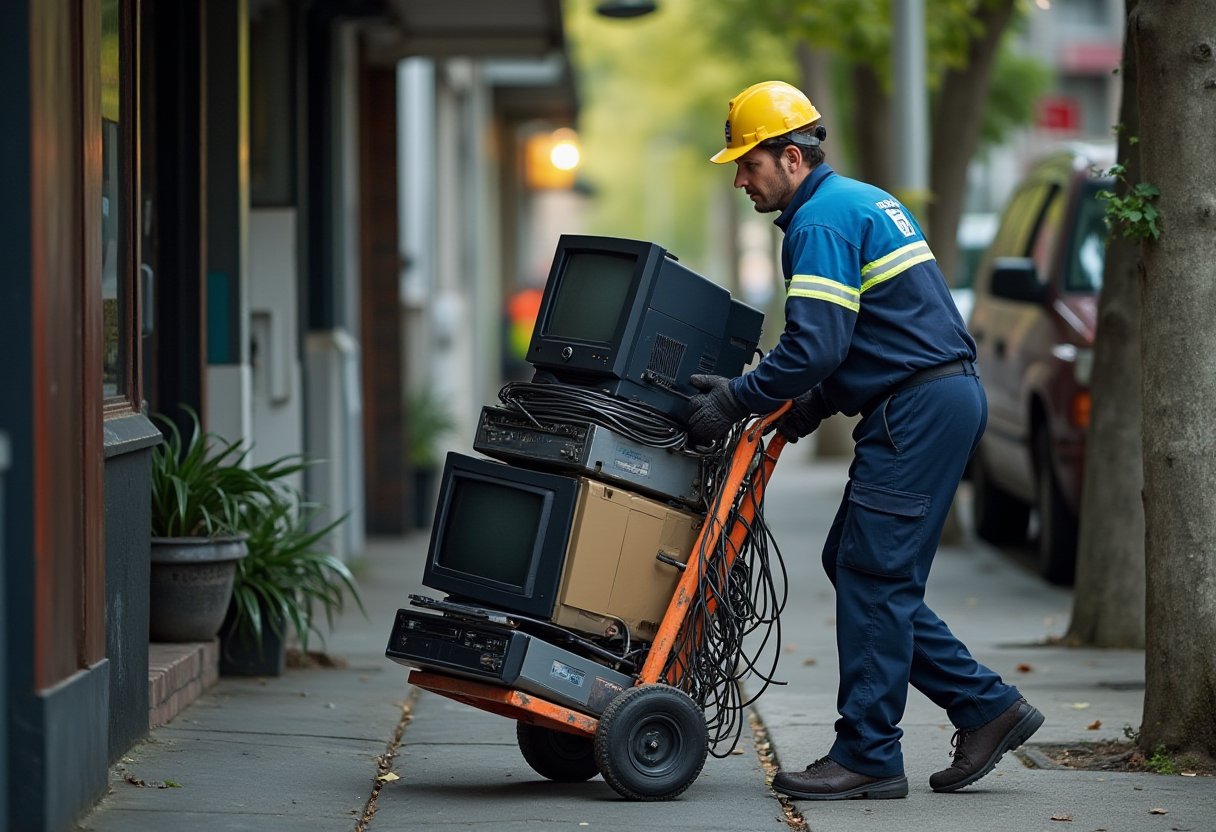
If you’re running a business in Melbourne’s inner-east or inner-south and someone’s mentioned the e-waste landfill ban, you’ve probably had one question: what does this actually mean for me? Victoria banned e-waste from landfill back in 2019, and most of what’s written about it since sits at one of two extremes: either it’s telling householders not to bin an old phone, or it’s quoting duty-of-care clauses from the Environment Protection Act like you’ve got a law degree. Neither one tells a business owner what to do on a Tuesday. If your office, shop or workshop generates e-waste, whether that’s dead monitors in Prahran or old point-of-sale gear in Toorak, you’ve got obligations too, and they’re a lot more straightforward than they sound.

What counts as e-waste for a business
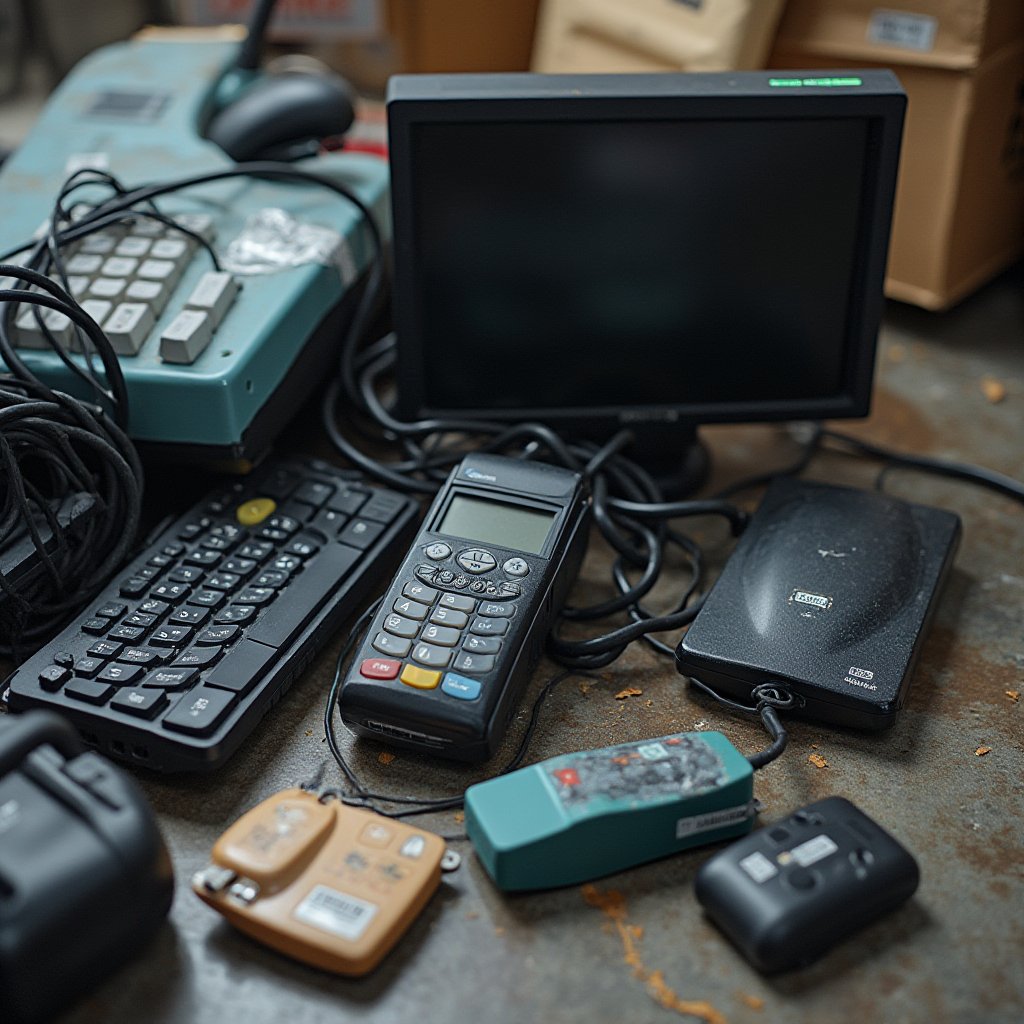
E-waste isn’t just the obvious stuff. Yes, it’s the dead monitor under the desk and the old till in a Toorak boutique, but it’s also every cable, charger, keyboard, and battery that came with them. If it’s got a plug, a battery, or a circuit board, it’s e-waste, and since 2019 none of it can go in your general waste bin or skip.
For a typical inner-Melbourne business, that covers more ground than most owners expect:
- computers, laptops, monitors and servers
- point-of-sale terminals, EFTPOS machines and cash registers
- printers, scanners and photocopiers
- phones, tablets and networking gear
- power tools, kitchen equipment and anything with a cord
- batteries of every kind, from the small ones in a wireless mouse to the sealed lead-acid type in old signage or alarm systems
Fluorescent tubes and CRT screens count too, if you’re still running either. So does anything with a lithium battery inside it, which is worth flagging on its own: these are the items most likely to start a fire in a bin truck or a warehouse if they’re crushed or damaged, which is a big part of why the ban exists in the first place.
It’s worth knowing solar panels are heading the same way. They’re not yet banned from landfill in Victoria, but a national reuse and recycling scheme is already being worked toward, so if you’re running panels on a shop roof in Prahran or a warehouse further out, it’s sensible to start asking your installer now what happens at end of life, rather than waiting for the rule to catch up with you.
Generator’s duty vs EPA licensing

Here’s where a lot of business owners get tangled up, and it’s an easy thing to get wrong. There are two very different things in Victorian environmental law: being an EPA licence holder, and having a general duty of care as a “generator” of waste.
If you run a cafe in Prahran, an accounting firm in Toorak, or a small warehouse further out, you are almost certainly not a licence holder. Licences are for the operators actually running waste facilities, transfer stations, and recycling plants. That’s not you.
What does apply to you is the general environmental duty, a standing legal obligation on anyone whose activities could cause environmental harm to minimise that risk so far as reasonably practicable. For a business generating e-waste, that duty is met by taking reasonable, practical steps: not putting screens and batteries in the general skip, and handing them to someone properly set up to deal with them.
This is a relief, not a burden. You don’t need to study the Environment Protection Act, register anything, or apply for a licence. You need to be able to show, if ever asked, that you made a sensible choice about where your old monitors and computers went. Keeping a docket or a certificate of recycling from whoever collects it is usually all the paperwork this requires.
The compliance job, in other words, isn’t yours to carry. It sits with the recycler you choose. Pick a properly certified one, and your duty of care is done.
What it costs to get wrong (current penalty figures)
Here’s where the stale numbers cause real confusion. A lot of the advice still doing the rounds quotes a $1.8 million maximum penalty for breaching your duty of care under the Environment Protection Act. That figure is out of date. Penalties in Victoria are set in penalty units, and penalty unit values are indexed and published each year, so the dollar figure attached to any offence moves annually, not once and done.
What matters for you as a business owner isn’t memorising this year’s exact figure. It’s understanding what actually triggers it. The general environmental duty applies to anyone whose activities could harm human health or the environment, and penalties scale with how serious and how deliberate the breach was. A small office sending its dead monitors off with a reputable e-waste recycler isn’t the target here. Enforcement is aimed at operators who knowingly dump, stockpile illegally, or ignore the landfill ban outright.
We haven’t seen evidence of Victoria going after ordinary small businesses for genuine mistakes. The real risk sits with businesses that never bother finding out where their electronics end up at all. Ask your recycler for a docket, keep it on file, and you’ve closed off the exposure that actually matters.
Choosing a certified recycler and handling special items

Here’s the practical bit: you don’t need to become an e-waste expert. You need to pick the right recycler and know where a handful of items sit outside the usual bin.
Look for a recycler certified to the national e-stewardship standard, or one that can show you where your gear actually goes once it leaves your premises. A proper operator will give you a docket or certificate of destruction/recycling for every collection. Keep those on file. If a business ever asks “did you do the right thing with your old computers”, that paperwork is your answer.
A few items need a bit more thought than your standard printer or monitor:
- Fluorescent tubes and CRT screens contain mercury or leaded glass and need a recycler set up to handle hazardous components, not just a general e-waste bin.
- Batteries, especially lithium ones from laptops and power tools, are a fire risk in general waste and should go to a dedicated battery collection point.
- Solar panels, if you’re a business decommissioning a rooftop system, are a newer problem nationally. Recycling pathways are still being built out, so ask your recycler directly whether they take panels or can point you to someone who does.
- Servers and drives with data on them need a recycler who’ll certify secure destruction, not just recycling. Ask for this in writing if client data’s involved.
None of this needs to be complicated. One recycler who handles the full mix, a docket every time, and you’ve covered the parts of e-waste compliance that actually matter for a business your size.
What your duty of care comes down to
If you’re running a business anywhere from Prahran to Hawthorn, the landfill ban isn’t something to lose sleep over. It’s mostly common sense with a paper trail attached. Keep the e-waste separate from general rubbish, use a recycler who can show you where it actually goes, and hang onto the docket. That’s the bulk of your duty of care sorted.
There’s no need to become an expert in the Victorian e-waste ban itself, just pick a partner who already is one. Get that right once, and every old monitor, keyboard or dead server after it takes care of itself.
Frequently Asked Questions
Anything with a plug, battery or cord is covered under Victoria’s e-waste ban, which has applied statewide since July 2019. For a typical inner-suburbs business, that’s computers, monitors, printers, phones, power tools, fluorescent tubes, and any appliance with a battery, from a shop’s till system to a cafe’s old coffee machine. It also covers the smaller stuff that’s easy to overlook: chargers, cables with built-in electronics, and battery packs from cordless equipment. If it plugs in, runs on a battery, or has a cord, assume it’s e-waste and needs to go through a proper recycler rather than the general waste bin. Your local council, including Stonnington and Boroondara, publishes e-waste drop-off points if you’d rather sort it yourself before a clearance.
No, and this is where most business owners overthink it. Under the Environment Protection Act 2017, ordinary businesses are ‘waste generators’ with a general duty of care, not licence-holders. You don’t need an EPA licence to store or transport a normal amount of office or shop e-waste. What you actually need is to hand it to someone who does the licensed part properly: a certified e-waste recycler or a rubbish removal service that routes it there. Keep it simple: separate your e-waste from general rubbish, use a legitimate recycler, and you’ve met your obligation without needing to become a compliance expert.
Realistically, for most small and medium businesses, the risk isn’t a knock on the door from an inspector. Enforcement against ordinary generators has been limited, and the EPA’s focus has been on large-scale offenders and licensed waste facilities, not a cafe binning an old printer. That said, penalties under the Act can be significant for serious or repeat breaches, and figures quoted online vary and are often out of date, so we won’t put a specific number here. The practical takeaway is the same either way: it’s genuinely no harder to do it properly, so there’s little reason to take the risk.
Ask two questions before you hand anything over: are they accredited under a recognised scheme (like the National Television and Computer Recycling Scheme for eligible items), and can they tell you where the material actually ends up? A proper recycler should give you a straight answer, not a vague “it’s sorted”. If you’re clearing out an office in Prahran, South Yarra or anywhere in the inner-south, it’s often easiest to book a rubbish removal team that already has that relationship sorted, so your e-waste is separated and sent to the right place without you having to manage it yourself.