
Office chair disposal is where most office cleanouts start, and it’s also where the first bit of bad advice usually creeps in: put it out with hard rubbish. That works if you’re a household in Stonnington or Boroondara with one chair and a council collection date. It doesn’t work for a business with fifteen chairs, six desks and a stack of partition panels, because hard waste collections are a household service, not a commercial one. A proper office cleanout needs a different approach, and it’s worth understanding what actually happens to a chair once it leaves your building, because “recyclable” doesn’t mean what most people assume.
Business cleanouts and hard rubbish: why council collection won’t help
Council hard waste picks up a fridge, a mattress, a couple of old chairs sitting on the nature strip once or twice a year. It’s a household entitlement, tied to a residential rate notice, and most inner-east and inner-south councils cap how much you can put out. There’s no version of that scheme for a business address, and there shouldn’t be: it was never built to handle office chair disposal at scale, let alone desks, partition panels and filing cabinets from a fit-out.
Under Victorian law, businesses also carry a general environmental duty to manage waste responsibly rather than dump it wherever’s convenient, which rules out quietly adding a few chairs to a neighbour’s household pile or a nearby public bin, and it puts the onus on you to manage your business’s waste under the general environmental duty.
So a genuine cleanout, whether you’re in Richmond, Hawthorn or Prahran, means booking a commercial rubbish removal service that’s set up for office volumes, not waiting on a collection date that was never meant for you.
What actually happens when an office chair is recycled
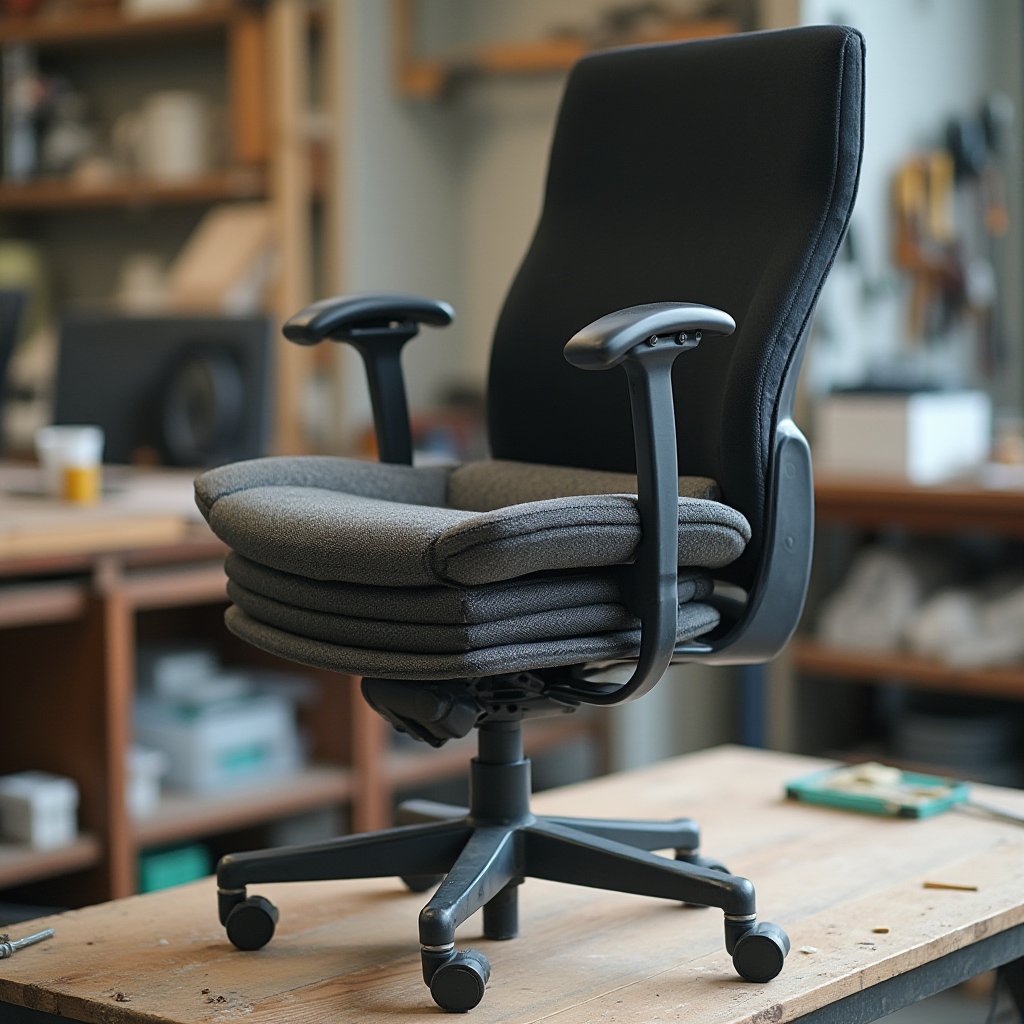
Say the chairs actually go for recycling rather than landfill. What happens next surprises most people. A typical office chair is steel frame, foam padding, fabric or mesh upholstery, and plastic components, and only the steel is straightforwardly recyclable. The foam, fabric and moulded plastic arms usually end up as landfill regardless, because the process of separating them costs more than the materials are worth. Chair Doctor, which handles this kind of stripping in Melbourne, estimates that a large share of a chair’s total weight isn’t recoverable, which is worth knowing before you assume “recyclable” means “fully recycled.”
That’s part of why office chair disposal is better handled as reuse first, recycling second. A chair with a working gas lift and no rips is worth donating or reselling, not stripping for parts. It’s only once a chair is genuinely worn out, broken, or unsellable that it should go into the recycling stream, where it’ll still leave some material behind no matter how it’s processed.
Desks and partitions: the part of the cleanout nobody explains
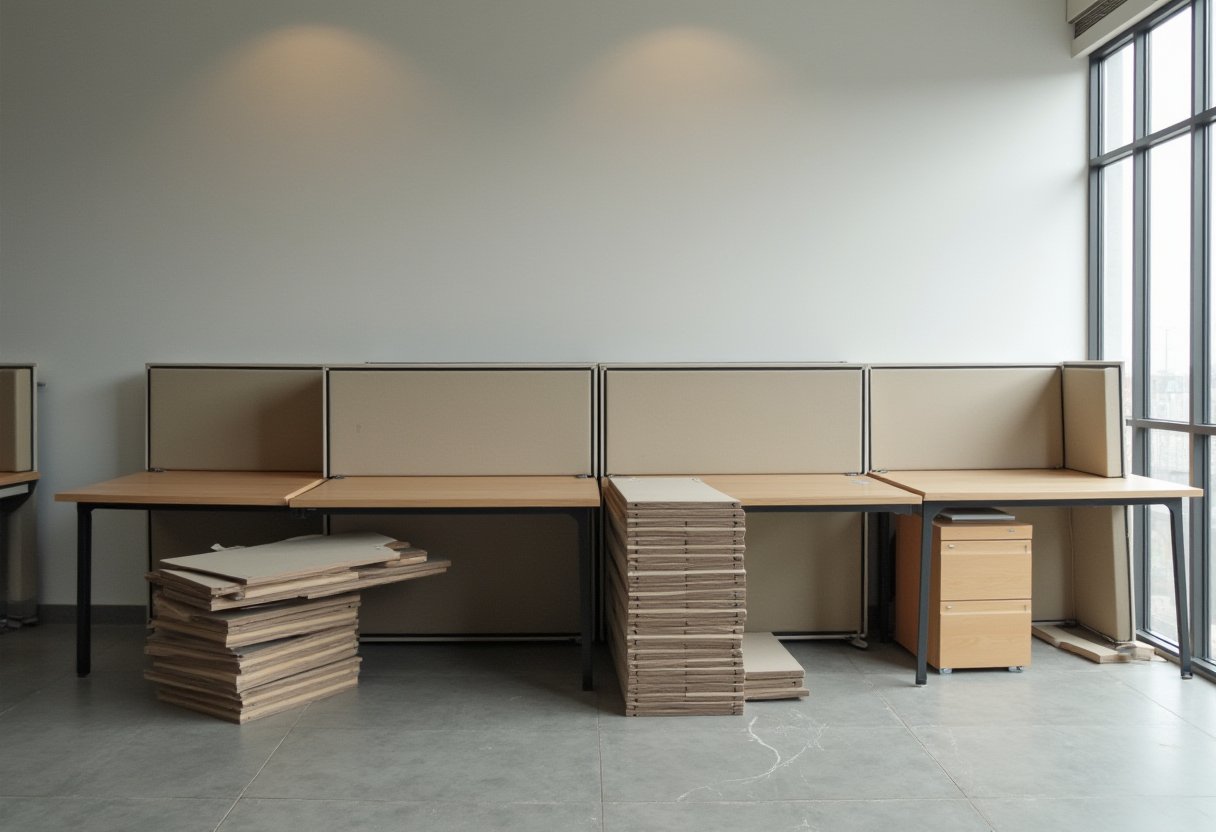
Chairs get all the attention in office chair disposal guides, but desks and partitions are usually the bulk of the job, and almost nobody tells you what actually happens to them.
Laminate desks in good nick are easy: reuse and resale. Office fit-out recyclers and secondhand furniture buyers in the inner-east and inner-south will often take a batch of matching desks off your hands if they’re not damaged, especially if they still have their original leg frames and cable trays.
Partitions are the trickier one. Most inner-suburban offices are running fabric-panel or glass partition systems, and neither breaks down cleanly. Fabric panels are a mix of chipboard core, foam, and synthetic fabric bonded together, which means they usually can’t be separated into single-material recycling streams and end up as general waste unless a specialist fit-out recycler takes them whole for reuse. Glass partitions need to go to a transfer station that handles glass separately, and gate prices vary by weight and material mix, so it pays to check before you book anything.
None of this is something a household hard-waste bin was ever meant to handle.
E-waste rules and gas cylinders: what needs special handling
Most office chairs don’t have a battery or a plug, so they sit outside Victoria’s e-waste ban, which covers items like monitors, computers and anything with a cord or battery. But plenty of office cleanouts turn up things that do: old phone systems, servers, monitors from the same fit-out. Those can’t go in general waste at all, by law, and need a licensed e-waste handler.
Gas cylinders are the other trap. Some older chair bases and pneumatic lift mechanisms use gas struts, and if a chair’s been damaged or is very old, that strut can be under pressure. A reputable recycler will check for this before processing rather than crushing it blind, which is one reason chair-specific recyclers exist in the first place. Office chair disposal isn’t just “put it out the front”: some parts genuinely need a specialist.
Treat it as a commercial job
Office chair disposal for a business isn’t a household hard-waste job, it’s a commercial one, and treating it that way from the start saves a second trip and a lot of frustration. Sort what’s still good for reuse or donation, book chairs, desks and partitions in as one clear-out rather than a slow trickle to the kerb, and remember that “recyclable” doesn’t mean every part ends up recycled. Businesses also carry their own duty of care for how waste is handled, which council hard waste was never designed around. Get that part right and the rest of the cleanout is straightforward.
Frequently Asked Questions
No, and this trips up a lot of businesses. Hard waste collections through councils like Stonnington, Boroondara or Port Phillip are a household service, tied to a residential rates account. An office in Prahran or Richmond isn’t eligible, even if the building looks like a house from the street. Some businesses try booking a hard waste slot under a director’s home address, but that’s against the terms and the truck won’t take commercial volumes anyway. For a genuine office cleanout, you need a commercial rubbish removal service that’s set up to collect from business premises, during business hours, with proper waste tracking. It’s a small distinction that saves a lot of wasted time waiting on a collection that was never going to happen.
Partly, and it’s worth knowing the real split before you assume ‘recyclable’ means the whole chair disappears responsibly. The steel frame and base recycle well. The plastic components are more hit and miss depending on the resin type. But the foam padding and fabric or mesh upholistery, which make up a lot of a chair’s weight, generally aren’t recyclable and end up as landfill even when the chair’s been through a proper recycling process. A chair in good condition is far better reused through donation or resale than sent for recycling, where a meaningful chunk of it was never going to be recovered anyway.
Partitions are the part most guides skip entirely, and they’re often the hardest bit of an office cleanout. Fabric-panel partitions have a metal frame, fibreboard or particleboard core, and a fabric or laminate skin, so they need to be broken down rather than recycled whole. Glass partitions need careful handling and separate disposal from the framing. If your partitions are still in good condition, it’s worth checking with an office fit-out company or a reuse network before disposal, since usable partition systems are in demand for smaller offices setting up on a budget. Otherwise, a commercial removal team can dismantle and cart them away as part of the wider cleanout.
Yes, if it’s genuinely still usable. Chairs, desks and partitions in decent nick are worth listing on Marketplace, offering to staff, or donating to a charity or school before they’re written off as rubbish. It’s better for the item and it can offset some of your cleanout cost. The catch is timing: most offices are working to a lease handover date or a fit-out deadline, and furniture that hasn’t moved after a week or two of trying needs to go regardless. A good approach is running the donation attempt in parallel with booking your removal, so the cleanout isn’t held up waiting on someone to collect a desk.
For anything beyond a few chairs, book ahead rather than leaving it to the last few days of your lease. A full office clearout involving furniture, partitions and general fit-out waste takes proper planning: access arrangements with the building, lift bookings if you’re above ground floor, and enough time to sort what’s being donated from what’s being removed. Give the team a call on (03) 9820 1927 with your move-out date and we’ll work backwards from there, so the whole space is sorted with time to spare rather than a scramble on the last day.