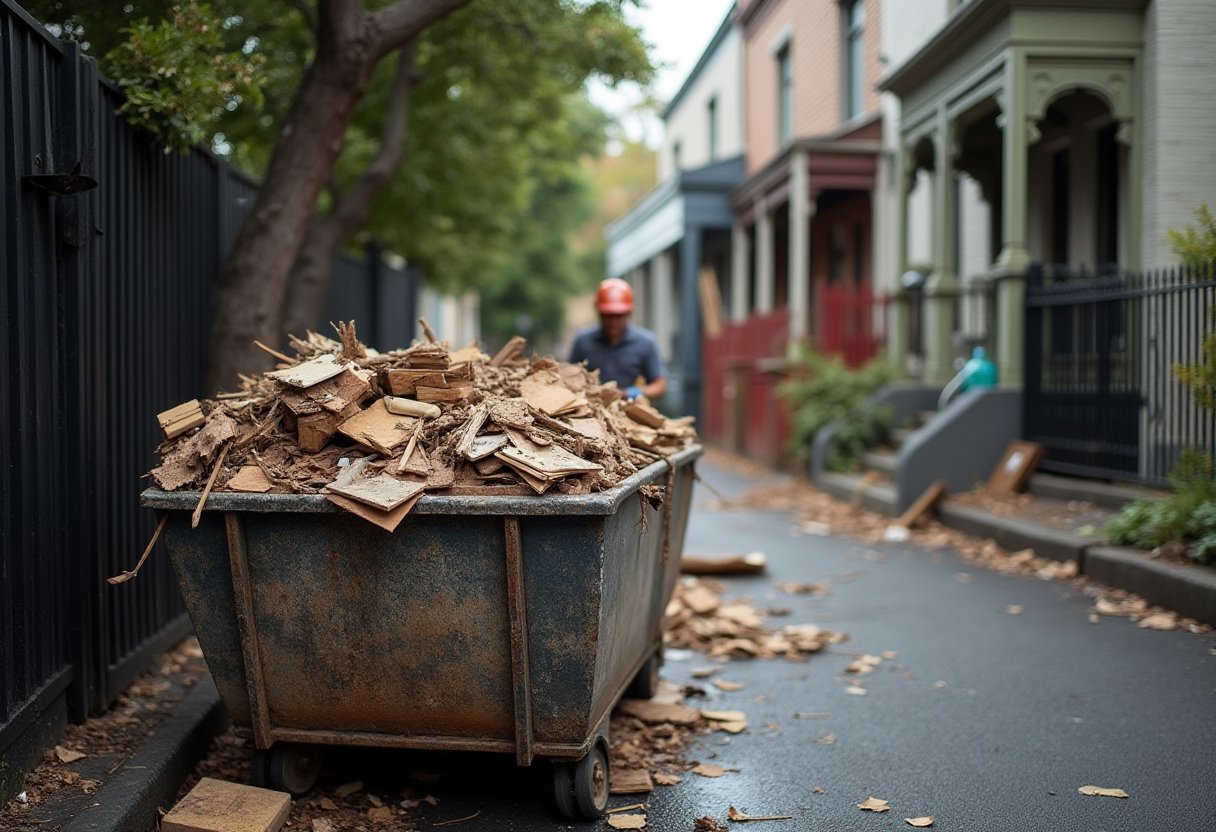
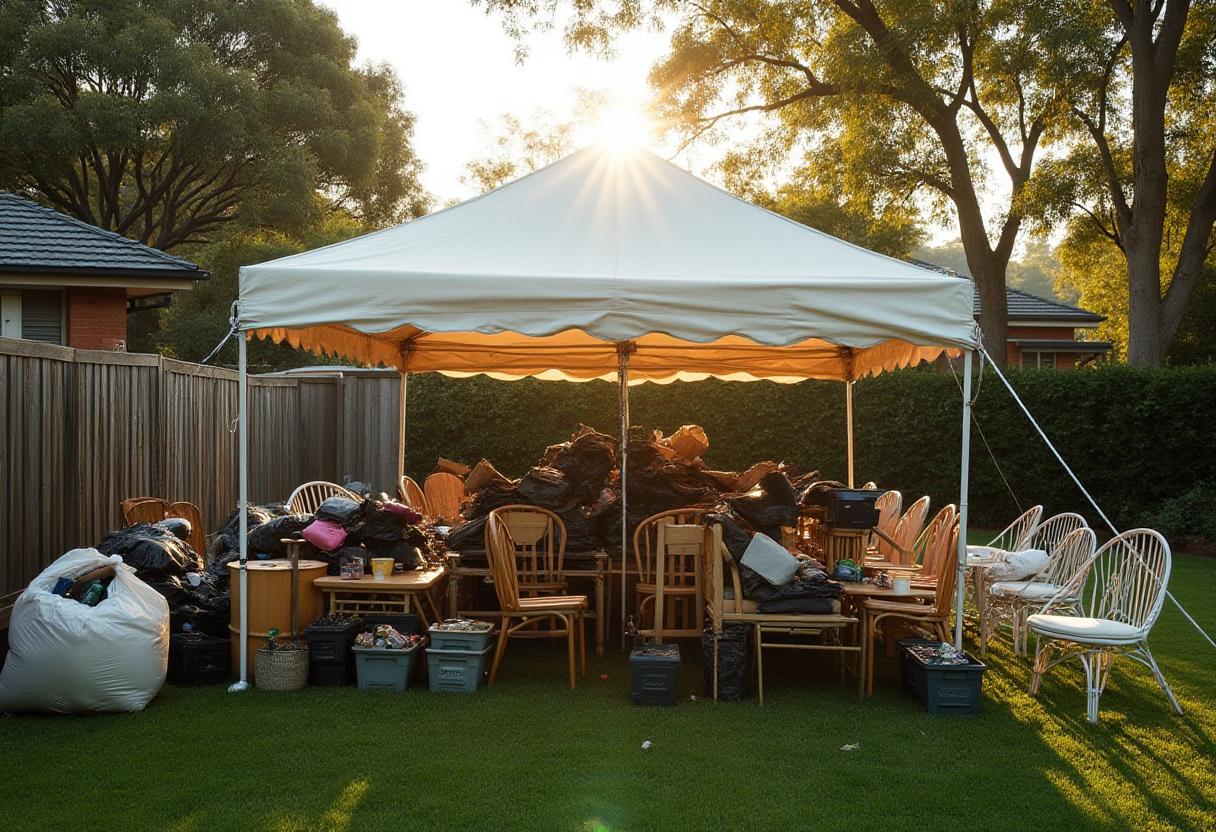
Event rubbish removal in Melbourne isn’t something most hosts think about until the marquee’s still standing, the fairy lights are still strung up, and there’s a mountain of bottles, napkins and half-eaten canapés left behind by 200 guests. It looked manageable at midnight. By morning it’s a different story, especially with the hire company collecting the marquee at nine and the venue wanting the block clear by lunch. Your wheelie bin won’t touch it, and Stonnington’s kerbside collection wasn’t built for party-scale waste either. This is a bigger job than most people expect, and how you handle it comes down to a few rules about what Melbourne’s councils will actually let you put out on the nature strip.

Who’s actually responsible: venue vs private host

If you booked a proper venue, check the contract before you do anything else. Most inner-Melbourne function spaces and marquee hire companies build waste removal into the package, and some will fine you for anything left behind past the agreed pack-down time. Read the fine print rather than assuming.
If you’re hosting at home, though, in Prahran, Toorak, or anywhere else in Stonnington, the rubbish is entirely yours. There’s no venue manager to hand it to and no council crew who’ll clear a marquee’s worth of waste on your say-so. Your council contract covers your household bin, not a one-off spike from 200 guests, and Stonnington’s free hard waste runs on a fixed area-wide date twice a year, not on the weekend you happen to need it.
This is where the confusion creeps in. Businesses that generate waste beyond normal household levels, caterers included, are expected to hire a private collection rather than leaning on kerbside systems built for households. A private event at a residential address sits in a grey area, but the practical test is the same: if it’s more than your bin was ever built to handle, it’s on you to sort out, not the council.
That’s the real question behind event rubbish removal in Melbourne: whose job is the clean-up, and what are you actually allowed to do about it once you know.
What council collection can (and can’t) absorb
What council collection gives you depends entirely on which one you’re in, and none of it moves at event speed. Stonnington runs two area-wide collections a year, spring and autumn, on a date set for your zone rather than one you pick. Boroondara gives you a single booked collection per financial year, Yarra two, and Glen Eira caps each booking by volume rather than item count. That’s fine for an old wardrobe or a broken washing machine. It’s not built for the leftovers of a 200-person function: stacked marquee offcuts, drink crates, hired furniture that didn’t get picked up on time, food scraps already turning in the heat.
There’s a size limit too. Councils cap what they’ll take, and anything over that gets left on the nature strip with a sticker telling you to sort it out yourself, which usually means a trip to the tip at your own cost. Kerbside bins are worse again: they’re sized and collected on a weekly or fortnightly cycle for a household’s normal output, not a weekend’s worth of function-grade volume dumped in one go.
Then there’s the four-bin system Victoria has been standardising, which splits glass and food organics off from mixed recycling. It’s a solid system for normal household habits, but it assumes you’ve got time to sort properly into the right stream. After a big event, nobody has that kind of time.
Put simply: council collection is a household tool with a booking lag and a hard cap. Event rubbish removal in Melbourne, at this kind of volume, needs something built for a one-off spike, not a weekly cycle designed around an ordinary household bin.
Skip bins, permits and choosing a licensed operator
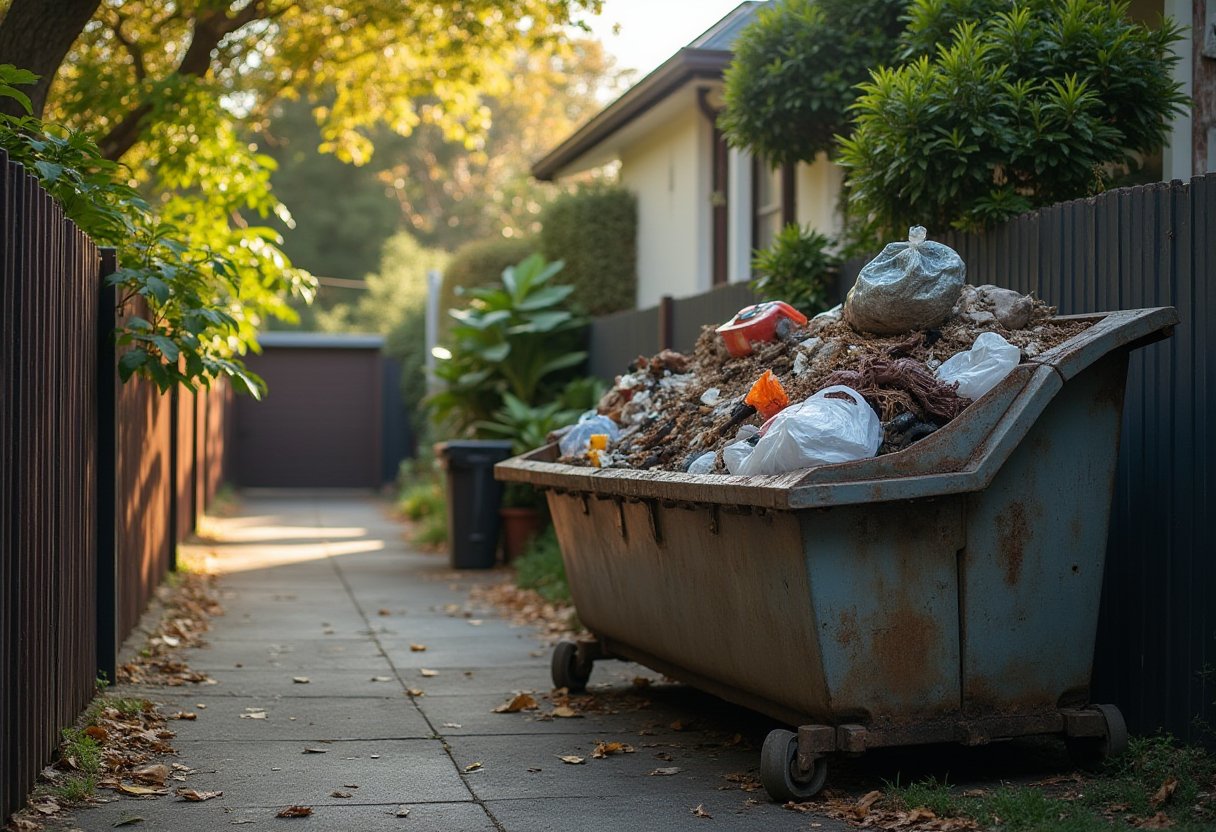
A skip can work well for a post-event clean-up, but only if you’ve got the two things it needs: decent private-land access and enough lead time to sort a permit. If the bin’s going on your driveway or another spot fully on your property, you’re generally fine without one. Put it on the street, which is often the only option on those narrow inner-suburb blocks in Prahran or Richmond, and you need a council permit first. In Stonnington you apply for that yourself: an application fee, then a further fee for every day the bin sits there. That’s paperwork and a wait, neither of which suits a wedding wrapping up on Sunday morning with the venue wanted back by Monday. On a terrace with no driveway it’s the whole problem in miniature.
This is where event rubbish removal in Melbourne, done through a private operator, comes in. No permit, no booking lead time, no guessing whether you’ve stayed under a council limit. You call, you get a quote, the truck turns up and takes the lot. It’s worth setting the two options side by side before you commit either way.
Whoever you use, make sure they’re licensed and insured. Illegal dumping isn’t a grey area in Victoria: EPA Victoria’s rule is that you break the law if you dump, abandon or bury any kind of waste at a place not authorised to accept it, and it applies to anyone who generates, transports or receives that waste, not just whoever tips the truck. A proper operator can tell you exactly where your rubbish is going. If they can’t, that’s your answer.
Sorting under Victoria’s four-bin system

Melbourne’s shifting to a four-bin system: general waste, recycling, food and garden organics (FOGO), and glass, though the rollout varies sharply from one council to the next. Stonnington is the case in point: it has declined to commit to a purple glass bin by the state’s 1 July 2027 deadline, so Prahran and Toorak households still put glass in the yellow recycling bin for now. Either way the system is built for normal household volumes, refilled once a week or fortnight. A marquee full of glassware, food scraps and general rubbish blows straight past that in one night.
This is where trying to do it yourself gets messy. Sorting 200 guests’ worth of waste into the right streams, on the night or the morning after, with a hire company chasing their marquee back, isn’t realistic. A private operator running event rubbish removal in Melbourne sorts it properly on your behalf: glass separated, food waste diverted where it can be, recycling kept clean rather than contaminated by a stray paper plate or wine cork. You get the split right without standing in your backyard at midnight trying to work out which crate takes what, and without hunting for advice that moved when Sustainability Victoria closed.
Why a private operator usually wins on a deadline
Two hundred guests through your place leaves more than one full bin. Council tools are built for household rubbish, not a marquee’s worth of glass, cardboard and leftover catering, and they’re capped and slow to book at the best of times. A skip works if you’ve got driveway access, or the time and the permit fees to put one on the street. For most events on a deadline, event rubbish removal in Melbourne through a private operator is the least fuss: no permit, no lead time, and everything sorted properly rather than risking a dumping fine. Book it ahead, and by the time the last guest leaves, it’s done.
Frequently Asked Questions
Not really, and definitely not on a deadline. Stonnington runs two area-wide hard waste collections a year, in spring and autumn, and you take the date set for your zone rather than picking one; the spring 2026 round runs 7 September to 21 October. Boroondara works the other way, with one booked collection per financial year. Either system is designed for a household’s normal clear-out, not 15 to 20 bin bags of cups, food scraps, decorations and broken glassware from a 200-person event. Kerbside bins are also capped by size and collection day, so you’ll be storing rubbish on the nature strip far longer than council likely allows. If your event has a bump-out deadline, whether that’s a marquee hire return or a venue handback, a booked private removal is the only option that matches the timeframe.
Only if it’s going on the road or footpath rather than on private land, and who lodges the permit depends on the council. In Stonnington you apply yourself through council’s online portal. In Yarra, which covers Richmond, only registered skip bin companies can apply, so you wait on the hire company’s paperwork and their timing, and the bin has to sit in a legal parking bay rather than on the nature strip. If you’ve got a driveway, courtyard or off-street car space, you can usually skip the permit altogether. For most home events, though, a private rubbish removal team collecting straight from where the mess is sitting avoids the permit question entirely and needs no lead time beyond booking your slot.
Victoria’s four-bin split, food and garden organics (FOGO), recycling, glass and landfill, is still rolling out across councils at different speeds, so what goes where depends on your suburb. Event waste is messy for this system because catering scraps, mixed packaging and broken glass often arrive already jumbled together in bags, not sorted at the source. Stonnington is also one of the councils holding off on the separate glass bin, so glass there still goes in the yellow lid. A private removal team sorts what can genuinely be recycled or composted before the rest goes to landfill, which keeps more of it out of general waste than trying to guess the right bin yourself at midnight.
No. EPA Victoria treats dumping rubbish outside your own bin system as illegal dumping, and it applies just as much to a pile of catering waste behind a Prahran terrace as it does to a builder’s skip. Fines are real and councils do act on reports from neighbours. If your bins are full and the collection is days away, the safer and honestly less stressful option is booking a removal service that takes everything away properly, with nothing left behind for someone else to deal with.