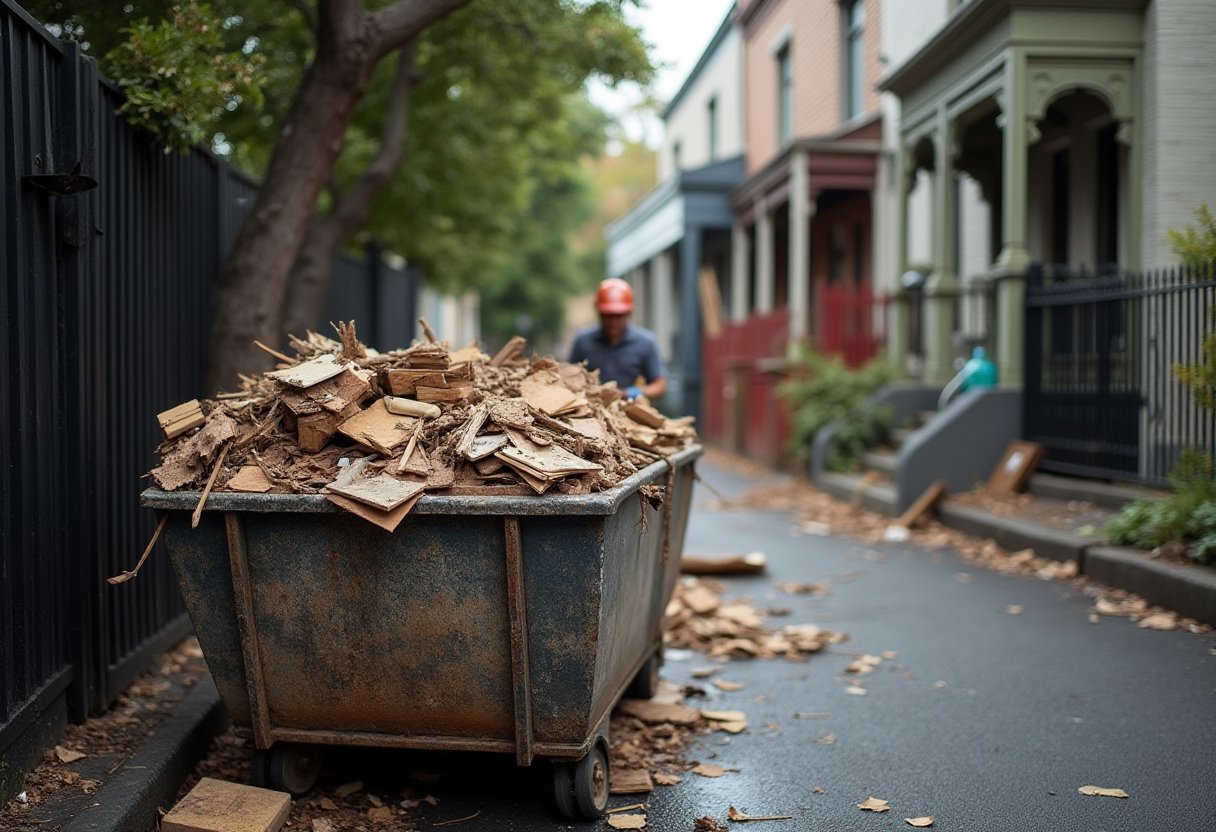
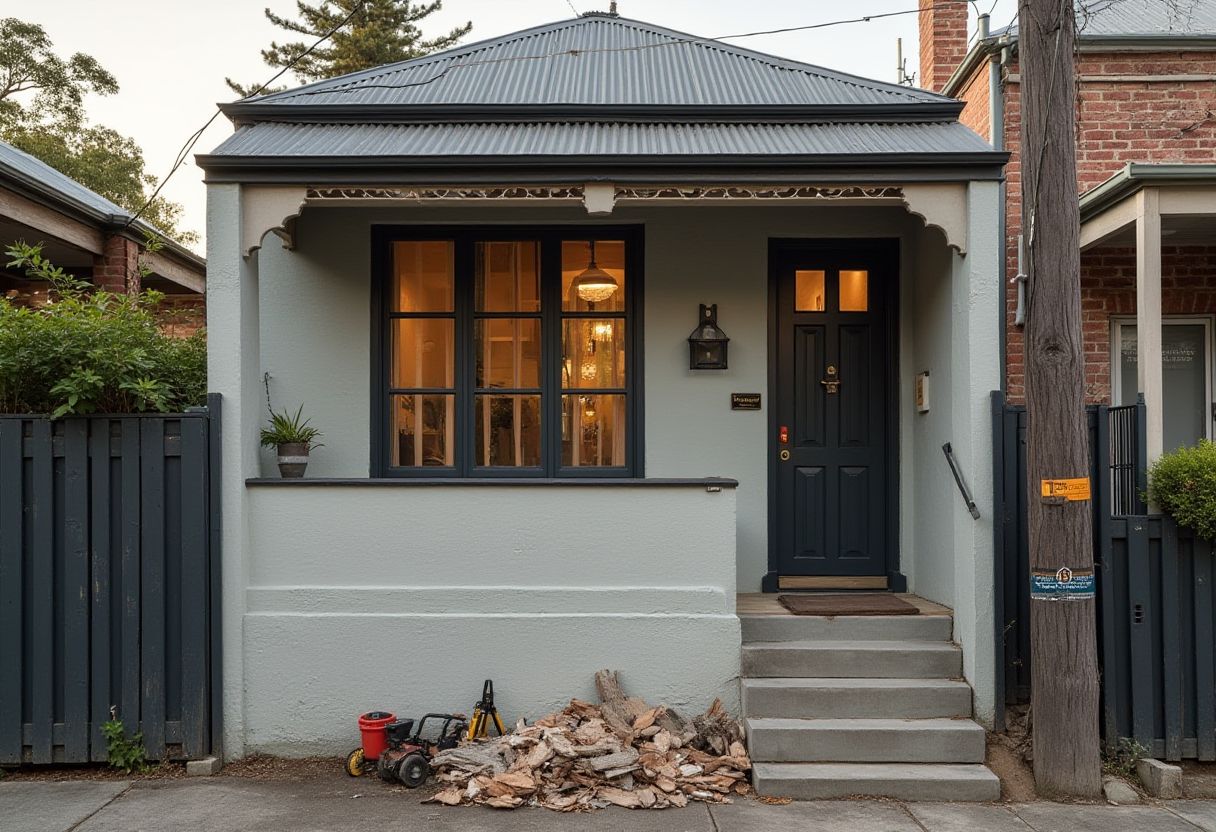
If you’re renovating an inner-east terrace with no driveway, renovation rubbish removal comes with a decision most guides skip straight past: where does the waste actually sit while it’s waiting to go? A skip out the front isn’t just a phone call to a supplier. It sits in a legal parking bay on public land, which means a council permit, a fee for every day it’s there, and on some streets, a flat no. Three steps sort it out: work out what access you genuinely have, check whether a skip can legally go on your street, then match the removal method to the load. Take them in that order and the rest of the job gets a lot simpler.

Step 1: Work out what access you actually have

If your terrace doesn’t have a driveway, the waste from a renovation has nowhere private to sit. That’s the crux of it, and it’s worth being precise about what you do have before you ring anyone.
Walk the job and note four things. Whether there’s any off-street space at all, even a courtyard or a rear lane. How far the waste has to travel from the room it comes out of to the kerb. Whether that path has steps, a tight side gate, or a first-floor staircase. And how much of your street frontage is taken up by permit parking. On a standard single-fronted terrace the honest answer is usually that everything comes out the front door, down a narrow path, and straight onto the footpath.
That matters because it decides your options before cost does. An on-demand renovation rubbish removal crew can work from a pile stacked inside the house, in a rear lane, or on the footpath for the ten minutes it takes to load. A skip can’t. It needs a legal, reachable spot to sit for days at a time, and whether you have one is a separate question with a council attached to it.
Step 2: Check whether a skip can legally go on your street
If a skip bin won’t sit on your own property, the next question is whether it can legally sit on the street, and that’s council territory. Boroondara, Stonnington and Yarra all run permit systems for skip bins placed on council land. The first thing worth knowing is that you don’t apply for it. Boroondara puts it plainly: only registered skip bin companies may apply, and residents should contact a company to hire one on their behalf. Yarra says the same, and adds that the company folds the permit cost into what it charges you.
That doesn’t make the rules someone else’s problem, because placement is what decides whether your street works at all. A permit buys a spot in a legal parking bay, not a stretch of nature strip or footpath, and not a clearway, no-stopping zone, loading zone or disabled bay. A rear laneway, or anything else that restricts access, needs a separate road or footpath occupation permit on top. Boroondara rules out arterial roads altogether, and the councils all defer to the state code of practice for placing waste bins on roadsides. If your frontage is permit parking, a street tree and a neighbour’s crossover, there may be no legal bay to buy.
Cost follows the same logic. Permits are charged per day on top of an application fee, so a bin that sits idle through a slow week in the trade schedule costs more than the hire price suggests. A metered bay costs more again: Yarra charges $28.30 a day for an unmetered bay and $76.75 for a metered one, and on a Richmond or Prahran street the space out the front is often the metered kind.
This is the bit that never makes it into the generic skip-bin comparisons. For a terrace, the real decision usually isn’t “skip or something else”, it’s “is there anywhere legal on my street to put a skip at all”. No driveway, no side access, a frontage of metered or permit parking: that’s a supplier application, a wait, and no guarantee either way. Worth knowing before you book anything, not after.
Step 3: Match the removal method to your load

Once you know whether a skip is even possible on your street, the next question is what actually suits the load. For most terrace jobs the waste comes out in stages: demolition rubble one week, a trailer-load of old skirting and plaster the next, a stack of kitchen cabinetry once the old one is ripped out. That staggered pattern is where an on-demand service works best on a terrace with no driveway. You book it per load, our crew carries it out from wherever it’s stacked, and there’s no permit application sitting between you and getting rid of it.
A skip bin is still the better call for one large, near-complete strip-out, if you’ve confirmed the street is wide enough and council has already signed off. That’s genuinely the right tool for clearing a lot in one go, and we’ve set the two options side by side if you want the longer comparison. For everything else on a tight inner-east terrace, booking per load is simply the less complicated way to keep the job moving alongside the trades.
It also helps if the job stalls. Plenty of terrace renovations pause for a few weeks, and materials left sitting around a half-finished site are a hazard and an eyesore in a way a booked pickup never is. When the job finally wraps, a post-construction clean-up is usually the last load out.
The one thing that sits outside all three steps
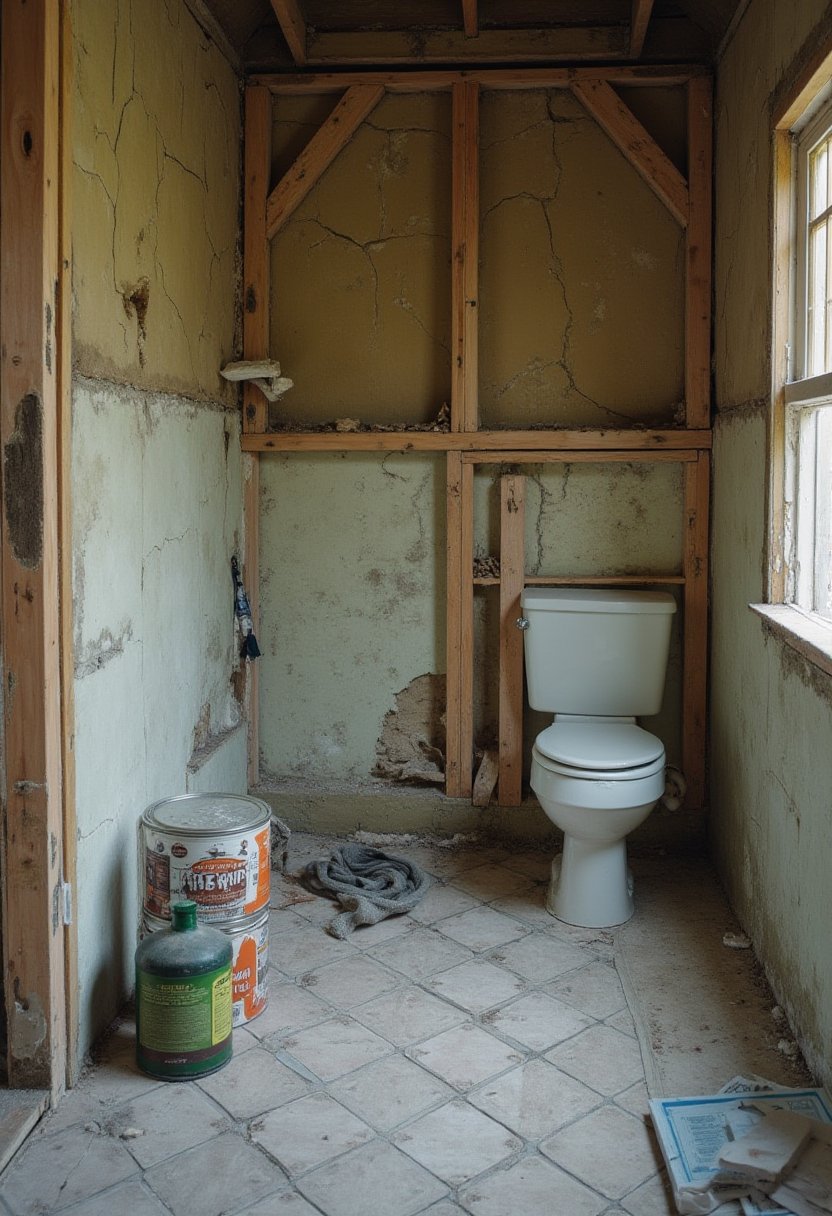
Not everything from a terrace strip-out is a straightforward pickup, and this is where it pays to slow down before you book anyone. Anything with even a chance of containing asbestos, fibro sheeting under old cladding, a bathroom that hasn’t been touched since the seventies, floor tiles with a suspicious backing, needs a licensed asbestos removalist, not a general booking. This applies more to later additions and lean-tos than to the original 1880s terrace fabric, but you can’t tell by looking, so get it checked if you’re unsure.
Paint tins, solvents, old gas bottles and fluorescent tubes also fall outside normal collection and need proper disposal, and EPA Victoria sets out what home renovation waste you can and can’t dispose of yourself. Neither a skip bin nor an on-demand service handles asbestos, full stop, so if that’s even a possibility on your job, that’s a separate call to make before rubbish removal of any kind starts. The rest of a bathroom or kitchen demolition is straightforward once the hazardous material is out of the picture.
Per load for most jobs, a skip for the rare one
For most terrace renovations without off-street space, the simplest path is booking removal per load: no permit, no insurance paperwork, no measuring the street. Save the skip for a genuine one-off, near-complete strip-out where your skip supplier has confirmed there’s a legal bay out the front and the permit’s approved. One thing worth being clear about, because it catches people out: council hard rubbish is not a route for building material at all. Yarra tells residents outright to organise a private waste service for renovation material, and the other inner-east councils take the same line. And if there’s any chance of asbestos in those later additions, get it checked and handled by a licensed removalist first, separate from everything else. Sort the access question early and the rest of the job runs a lot smoother, whether you’re in Prahran, Armadale or Hawthorn.
Frequently Asked Questions
Yes, a permit is needed, but you are not the one who applies for it. If a skip is going on the road, that’s public land, and Stonnington, Yarra and Boroondara all require a permit before it goes down. In Boroondara and Yarra only a registered skip bin company can lodge that application, so you hire the company, they get the permit and the cost comes through in their fee. What is worth checking before you commit is whether there is anywhere legal to put it. The permit covers a legal parking bay, not the nature strip or the footpath, and never a clearway, no-stopping zone, loading zone or disabled bay, and a bin in a laneway needs a separate occupation permit. Yarra turns a complete application around in about 24 hours, though Stonnington has warned of delays when permit volumes spike, so leave some slack if your reno timeline is tight.
This is the situation most inner-east terraces are actually in, and it’s exactly what an on-demand rubbish removal service is built for. Instead of a bin sitting on your street for days, our crew turns up, carries everything straight from the house (or a narrow side lane) to the truck, and takes it away in one go. There’s no permit to wait on, no parking bay to find and no council application in the middle of it. It works well for the ongoing tip-runs a renovation generates: old kitchen cabinetry, plasterboard, flooring, that sort of thing. It’s the simpler path for most terrace jobs in Richmond and across the inner east, book it around your trade schedule and you’re sorted.
Sometimes, yes. If you’re doing one big, near-complete strip-out rather than a staged reno, and your skip company has confirmed there’s a legal bay out the front and the permit’s approved, a skip can work out well for volume. It’s really a question of scale and certainty: one large drop with a confirmed spot, versus the more common terrace reality of ongoing waste with nowhere fixed to leave a bin. For most of our inner-east customers, the second is closer to the truth, which is why booking per load tends to be the default rather than the exception.
Stop and call a licensed asbestos removalist first. This applies whether you were planning a skip or a rubbish removal booking, because neither handles asbestos as part of a standard job. It’s more often found in later additions to a terrace, an old bathroom extension, a lean-to laundry or a garage, rather than the original 1800s fabric, but it can turn up anywhere pre-1990. Once it’s been safely removed and disposed of by a licensed contractor, we’re happy to come back and take care of everything else.
It depends on the job rather than a flat rate, and on a terrace the access is often what moves it. The things that matter are how far the waste has to be carried from the room to the truck, whether that path has steps or a narrow side gate, how heavy the load is (demolition rubble weighs far more than the same space filled with cabinetry), and whether it comes out in one visit or across several as the trades finish. Tip fees sit underneath all of it, and those have been climbing. The best way to get an accurate number is a free, no-obligation quote, over the phone or with a few photos, so you know the cost before anything’s booked in.